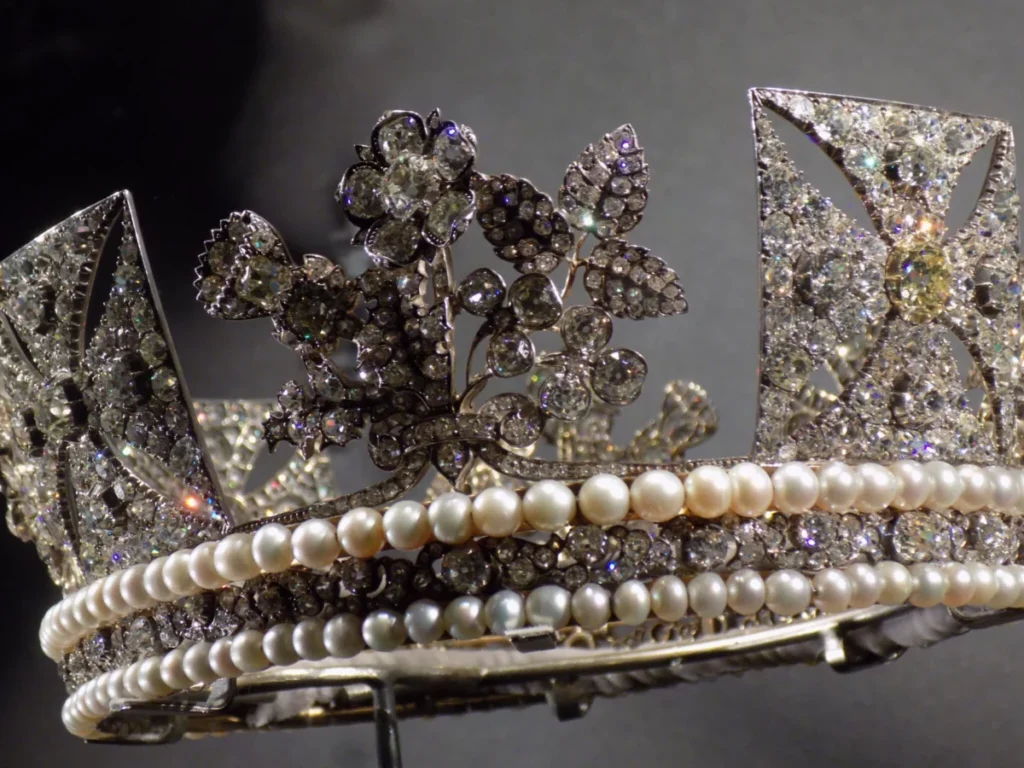

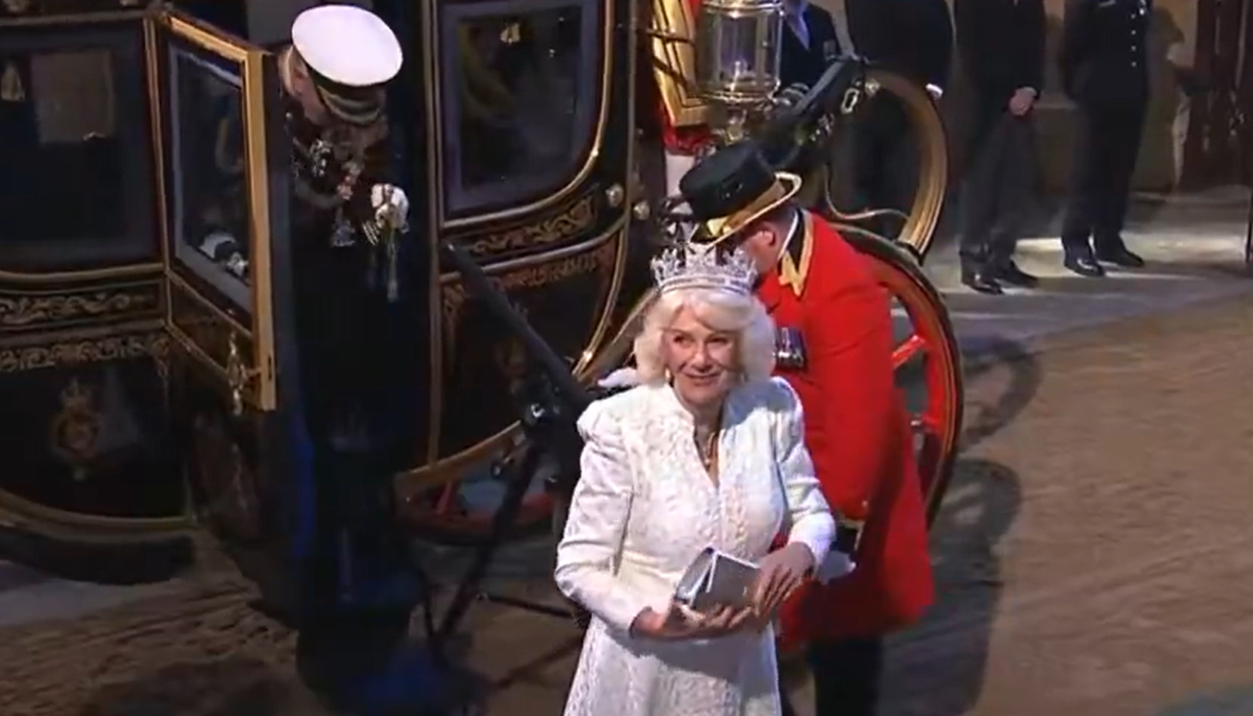
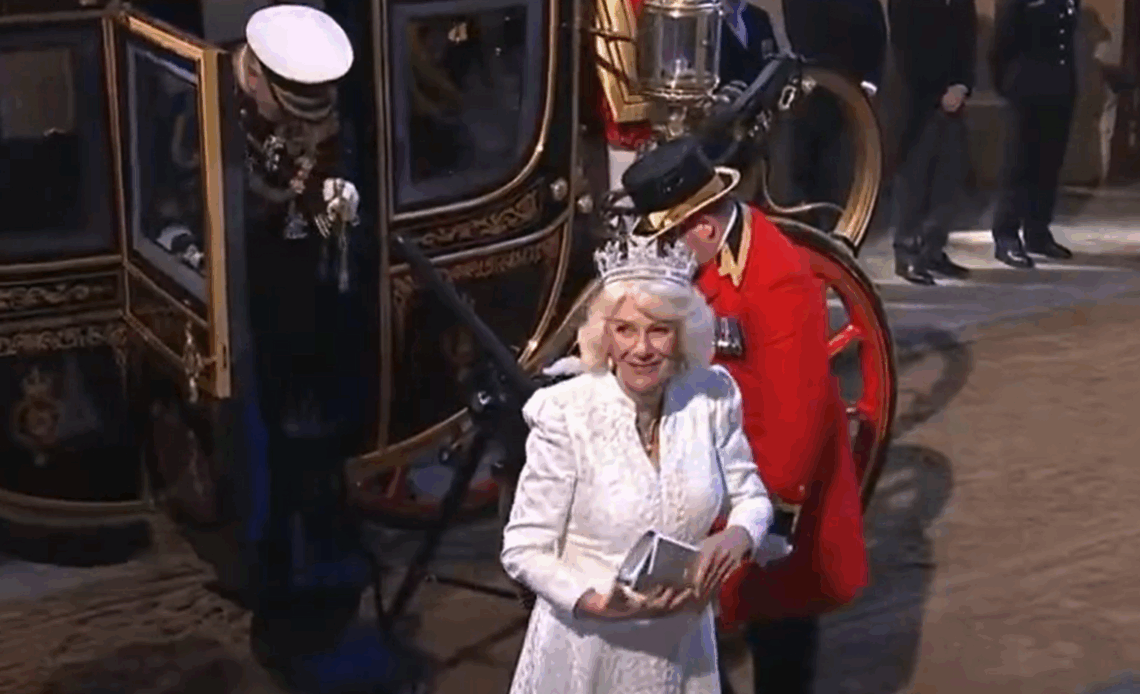
The Houses of Parliament, a venerable institution steeped in tradition and often buffeted by the winds of political change, played host to a moment of profound symbolic significance as Queen Camilla graced the State Opening of Parliament. Against a backdrop of palpable political anticipation, a piece of jewellery, both historically rich and visually arresting, captured the attention of onlookers and underscored the enduring continuity of the British monarchy. Queen Camilla arrived wearing the George IV State Diadem, a dazzling testament to royal patronage and a piece that has, for decades, served as a silent witness to the evolving landscape of British governance.
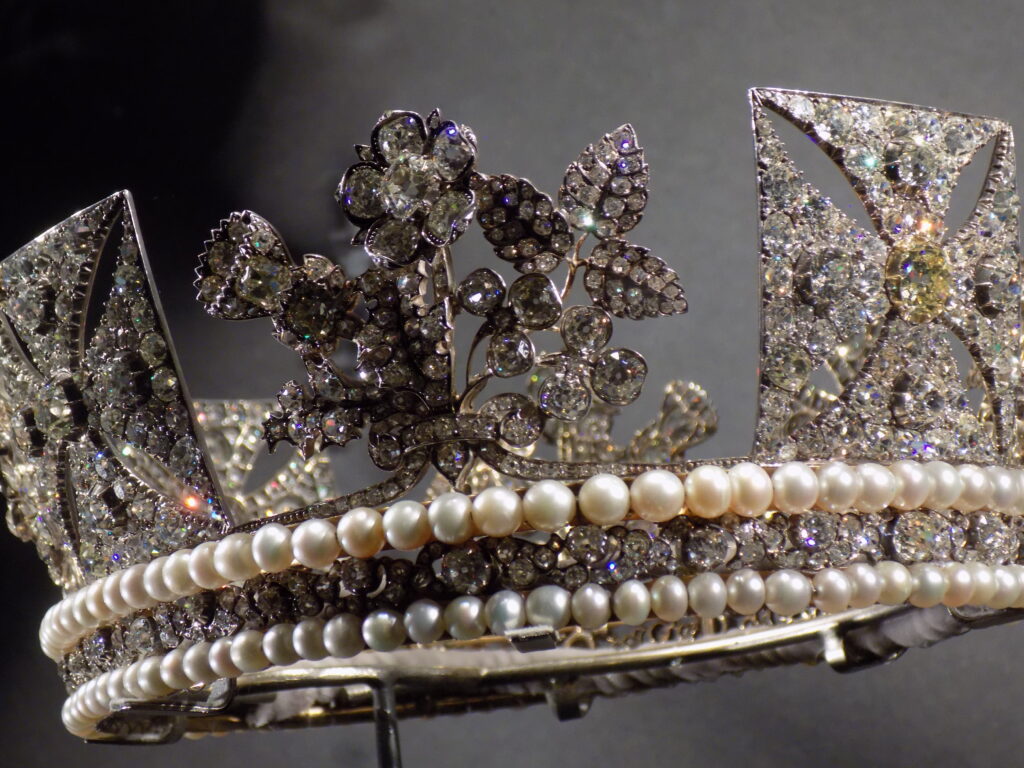
This exquisite coronet, a veritable constellation of over 1,300 diamonds set in a gold and silver frame, is far more than a mere adornment. It represents a tangible link to past monarchs and a symbol of the Crown’s presence at the heart of the United Kingdom’s legislative process. The State Opening of Parliament, an annual ceremony marking the formal commencement of the parliamentary session, is a cornerstone of the UK’s constitutional framework. It is here that the Sovereign delivers the King’s Speech, outlining the government’s legislative agenda for the coming year, a tradition that traces its roots back to the 16th century.
A Regal Heirloom’s Journey
The history of the George IV State Diadem is as fascinating as its intricate craftsmanship. Commissioned in 1820 by King George IV himself, this piece was intended to be a personal statement of his accession to the throne after a lengthy period as heir apparent and regent. The diadem, designed with a strikingly modern aesthetic for its time, eschewed traditional heraldic motifs in favour of incorporating the four national symbols – the rose for England, the thistle for Scotland, the shamrock for Ireland, and the leek for Wales – around its central cross. This choice, in itself, can be interpreted as a deliberate attempt by George IV to project an image of unity and national representation from the very outset of his reign.
George IV’s reign, though marked by a passion for art and architecture, was also characterised by considerable public expenditure, a fact that often drew criticism. The commissioning of such an opulent piece of jewellery, worn by the King on his procession to his coronation in 1821, can be viewed through this lens – an assertion of royal prerogative and a projection of regal splendour, even amidst financial scrutiny. However, George IV’s popularity waned, and his lavish spending did little to endear him to his subjects or Parliament.
Upon his death in 1830, the diadem passed to his younger brother, King William IV. A monarch with a decidedly more austere disposition, William IV famously expressed a distaste for excessive ceremony. He was reportedly persuaded to undergo a coronation at all, opting for a pared-down affair that earned it the moniker "the Half Crown-ation" or "the Penny Coronation." His choice of attire for the ceremony – his naval uniform – starkly contrasted with the dazzling potential of the diadem.
It was, however, William IV’s wife, Queen Adelaide, who developed a particular fondness for the diadem. She began to wear it during her husband’s reign, thereby initiating a tradition that would see the jewel firmly established as belonging to the queens of the United Kingdom. This ensured that the George IV State Diadem would become a cherished piece within the royal jewellery collection, designated for the consorts and reigning queens.
Continuity and Symbolism in the Modern Era
The diadem’s journey continued through the reigns of Queen Victoria and Queen Elizabeth II, both formidable monarchs who wore it on significant occasions. For Queen Elizabeth II, the George IV State Diadem became one of the most recognisable symbols of her long and impactful reign. Its image was immortalised on countless stamps and coins issued throughout Britain and the Commonwealth, embedding its visual presence into the daily lives of millions.
Queen Elizabeth II first wore the diadem to her inaugural State Opening of Parliament in 1952. At that time, the more imposing Imperial State Crown was not an option, as her own coronation had not yet taken place. The diadem, while lighter than the Imperial State Crown, carried immense symbolic weight. As her reign progressed, Queen Elizabeth II continued to wear the diadem for the procession to and from Westminster. In the later years of her reign, she adopted the practice of wearing the diadem throughout the ceremony itself, while the Imperial State Crown, a potent symbol of royal authority, was carried before her and placed on a cushion beside the throne. This subtle shift underscored the diadem’s growing significance as a personal emblem of the monarch.
Queen Camilla and the Diadem’s New Chapter
With the accession of King Charles III, the tradition of the consort wearing the George IV State Diadem at the State Opening of Parliament has continued. Queen Camilla’s choice to wear the diadem for the recent State Opening marks a new chapter in its illustrious history. Her selection, at a moment of considerable political significance, serves to visually reinforce the continuity of the monarchy and its enduring connection to the parliamentary process.
The State Opening of Parliament is not merely a ceremonial event; it is a crucial constitutional juncture. The King’s Speech, drafted by the government of the day, sets the legislative agenda and provides a roadmap for the upcoming parliamentary year. In recent times, the political climate has been marked by significant debate and evolving policy directions, making the pronouncements delivered during the State Opening particularly keenly observed. The presence of the Sovereign, adorned with such historically resonant regalia, lends a solemnity and gravitas to these proceedings, reminding all present of the foundational principles upon which the United Kingdom’s governance is built.
The diadem, with its intricate design and sparkling diamonds, offers a moment of visual respite and historical reflection amidst the often-frenetic pace of political discourse. It serves as a reminder that while governments and political parties may change, the Crown remains a constant, a unifying presence in the nation’s life. The diadem, originally conceived for a king, has transcended its initial purpose to become a symbol of female royal authority and continuity, worn by queens regnant and consorts alike.
Broader Implications and Enduring Significance
The choice of the George IV State Diadem by Queen Camilla for the State Opening of Parliament carries broader implications. In an era where the monarchy’s role and relevance are subject to ongoing public discussion, the visible embodiment of tradition and historical continuity through such regalia plays a vital role in shaping public perception. The diadem, with its direct lineage to monarchs of the past, connects the present to a long and storied heritage, reinforcing the institution’s deep roots within the fabric of British society.
Furthermore, the diadem’s journey from being a personal commission of George IV to a symbol of queenship highlights the adaptable nature of royal tradition. It demonstrates how objects of historical significance can acquire new meanings and associations over time, reflecting the evolving roles and representation within the monarchy. Queen Camilla’s wearing of the diadem not only pays homage to her predecessors but also subtly asserts her own position within the ongoing narrative of the British Crown.
As the political landscape continues to shift and evolve, the George IV State Diadem, worn by Queen Camilla at the State Opening of Parliament, stands as a potent symbol. It represents the enduring power of tradition, the continuity of the monarchy, and the quiet, yet profound, statement of regal presence that has been a hallmark of British state occasions for centuries. It is a reminder that even in times of political flux, certain symbols remain constant, offering a sense of stability and historical perspective. The sparkle of its diamonds, reflecting the light of parliamentary proceedings, serves as a dazzling, enduring beacon of royal heritage.