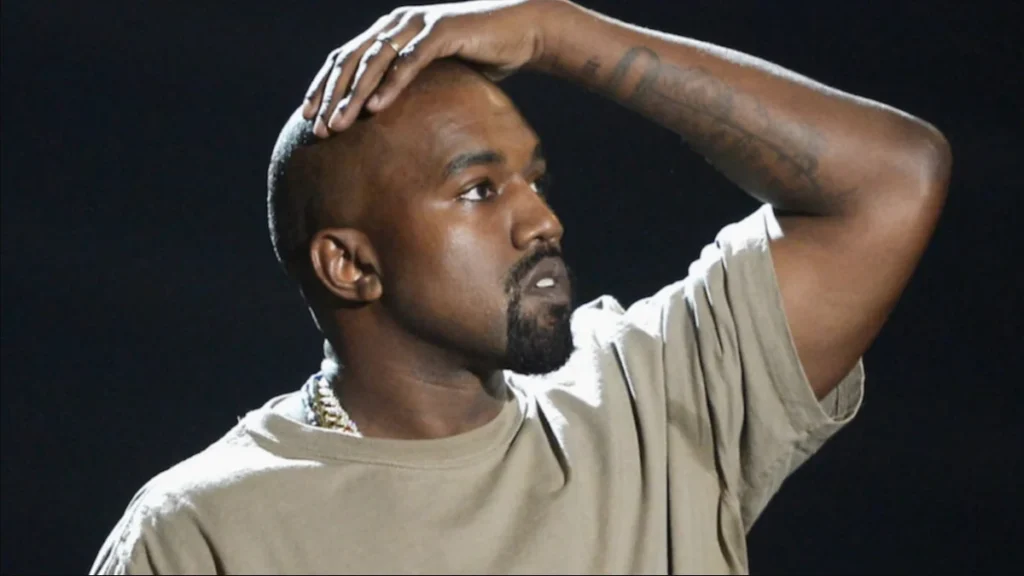

In a moment that sent shockwaves through the entertainment world and ignited widespread debate, comedian Pete Davidson unleashed a scathing verbal attack on controversial rapper Kanye West, labeling him a "gay Nazi," all while West himself was seated in the audience at Netflix’s star-studded roast of Kevin Hart. The highly anticipated event, which took place in May 2026, became an unexpected battleground for one of Hollywood’s most public and acrimonious feuds, drawing immediate attention to the boundaries of comedic license and the persistent shadow of West’s past antisemitic rhetoric.
The incendiary remark, delivered with Davidson’s signature deadpan intensity, instantly became the focal point of the night, overshadowing many other comedic jabs. Reports from TMZ, who published exclusive video footage of the incident, confirmed that West, a Grammy-winning artist also known as Ye, maintained a "stone-faced" and "expressionless" demeanor as Davidson’s pointed joke echoed through the venue. This public confrontation reignited discussions about the nature of celebrity feuds, the platforming of controversial figures, and the evolving landscape of stand-up comedy in an increasingly polarized cultural climate.
The Incendiary Moment: Davidson’s Controversial Set
The specific jab at West came during a segment of Davidson’s routine that saw him turn his attention to fellow comedian Tony Hinchcliffe, known for his own brand of dark and often provocative humor. After an initial exchange laden with explicit wisecracks, Davidson pivoted, setting the stage for his most talked-about line of the evening. "Tony, nothing you say tonight will hurt my feelings," Davidson declared, leaning into the mic with a knowing smirk. "I was in a beef with Kanye, so I’ve taken shots from better gay Nazis." The audience’s reaction was a mix of gasps, nervous laughter, and palpable tension, as the full weight of the statement landed.
The "gay Nazi" epithet was a double-edged sword, designed to wound on multiple fronts. It not only referenced West’s well-documented history of antisemitic comments, which led to significant public backlash and financial losses, but also added a layer of potentially offensive irony, given West’s often confrontational and self-proclaimed masculine persona. Davidson, who has frequently used his personal life and struggles as material, leveraged his past entanglement with West to deliver a joke that was both deeply personal and broadly provocative, aligning with the "no-holds-barred" ethos typically associated with celebrity roasts.
Kanye West’s Reaction in the Spotlight
For many in the audience and the millions who would later view the broadcast, Kanye West’s reaction was as much a part of the spectacle as Davidson’s joke itself. Seated prominently, West was captured by cameras, including those of TMZ, displaying an unwavering poker face throughout Davidson’s routine. This stoic silence was particularly striking given West’s typically volatile and expressive public persona. His refusal to outwardly react, whether with anger, amusement, or even a subtle flinch, left observers to speculate about his internal state. Was it a calculated display of indifference, a sign of genuine surprise, or perhaps a profound disengagement?
However, reports from TLAP and other outlets indicated that West was not entirely impassive throughout the entire evening. His composure reportedly broke later in the night when Teyana Taylor, a Golden Globe winner and star of "One Battle After Another," who famously appeared in West’s 2016 music video for "Fade," graced the stage. West was seen applauding her appearance, a gesture that signaled a moment of appreciation amidst the otherwise tense atmosphere. Furthermore, when global superstar Dwayne "The Rock" Johnson introduced the man of the hour, Kevin Hart, West reportedly smiled, momentarily shedding his earlier expressionless facade. These brief glimpses of emotion offered a subtle counterpoint to his earlier, more rigid reaction to Davidson, suggesting a selective engagement with the evening’s proceedings.
A Deep-Seated Feud: The History Between Davidson and West
The "gay Nazi" joke was not merely an isolated comedic barb but the latest, and arguably most explosive, volley in a long-running and intensely public feud between Pete Davidson and Kanye West. The genesis of this animosity traces back to late 2021, following the highly publicized divorce proceedings between Kanye West and reality television icon Kim Kardashian. Shortly after the separation, Kardashian began a romantic relationship with Davidson, then a popular cast member on NBC’s Saturday Night Live.
What began as a celebrity romance quickly escalated into a full-blown public conflict, largely fueled by West’s relentless and often aggressive social media attacks against Davidson. Throughout late 2021 and early 2022, West frequently used platforms like Instagram to lambaste Davidson, nicknaming him "Skete" and posting a barrage of memes, threats, and accusations. These online tirades included a disturbing animated music video for his song "Eazy," which depicted West burying a claymation figure resembling Davidson alive. The vitriol was widely criticized as harassment and sparked concerns for the safety and mental well-being of all parties involved.
Davidson, known for his self-deprecating humor and willingness to address personal struggles publicly, initially attempted to de-escalate the situation, even sending West a text message that read, "I’m in bed with your wife," attempting to inject humor into the increasingly fraught dynamic. However, the feud persisted, ultimately contributing to the end of Davidson and Kardashian’s relationship in August 2022. Davidson had previously addressed the harassment in his stand-up routines, often framing it through the lens of dark comedy, setting a precedent for his willingness to use their conflict as material, albeit never as pointedly as at the Netflix roast.
The Shadow of Controversy: West’s Antisemitic Remarks
The "Nazi" component of Davidson’s joke carried significant weight, directly referencing Kanye West’s alarming descent into antisemitic rhetoric in late 2022. This period marked a critical turning point for West’s public image and career, leading to widespread condemnation and the termination of lucrative partnerships.
The controversy began with a series of social media posts, most notably a tweet in October 2022 where West declared he was going "death con 3 on Jewish people." This was followed by a slew of conspiracy theories, hateful remarks about Jewish people and Jewish executives, and public endorsements of antisemitic tropes. During an appearance on Alex Jones’ Infowars in December 2022, West infamously stated, "I like Hitler," and praised Nazis, denying the Holocaust in a shocking display that prompted outrage from across the political spectrum.
The backlash was swift and severe. Major brands, including Adidas, Gap, Balenciaga, and his talent agency CAA, severed ties with West, costing him billions of dollars and significantly impacting his business empire. Advocacy groups such as the Anti-Defamation League (ADL) and the American Jewish Committee (AJC) condemned his statements as dangerous hate speech. For months, West remained largely unrepentant, doubling down on his views and continuing to associate with known white supremacists and antisemites.
However, in January 2026, West issued a public apology for his antisemitic remarks, specifically addressing the Jewish community. In a statement, he acknowledged the pain his words had caused and expressed remorse. This apology, while welcomed by some, was met with skepticism by others, who questioned its sincerity and timing, particularly given the prolonged period of his hateful rhetoric. Davidson’s joke, delivered just months after this apology, served as a stark reminder of the indelible stain West’s antisemitic period left on his public record, suggesting that for many, an apology alone could not erase the impact of such grievous statements.
Another Line Crossed: The Charlie Kirk Joke
Beyond the headline-grabbing jab at Kanye West, Pete Davidson’s set also included another highly controversial joke that provoked outrage, demonstrating his willingness to push boundaries regardless of the subject matter. This particular remark targeted right-wing political activist Charlie Kirk, who was fatally shot in the neck in 2025 by an assassin.
While roasting Tony Hinchcliffe, Davidson stated that his fellow comedian "reminds me of Charlie Kirk, in that he definitely has been on camera letting a guy unload in his throat." The joke, a graphic and crude insinuation of a sexual act, immediately drew criticism not only for its explicit nature but also for its perceived disrespect towards a deceased public figure.
Hosts of The Charlie Kirk Show podcast, the platform Kirk founded and led, were quick to condemn Davidson’s remarks. They criticized the comedian for mocking a tragic death and for engaging in what they viewed as gratuitous and offensive humor. The controversy surrounding this joke highlighted a recurring debate in comedy: where does the line lie between edgy satire and outright insensitivity, particularly when it involves violence, death, and political figures? For many, making light of an assassination, regardless of one’s political stance, was a step too far, reinforcing Davidson’s reputation as a comedian unafraid to court controversy, even at the cost of public goodwill.
The Culture of Roasts: Pushing Boundaries
Celebrity roasts, a long-standing tradition in American comedy, are inherently designed to be exercises in provocative humor. Rooted in the Friars Club roasts and popularized by television specials, these events are characterized by brutal, often deeply personal, and frequently offensive jokes aimed at the guest of honor and other participants. The expectation is that nothing is off-limits, and the target is meant to absorb the blows with good humor.
However, Davidson’s performance at the Kevin Hart roast arguably pushed the boundaries of even this notoriously uninhibited format. The specific targeting of Kanye West, a figure whose recent history includes serious accusations of antisemitism and mental health struggles, and the crude joke about the assassination of Charlie Kirk, raised questions about the evolving limits of acceptable humor in a public forum. While roasts are granted a certain comedic immunity, the nature of the jokes, particularly those involving hate speech and real-world violence, often sparks broader discussions about the social responsibility of comedians and the platforms that host them.
Netflix, as the streaming giant behind the special, operates within a complex landscape where freedom of artistic expression often clashes with calls for greater sensitivity and accountability. The platform has previously hosted numerous controversial comedy specials, often defending comedians’ rights to push boundaries. However, the sheer audacity of Davidson’s jokes at the Kevin Hart roast, particularly the "gay Nazi" comment, ensures that the special will be scrutinized not just for its comedic merit but for its cultural implications.
Industry and Public Reactions
The immediate aftermath of Davidson’s roast performance saw a torrent of reactions across social media and within the entertainment industry. On platforms like X (formerly Twitter), the clip of Davidson’s joke and West’s reaction went viral, dominating trending topics. While some users praised Davidson for his "bravery" and for "holding Kanye accountable," others condemned the joke as crass, insensitive, or even potentially homophobic, questioning the use of "gay" as an insult alongside "Nazi."
Comedians and industry insiders offered a range of perspectives. Some defended Davidson’s right to push boundaries, arguing that roasts are precisely the venue for such unfiltered humor. They highlighted the historical context of roasts as spaces where no subject is sacred. Others, however, expressed concern that such jokes, while perhaps intended as satire, could inadvertently normalize or trivialize serious issues like antisemitism and homophobia. The Charlie Kirk joke, in particular, was widely criticized for its perceived insensitivity, with many arguing that mocking a person’s death crosses a line that even roast culture should respect.
Antisemitism advocacy groups, while not issuing direct statements about the specific comedic context of the "gay Nazi" joke, have consistently condemned any rhetoric that downplays or satirizes Nazi ideology or antisemitism. The use of "Nazi" in any context, even as an insult, often triggers discussions about the need for careful language when addressing such grave historical atrocities. Similarly, LGBTQ+ advocacy groups often caution against the casual use of "gay" as a pejorative, even within comedic frameworks, pointing to its potential to reinforce harmful stereotypes.
Broader Implications and The Future of Celebrity Discourse
Pete Davidson’s controversial performance at the Kevin Hart roast is more than just a memorable moment in comedic history; it represents a significant flashpoint in the ongoing evolution of celebrity discourse, the boundaries of humor, and the public’s engagement with controversial figures. The incident forces a re-evaluation of how society processes and reacts to celebrity feuds, especially when they intersect with serious issues like hate speech and violence.
For Pete Davidson, the roast solidifies his image as a fearless, albeit polarizing, comedian willing to use his own traumatic experiences and public feuds as fodder for his art. Whether this further enhances his appeal or alienates a segment of the audience remains to be seen, but it undeniably cements his place as a provocateur in contemporary comedy.
For Kanye West, the incident serves as a stark reminder that despite recent apologies, his past antisemitic remarks continue to cast a long shadow over his public persona. The "gay Nazi" label, delivered on a global platform, underscores the difficulty of fully rehabilitating an image tarnished by such severe controversies. His stoic reaction, while possibly an attempt at dignified silence, could also be interpreted as a failure to acknowledge the public perception of his actions.
Ultimately, the Netflix Kevin Hart roast of 2026 will be remembered not just for its comedic moments, but for the uncomfortable truths it exposed about celebrity culture, the limits of satire, and the enduring power of words to provoke, wound, and ignite public debate. As streaming platforms continue to offer uncensored stages for comedians, the discussion around artistic freedom versus social responsibility is only set to intensify, with this event serving as a potent case study.