
Sir David Attenborough has captivated audiences worldwide for over 70 years, bringing the intricate beauty and profound mysteries of the natural world directly into homes through his iconic television programmes. His distinctive, reverential, and often playfully inquisitive tone has become synonymous with British broadcasting, while his tireless efforts to champion conservation and raise global awareness for climate change have inspired millions and fundamentally shifted public perception. From pioneering underwater cinematography to confronting the stark realities of environmental degradation, Attenborough’s career is a testament to unparalleled dedication, scientific curiosity, and the power of compelling storytelling.
A Groundbreaking Start: Life on Earth and the Gorilla Encounter
Born in 1926, David Attenborough’s journey with the BBC began in 1952, eventually leading him to head BBC Two and commission groundbreaking series before returning to his true passion: filmmaking. His seminal 1979 series, Life on Earth, marked a pivotal moment in natural history broadcasting. This 13-part epic, filmed across 30 countries, was revolutionary in its scope and ambition, presenting a comprehensive evolutionary history of life on our planet. It eschewed the often static, observational style of earlier wildlife documentaries, instead embracing a dynamic narrative driven by Attenborough’s personal encounters and insights. The series was a monumental undertaking, reportedly costing £4 million – a significant sum at the time – and utilizing state-of-the-art cinematic techniques to capture intimate animal behaviours never before seen by mass audiences.
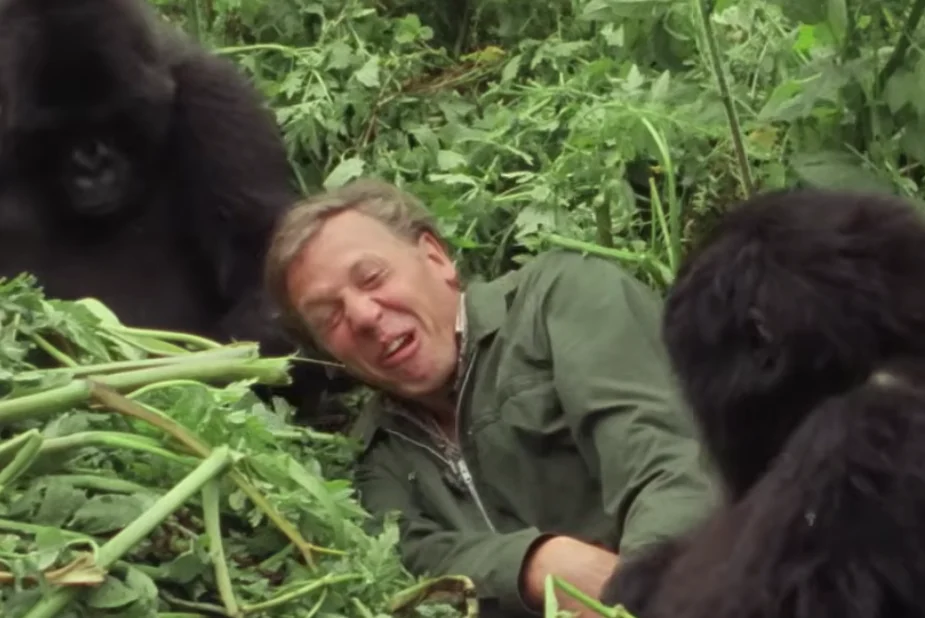
Among its many indelible moments, a particular clip from Life on Earth has been consistently voted one of the top television moments of all time: Attenborough’s serene interaction with a family of mountain gorillas in Rwanda. In a scene of breathtaking intimacy, a young gorilla gently lies across his body, while mischievous baby gorillas are seen just out of frame, playfully removing his shoes. This unscripted, genuine bond transcended mere observation, offering viewers a profound connection to these magnificent primates and challenging preconceived notions about their wild nature. The series was a global phenomenon, with more than 500 million people tuning in – an astonishing 11.4 percent of the global population at the time – cementing Attenborough’s status as a broadcasting legend.
Pioneering New Frontiers: The Living Planet and Technological Advancements

Building on the success of Life on Earth, Attenborough continued to push the boundaries of natural history filmmaking. His 1984 series, The Living Planet, focused on ecology and the adaptations of species to their environments. This series saw Attenborough become one of the first presenters to deliver commentary live underwater, observing grey reef sharks in their natural habitat. This was made possible by significant advancements in full-face diving masks, which allowed for clear vocal delivery and recording, transforming underwater sequences from silent visual spectacles into engaging, narrated experiences. The technical challenges were immense, requiring specialized equipment and highly skilled crews to capture both Attenborough and the marine life with unprecedented clarity.
The Living Planet also featured another astonishing feat: Attenborough presenting in zero gravity aboard a NASA experimental plane, affectionately nicknamed the "vomit comet." Bouncing and floating weightlessly, he described the often-overlooked phenomenon of gravity before humorously concluding his commentary completely upside down. This segment underscored Attenborough’s willingness to embrace scientific exploration and demonstrate complex principles in an accessible, engaging manner, further broadening the scope of what natural history television could achieve.
Understanding Complex Behaviors: Dolphins, Lyrebirds, and the Mammalian World
In 1990, Trials of Life delved deeper into animal behaviour, showcasing the struggles and strategies animals employ to survive and reproduce. Here, Attenborough once again donned his scuba gear, taking viewers swimming with dolphins. By strapping on specialized listening equipment, he provided unparalleled insights into the intricate body language and sophisticated vocalizations dolphins use to communicate, allowing audiences to "eavesdrop" on their underwater conversations and appreciate their complex social structures.
Eight years later, The Life of Birds (1998) brought viewers to south Australia, where Attenborough encountered the extraordinary lyrebird. Clutching his binoculars, he walked carefully towards the bird, marveling at its astonishing mimicry. The lyrebird’s repertoire included perfect imitations of camera shutters, car alarms, and even chainsaws – sounds it uses to outcompete rivals and attract a mate. Attenborough’s incredulous laughter at the bird repeatedly interrupting his takes with its incredible noises became another cherished moment, highlighting the pure joy and wonder he finds in the natural world. This segment not only entertained but also educated viewers on the fascinating evolutionary pressures that drive such elaborate courtship displays.
The Life of Mammals (2002) continued this tradition of intimate encounters and groundbreaking footage. One particularly heartwarming scene captured Attenborough’s sheer excitement as a massive blue whale surfaced near his small boat. The 30-metre whale, the largest animal known to have ever existed, dwarfed his vessel, providing a powerful visual representation of nature’s scale and grandeur. The series also featured Attenborough visiting a group of orphaned chimpanzees being taught essential survival skills for release into the wild. An enthusiastic chimp jumped straight into the water to greet his approaching boat, illustrating the animals’ capacity for connection. Later, he enjoyed a nut-cracking session with the dexterous mammals, showcasing their intelligence and adaptability. Another spectacular moment saw Attenborough trudging through knee-deep snow to come face-to-face with a Siberian tiger in captivity, providing a rare and close-up look at one of the planet’s most majestic predators.

Miniaturization, Extremes, and Enduring Dedication
Life in Cold Blood (2008) explored the world of amphibians and reptiles. A memorable sequence utilized slow motion to reveal the incredible diversity in size, shape, and ability of frogs and toads. Attenborough was filmed lying on the floor of a Madagascan rainforest, with a tiny pygmy frog resting on his fingertip, as he marveled at the "miracle of miniaturization." This intimate perspective underscored the hidden wonders of the microbial and miniature worlds often overlooked.
In 2011, Frozen Planet took viewers to the Earth’s polar regions, highlighting the beauty and fragility of these extreme environments. At the age of 84, Sir David ventured to the North Pole, becoming the oldest person to visit this remote and challenging location. His journey into high altitude and extreme cold was a testament to his unwavering dedication and physical endurance, and it powerfully underscored the urgent message about climate change impacting these vital ecosystems. The series vividly depicted the melting ice caps and the profound impact on polar wildlife, bringing the climate crisis into sharp focus for millions.
Personal Connections and the Power of Advocacy
David Attenborough’s Natural Curiosities (2014) saw him explore peculiar and often misunderstood aspects of the animal kingdom. In one episode, "Impossible Feats," Attenborough met and sat with Ares, a 13-year-old hand-reared cheetah. The calm, friendly interaction, which included the cheetah licking Attenborough, demonstrated the species’ specialized adaptations and highlighted the unique bonds that can form between humans and animals, albeit in a controlled environment. This interaction resonated deeply with viewers, showcasing Attenborough’s unparalleled ability to connect with wildlife on a personal level.
A Milestone Birthday and Modern Masterpieces

In 2016, Sir David celebrated his 90th birthday, a momentous occasion marked by the BBC’s "Attenborough At 90" documentary, where he sat down with journalist Kirsty Young to recount the highlights of his extraordinary life and career. This retrospective offered a rare glimpse into the man behind the voice, his motivations, and his enduring passion.
Later that year, Planet Earth II was released, captivating audiences with its stunning visuals and immersive storytelling. Leveraging advanced camera technology, including drones and remote-controlled cameras, the series provided unparalleled perspectives. Iconic scenes included rare snow leopard mating footage, lions attacking a giraffe in a desert, and, perhaps most famously, an intense, high-speed chase of a newborn marine iguana escaping a swarm of racer snakes on Fernandina Island. Hailed as one of the most tense sequences in wildlife television history, this scene showcased the brutal realities of survival in the natural world with cinematic flair. The series averaged 10.47 million viewers in the UK, making it the most-watched natural history programme in a decade, and garnered widespread critical acclaim for its breathtaking cinematography and gripping narratives.
The "Attenborough Effect" and Environmental Awakening
Sir David returned as presenter for Blue Planet II in 2017, a series that would have an even more profound impact. It became the most-watched UK television show of 2017, with a chart-topping 14 million tuning into its first episode. The series featured dramatic footage of walruses fighting for dwindling space, dazzling scenes of surfing dolphins, and the fascinating complexities of a sex-changing fish. However, beyond its visual spectacle, Blue Planet II is widely credited with triggering a significant increase in public, media, and political attention to plastic pollution. Attenborough’s powerful closing remarks, coupled with stark images of marine life suffering from plastic waste, sparked a global movement. This "Attenborough effect" led to increased public awareness, calls for policy changes, and tangible actions from individuals and corporations to reduce single-use plastics, demonstrating the immense power of his platform to drive environmental change.
The debut episode of Dynasties in November 2018, which focused on a chimpanzee family, became the most popular programme of the month. Narrated by Sir David, the series documented the struggles of various animal families, including baby penguins fighting to avoid an icy death. This particular segment sparked widespread debate when the BBC camera crew intervened to rescue the stricken birds, breaking a long-held stance in wildlife filming against direct involvement. The incident highlighted the ethical dilemmas faced by filmmakers witnessing nature’s harsh realities and fueled discussions about the role and responsibilities of documentarians.
A Cultural Icon and Enduring Legacy

In 2019, Sir David made a surprise appearance on Glastonbury’s iconic Pyramid Stage, introducing a four-minute trailer for the BBC’s new natural history series, Seven Worlds, One Planet, ahead of Kylie Minogue’s performance. His presence at such a major cultural event underscored his status as a national treasure. He also delivered a powerful speech to the enormous crowd, celebrating Glastonbury’s pioneering decision to ban single-use plastic bottles from the Somerset event that year, further amplifying his environmental message to a diverse audience.
His lifelong contributions have been met with numerous accolades. In 2022, Sir David was awarded one of Britain’s highest honours, the Knight Grand Cross of the Order of St Michael and St George, by the then Prince of Wales (now King Charles III), himself an avid environmentalist. This rare second knighthood recognized his exceptional and sustained service. That same year, he was named a Champion of the Earth by the UN Environment Programme (UNEP), the UN’s highest environmental honour, acknowledging his unwavering commitment to advocating for the protection of nature and the restoration of the planet. Additionally, he was appointed a member of the Order of the Companions of Honour in the New Year Honours list, recognizing his major contributions to science and broadcasting.
Sir David Attenborough’s unparalleled seven-decade career has not only brought the wonders of the natural world to billions but has also served as a clarion call for environmental action. His unique blend of scientific authority, genuine empathy, and captivating storytelling has educated and inspired generations. Through his lens and his voice, he has fostered a deeper understanding and appreciation for the planet’s biodiversity, leaving an indelible mark on both broadcasting history and the global conservation movement. His legacy continues to grow, reminding humanity of its profound connection to nature and the urgent responsibility to protect it for future generations.