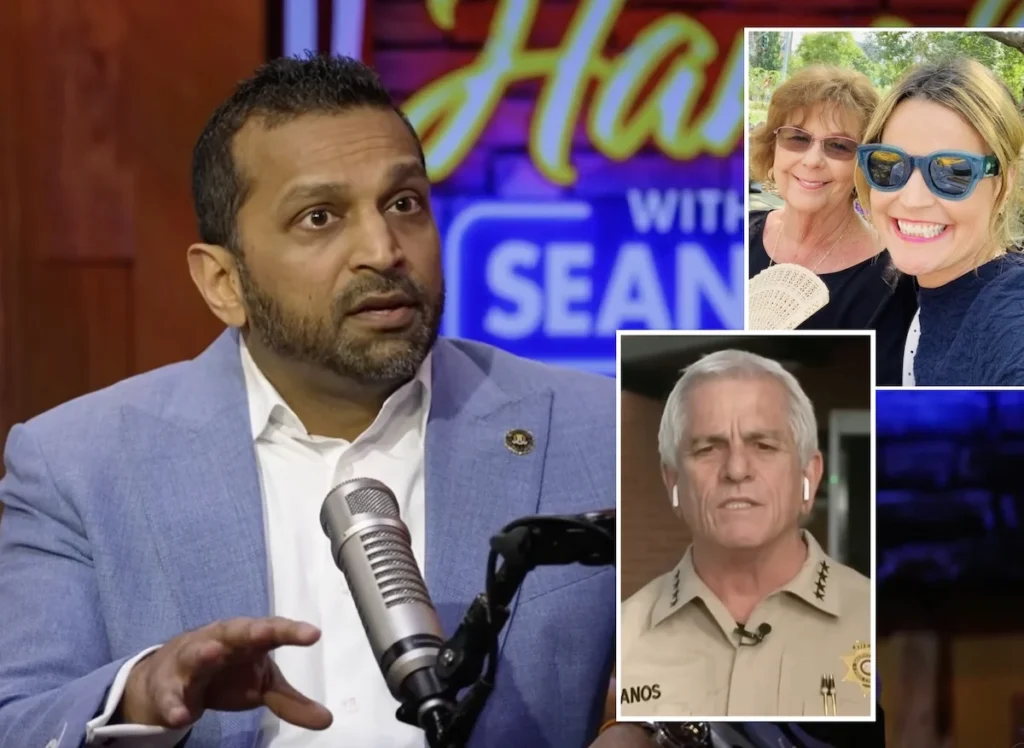

A deeply concerning development in the ongoing investigation into the disappearance of Nancy Guthrie, mother of Today journalist Savannah Guthrie, has escalated with FBI Director Kash Patel publicly accusing Arizona authorities of critically mishandling the initial stages of the case. Patel’s pointed remarks, delivered during an interview with journalist Sean Hannity, allege significant delays in federal involvement and questionable choices regarding forensic evidence, painting a picture of inter-agency friction that may have compromised the search for Ms. Guthrie. The unfolding narrative now intertwines a desperate search for a missing person with a high-stakes controversy over investigative protocols and jurisdictional cooperation.
The Disappearance of Nancy Guthrie: A Timeline of Concern
Nancy Guthrie, 76, vanished from her home in Tucson, Arizona, on February 1. The immediate alarm raised by her family, including her high-profile daughter, Savannah Guthrie, quickly brought national attention to the case. Initial reports suggested a possible abduction, a scenario reinforced by chilling doorbell camera footage that surfaced shortly after her disappearance, showing a masked individual lurking outside her property. This footage, crucial to the early stages of the investigation, immediately heightened the urgency and gravity of the situation.
In missing persons cases, particularly those suspected of involving abduction, the initial 24 to 48 hours are widely considered the "golden hours." During this critical window, the chances of locating a missing person significantly diminish if key investigative actions are not taken swiftly and effectively. Law enforcement agencies typically prioritize rapid evidence collection, witness interviews, establishing perimeters, and utilizing all available surveillance resources. Any delay in these crucial early stages can lead to the degradation or loss of vital forensic evidence, the erasure of surveillance footage, the dispersal of potential witnesses, and the increased difficulty in tracking a suspect or victim. Experts in forensic science and law enforcement universally stress that every minute counts in these scenarios, making the speed and coordination of the initial response paramount.
The Pima County Sheriff’s Department (PCSD) was the primary agency responsible for the initial investigation, given its local jurisdiction. As the days turned into weeks without Nancy Guthrie’s return, public concern grew, fueled by the unsettling nature of the known details and the lack of a breakthrough.
FBI’s Stance: Allegations of Critical Delays and Benchmarking
FBI Director Kash Patel’s recent statements have cast a stark light on the dynamics of the investigation, alleging that the Pima County Sheriff’s Department significantly hindered the FBI’s ability to contribute effectively during this critical early phase. Speaking with Sean Hannity, Patel explicitly stated that his federal team was "benched" and "blocked from assisting" the PCSD for a period of four days following Ms. Guthrie’s disappearance.
"When we were finally let in, Sean, look what we did," Patel remarked, implicitly taking credit for the FBI’s role in ultimately obtaining the aforementioned surveillance footage of the masked individual. This statement was interpreted as a not-so-subtle critique of the local authorities’ initial handling and a clear indication that, in Patel’s view, valuable time and investigative opportunities were lost. The implication is that if the FBI’s extensive resources and specialized expertise had been deployed from day one, additional critical evidence might have been uncovered, or the investigation might have progressed more rapidly.
The four-day delay, as alleged by Patel, is particularly concerning given the consensus among law enforcement professionals regarding the urgency of kidnapping investigations. During such a period, critical digital footprints can vanish, perishable evidence can be compromised, and the trail of a perpetrator can grow cold. The FBI possesses a unique array of resources, including advanced forensic capabilities, intelligence networks, and highly trained rapid-response teams, which are often vital in complex, high-stakes cases that may involve interstate or even international elements. Preventing such a powerful agency from engaging fully at the outset raises serious questions about inter-agency communication, protocols, and the overall strategy employed in the immediate aftermath of Ms. Guthrie’s disappearance.
Forensic Evidence and Jurisdictional Disagreements
Beyond the alleged delay in operational involvement, Patel also voiced concerns regarding the handling of potential DNA evidence. He criticized local authorities for opting to send crucial samples to a laboratory in Florida rather than utilizing the FBI’s renowned forensic facility in Quantico, Virginia. The FBI Laboratory in Quantico is globally recognized as one of the most advanced and comprehensive forensic science centers, offering unparalleled expertise in areas such as DNA analysis, trace evidence, ballistics, and digital forensics. It houses extensive databases, including the Combined DNA Index System (CODIS), which can rapidly compare DNA profiles from crime scenes against a vast repository of known offenders and other crime scenes nationwide. The facility is equipped with state-of-the-art technology and staffed by highly specialized scientists, making it a preferred choice for complex and high-priority investigations that demand rapid and definitive results.
While Patel acknowledged the Pima County Sheriff’s Department’s jurisdictional prerogative – stating, "It’s a state and local matter, so it’s their call where to send the DNA. They have jurisdiction, so it’s their call" – his comments carried an unmistakable tone of implied dissatisfaction. This diplomatic framing, often summarized as "not my circus, not my monkeys… but maybe it should have been," suggests that while local agencies have the right to make such decisions, the choice to forgo the FBI’s superior resources might have been suboptimal for the investigation’s efficiency and potential for breakthrough. The decision could affect the speed of analysis, the depth of forensic examination, or the immediate access to national databases that Quantico offers, all of which are critical factors in time-sensitive cases.
Reactions, Silence, and Public Scrutiny
Sean Hannity, a prominent media figure, used his platform to amplify Patel’s concerns, articulating a sentiment of frustration shared by many observers regarding the perceived slow progress and the unlikely outcome of the case thus far. His questioning reflected public anxieties about whether the investigation was being pursued with maximum efficiency and collaboration.
In the wake of these pointed criticisms, the Pima County Sheriff’s Department and its leader, Sheriff Chris Nanos, have maintained a public silence regarding Patel’s specific allegations. This lack of immediate public response from the local agency has left a vacuum of information, fueling speculation and raising additional questions among the public and media alike. In high-profile cases, transparency and clear communication from all involved agencies are crucial for maintaining public trust and ensuring that the investigative process is perceived as robust and unified.
The dynamics between federal and local law enforcement agencies can often be complex, marked by differing mandates, resource levels, and jurisdictional boundaries. While cooperation is generally the norm, disputes over lead agency status, resource allocation, or investigative methodologies can arise, particularly in high-stakes cases that attract significant public and media attention. Such inter-agency friction, when it spills into the public domain, can inadvertently distract from the primary objective of solving the crime and locating the missing person. It also risks eroding public confidence in the overall effectiveness of law enforcement, creating an impression of disunity rather than a coordinated effort.
Broader Implications: The Cost of Inter-Agency Discord
The allegations made by FBI Director Kash Patel highlight a critical issue in modern law enforcement: the absolute necessity of seamless inter-agency cooperation, especially in time-sensitive and high-stakes investigations like kidnappings. When federal and local agencies fail to collaborate effectively from the outset, the consequences can be profound and far-reaching.
Firstly, such discord can directly hinder the pursuit of justice. Precious time lost in jurisdictional squabbles or delays in information sharing can allow perpetrators to further cover their tracks, destroy evidence, or move victims, drastically reducing the chances of a successful recovery or apprehension. The "golden hours" concept underscores that initial delays are not merely inconvenient; they can be determinative.
Secondly, public confidence in law enforcement can suffer significantly. When the public perceives that agencies tasked with their protection are at odds with each other, it can undermine trust and create skepticism about their ability to effectively resolve complex criminal cases. This erosion of trust can have long-term implications for community cooperation, which is often vital for generating tips and witness testimony.
Furthermore, these incidents serve as stark reminders of the need for clear, pre-established protocols for multi-jurisdictional investigations. While local agencies maintain primary jurisdiction over crimes committed within their boundaries, federal agencies like the FBI possess unique resources, expertise, and national reach that are often indispensable, especially when cases involve interstate elements, sophisticated criminal networks, or specific forensic challenges. The "not my circus, not my monkeys" attitude, even if expressed diplomatically, points to a fundamental challenge in ensuring that the best available resources are brought to bear on a case, regardless of which agency holds primary jurisdiction. Effective collaboration requires mutual respect, clear lines of communication, and a shared commitment to the ultimate goal of solving the crime, transcending institutional rivalries or procedural disagreements.
The Ongoing Search and Appeal for Information
As of now, Nancy Guthrie remains missing, and the circumstances of her disappearance continue to be investigated. The complexities introduced by these public allegations of mishandling have added another layer to an already perplexing case. The family of Nancy Guthrie, spearheaded by Savannah Guthrie, has demonstrated their unwavering commitment to her recovery by offering a substantial reward of up to $1 million for information leading to her safe return. This reward is consistent with the FBI’s criteria for such payments, underscoring the severity and urgency of the situation.
Authorities continue to urge anyone with any information or tips related to Nancy Guthrie’s disappearance to come forward. The FBI can be contacted at 1-800-CALL-FBI or through their online tip portal at tips.fbi.gov. Additionally, the Pima County Sheriff’s office is accepting tips via 520-351-4900 or through their dedicated online portal. The hope remains that despite the challenges and the emerging inter-agency controversy, renewed public attention and continued investigative efforts will ultimately lead to Nancy Guthrie’s recovery and bring clarity to this unsettling case. The resolution of this mystery is not just about finding a missing person; it is also about affirming the integrity and collaborative spirit essential to effective law enforcement.