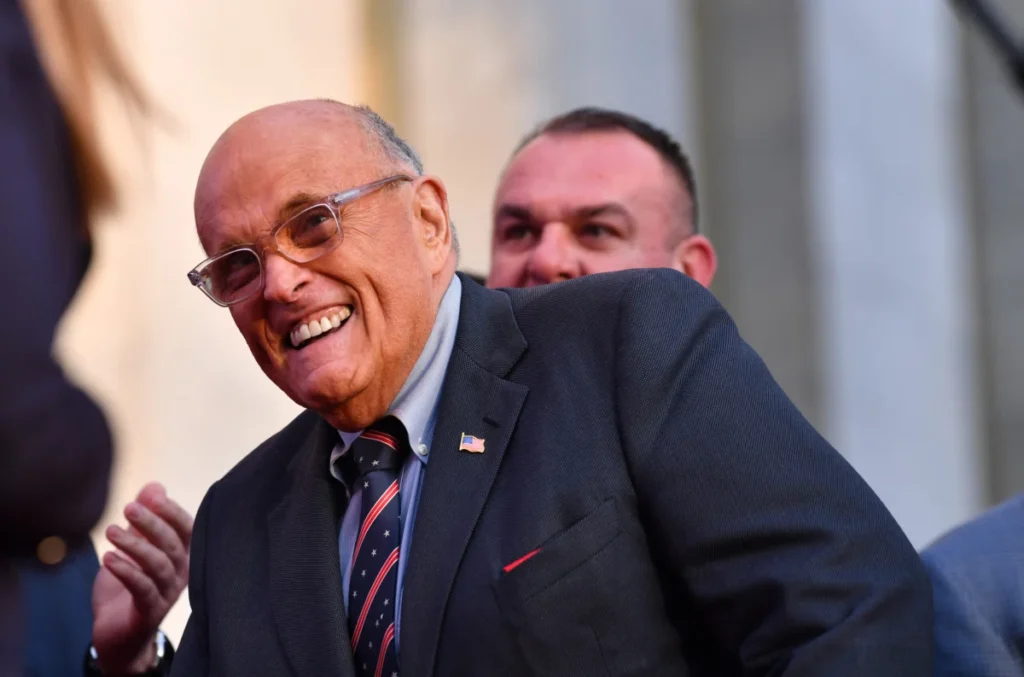

Rudy Giuliani, the former Mayor of New York City and a central figure in the legal efforts to challenge the 2020 presidential election, has been hospitalized in Florida after contracting what medical representatives describe as an "overwhelming" case of pneumonia. The 81-year-old former federal prosecutor is currently being treated at a medical facility where his condition has been categorized as critical but stable. This latest health crisis follows a series of physical setbacks for the man once hailed as "America’s Mayor," marking a precarious moment for a public figure whose life has been defined by high-stakes litigation, political ascension, and, more recently, significant legal and financial turmoil.
According to Ted Goodman, a spokesman for Giuliani, the former mayor is currently breathing on his own and is being closely monitored by his family and his primary medical provider. Goodman emphasized that while the condition is serious, the medical team is working to stabilize his recovery. The news of Giuliani’s hospitalization first gained widespread attention after former President Donald Trump posted on the social media platform Truth Social, informing his followers that Giuliani was in "critical condition" and calling for prayers. The hospitalization comes at a time when Giuliani’s physical health appears to have been in a state of decline, exacerbated by a serious motor vehicle accident and the immense stress of ongoing civil and criminal legal proceedings.
A Succession of Health Challenges
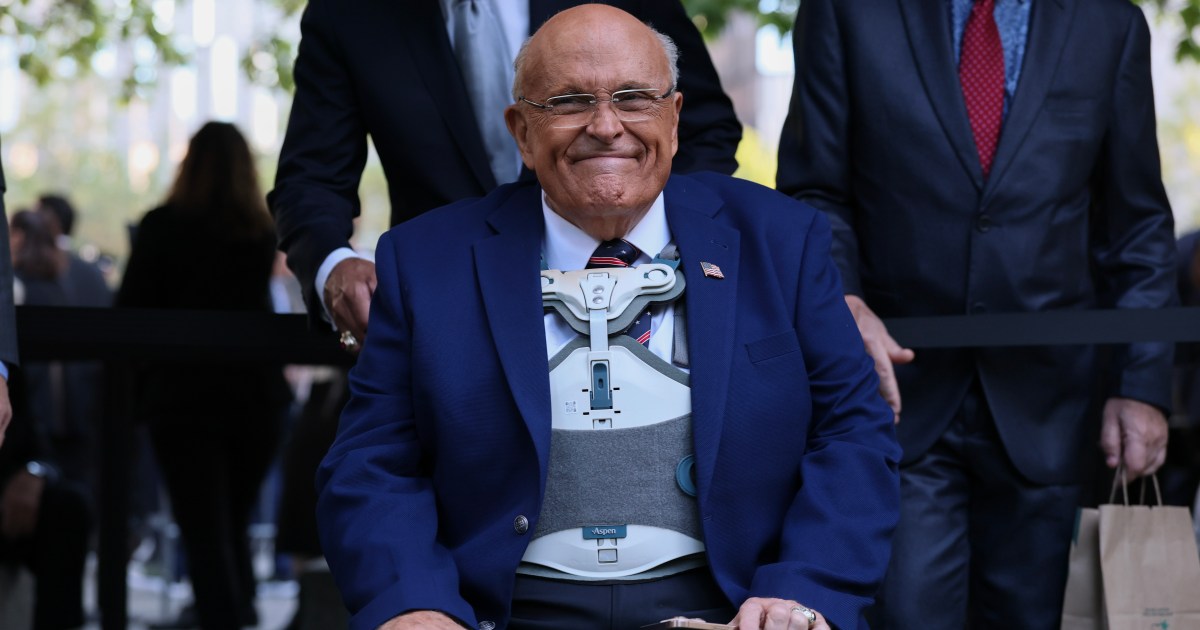
The onset of pneumonia is the most recent in a string of medical emergencies for Giuliani. In September, he was involved in a significant car accident that resulted in a range of injuries, including cuts, bruises, and fractured vertebrae. For an individual in his eighth decade, a spinal fracture represents a severe physical trauma that often requires a lengthy and grueling rehabilitation process. Medical experts note that such injuries can significantly weaken the immune system and decrease mobility, making elderly patients more susceptible to secondary infections such as pneumonia.
Pneumonia remains a leading cause of hospitalization and mortality among adults over the age of 65. According to data from the Centers for Disease Control and Prevention (CDC), older adults are at a significantly higher risk for complications from respiratory infections due to age-related changes in lung tissue and a natural decline in immune function. When combined with the physical exhaustion from a recent major accident, the "overwhelming" nature of the infection described by sources close to Giuliani suggests a high-level medical intervention was necessary to prevent respiratory failure.
This is not the first time Giuliani’s health has intersected with his political career. In 2000, while serving as Mayor of New York City, Giuliani was the presumptive Republican nominee for a seat in the United States Senate, where he was expected to face off against then-First Lady Hillary Clinton. However, he was forced to withdraw from the race following a diagnosis of prostate cancer. He subsequently underwent treatment and remained in office to lead the city through the events of September 11, 2001, but the diagnosis marked the first major instance where his physical well-being altered the trajectory of his political ambitions.
The Evolution of a Political Legacy
To understand the weight of the current news regarding Giuliani’s health, one must examine the arc of his career, which spans more than four decades of American public life. Giuliani first rose to national prominence in the 1980s as the U.S. Attorney for the Southern District of New York. During this tenure, he became famous for his aggressive use of the Racketeer Influenced and Corrupt Organizations (RICO) Act to dismantle the leadership of the American Mafia in the historic Commission Trial. His reputation as a "tough-on-crime" prosecutor served as the springboard for his successful 1993 mayoral campaign.
As the 107th Mayor of New York City, serving from 1994 to 2001, Giuliani was credited with a dramatic reduction in the city’s crime rates. Implementing "broken windows" policing—a theory suggesting that addressing minor crimes creates an atmosphere of order that prevents more serious offenses—Giuliani oversaw a transformation of the city’s image. While this approach was later criticized by civil rights advocates for its impact on minority communities, it was widely popular at the time and contributed to his image as a decisive leader.
The defining moment of his mayoralty came during the September 11 terrorist attacks. Giuliani’s presence at Ground Zero and his composed communication in the aftermath of the collapse of the Twin Towers earned him the moniker "America’s Mayor." He was named Time Magazine’s Person of the Year in 2001 and received an honorary knighthood from Queen Elizabeth II. At that peak, he was arguably one of the most respected political figures in the world.
Transition to the Trump Era and Legal Reversals
The latter half of Giuliani’s career has been marked by a sharp departure from the broad bipartisan approval he once enjoyed. After an unsuccessful bid for the Republican presidential nomination in 2008, Giuliani transitioned into the private sector before re-emerging as a staunch ally of Donald Trump during the 2016 campaign. Following Trump’s victory, Giuliani served as an informal advisor and later as the president’s personal attorney.
It was in this role that Giuliani became the face of the legal challenges to the 2020 presidential election results. He traveled across the country, appearing in courtrooms and at press conferences to promote claims of widespread voter fraud—claims that were repeatedly rejected by state and federal courts, including the Supreme Court. These activities eventually led to severe professional consequences.
In 2024, Giuliani was officially disbarred in the state of New York. The New York Supreme Court’s Appellate Division ruled that he had made "demonstrably false and misleading statements" to courts and the public. A similar disbarment followed in Washington, D.C. These legal rebukes were accompanied by staggering financial liabilities. In December 2023, a federal jury ordered Giuliani to pay $148 million in damages to two Georgia election workers, Ruby Freeman and Shaye Moss, whom he had falsely accused of manipulating ballots. The financial pressure of these judgments led Giuliani to file for Chapter 11 bankruptcy, though the filing was later dismissed by a judge who cited Giuliani’s failure to provide a transparent accounting of his finances.
Analysis of Current Implications
The hospitalization of Rudy Giuliani occurs at a critical juncture in his various ongoing legal battles. He remains a defendant in a high-profile racketeering case in Georgia related to efforts to overturn the 2020 election results, and he faces a criminal indictment in Arizona on similar grounds. Legal analysts suggest that a prolonged medical incapacity could lead to delays in these proceedings, as defendants must be physically and mentally capable of participating in their own defense.
Furthermore, the physical toll of these legal battles cannot be discounted. Giuliani has spent much of the last three years in and out of depositions, court hearings, and media appearances, often while facing intense public scrutiny and the threat of total financial ruin. For an 81-year-old, the combination of chronic stress and the physical recovery from a car accident creates a "perfect storm" for medical vulnerability.
The reaction to his illness has been polarized, reflecting the current state of American political discourse. While supporters like Donald Trump have called for national prayers and focused on his past service to the country, critics often point to his recent actions as a cautionary tale of a legacy tarnished by political zealotry. Regardless of one’s perspective on his recent career, his current medical status represents a significant moment for New York and national history, as one of its most recognizable figures fights a life-threatening illness.
Official Responses and Future Outlook
As of the latest reports, Giuliani remains under intensive care. His spokesman, Ted Goodman, has continued to provide updates, emphasizing that the former mayor is a "fighter." Goodman stated, "The Mayor is receiving the best possible care, and he is surrounded by the people who love him. We ask for privacy and continued prayers during this difficult time."
The medical team in Florida has not released a specific timeline for his recovery. Pneumonia recovery in the elderly is often non-linear; patients may show signs of improvement before facing setbacks. The primary goal for his doctors currently is to ensure his oxygen levels remain stable without the need for mechanical ventilation and to clear the infection using aggressive antibiotic or antiviral treatments, depending on the specific strain of the illness.
In the broader context, Giuliani’s health crisis serves as a reminder of the aging leadership within the American political landscape. As figures who dominated the 1990s and 2000s enter their eighties, the intersection of their personal health and their public or legal obligations becomes an increasingly frequent topic of national conversation. For Rudy Giuliani, the path forward remains uncertain, both in terms of his physical recovery and the resolution of the legal challenges that have come to define his later years. The world now waits to see if the man who once steered a city through its darkest hour can navigate his own personal health crisis.