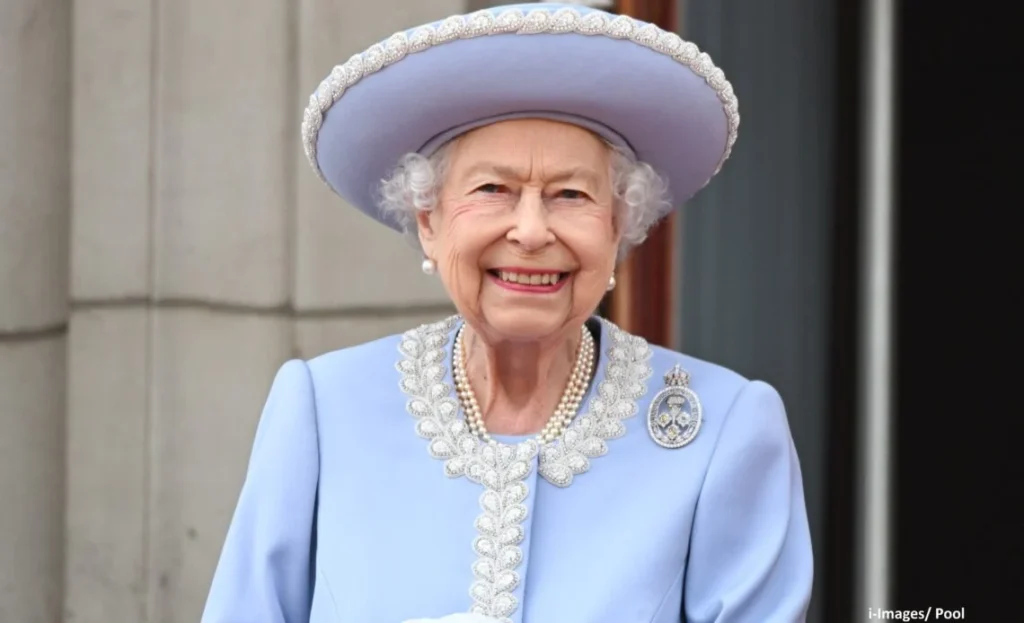

As the centenary of Queen Elizabeth II’s birth approaches, Britain and the Commonwealth find themselves contemplating a profound question that transcends mere historical record: how will the late sovereign ultimately be remembered? While her 70-year reign, the longest in British history, undeniably cemented her place as a figure of immense historical significance, the debate is intensifying over whether her legacy warrants the ultimate historical distinction: "Elizabeth the Great." This epithet, reserved for monarchs whose impact fundamentally reshaped their era, is a rare honour, with Alfred the Great standing as its sole widely recognised recipient in English history. The question, therefore, is not just about her longevity, but about the nature of greatness itself, and whether the demands placed upon a modern constitutional monarch align with the criteria that have historically defined such monumental figures.
The title "the Great" is not a formal accolade bestowed by decree; rather, it emerges organically from the annals of popular memory, the narratives of chroniclers, and the considered analyses of historians over time. It is a testament to a reign that left an indelible mark, often characterized by significant achievements in state-building, military prowess, or profound societal transformation. Alfred the Great, for instance, is lauded for his successful defence against Viking invasions, a feat that preserved the Anglo-Saxon kingdoms and laid crucial groundwork for a more unified England. His greatness is intrinsically linked to his role as a defender and unifier in a period of existential threat.
Other monarchs have earned their enduring labels through defining events or characteristics. William I is eternally known as "the Conqueror" for his pivotal victory at the Battle of Hastings in 1066, an event that irrevocably altered the course of English history, language, and governance. Richard I, dubbed "the Lionheart," earned his moniker through his reputation as a formidable warrior and his extensive involvement in the Crusades, embodying the martial ideals of his time. These titles, therefore, are deeply embedded in the specific historical contexts in which these monarchs reigned, reflecting the challenges and prevailing values of their eras.
The modern era, however, presents a fundamentally different landscape for monarchy. The 20th and 21st centuries have witnessed a shift in the perception and function of constitutional monarchies. The emphasis has moved from overt conquest and state-building to a more nuanced role defined by restraint, political neutrality, continuity, and the embodiment of national stability during periods of flux. In this context, the criteria for "greatness" are necessarily redefined, demanding a mastery of subtle influence, symbolic representation, and unwavering dedication to public duty rather than battlefield victories or territorial expansion.
Supporters of the "Elizabeth the Great" appellation argue that Queen Elizabeth II demonstrably met these evolving standards of greatness. Her ascension to the throne in 1952, at the tender age of 25, placed her at the helm of a nation and an empire undergoing seismic shifts. She navigated the complex decolonization process, the ideological chasm of the Cold War, significant constitutional reforms, and the ever-changing expectations of a populace increasingly engaged by mass media. Her reign spanned the tenure of fifteen British Prime Ministers, from the elder statesman Winston Churchill, who had led Britain through World War II, to Liz Truss, a leader of a new generation grappling with unprecedented economic challenges. Throughout these diverse political landscapes, Queen Elizabeth II maintained a steadfast commitment to the strict impartiality demanded of the Crown, a feat of considerable political astuteness and personal discipline.
Her Christmas broadcasts, a tradition deeply ingrained in the fabric of British national life, became a consistent source of reassurance and continuity for millions. These annual addresses, often imbued with a spirit of wartime generation stoicism that resonated deeply with many, provided a sense of unwavering presence during periods of national anxiety, from economic recessions and the threat of terrorism to the unprecedented global crisis of the Covid-19 pandemic. In an era characterized by rapid change and uncertainty, her visible and consistent sense of duty offered a vital anchor, a symbol of enduring national identity.
A Timeline of Transformation Under Elizabeth II
Queen Elizabeth II’s reign, commencing on February 6, 1952, was a period of unparalleled societal and global transformation:
- 1950s: Post-war reconstruction, the decline of the British Empire accelerates, the coronation of Queen Elizabeth II in 1953 marks a new era.
- 1960s: Social revolution, the rise of youth culture, significant constitutional reform in former colonies, the advent of widespread television.
- 1970s: Economic challenges, the UK joins the European Economic Community (EEC), periods of industrial unrest.
- 1980s: The Falklands War, the rise of Thatcherism, the continued evolution of the Commonwealth.
- 1990s: The end of the Cold War, increasing globalization, the "annus horribilis" of 1992, and the death of Diana, Princess of Wales in 1997.
- 2000s: The 9/11 attacks and their global repercussions, the UK’s involvement in conflicts in Afghanistan and Iraq, the Silver Jubilee in 2002.
- 2010s: The Diamond Jubilee in 2012, the Scottish independence referendum, the Brexit vote and subsequent negotiations, the global pandemic.
- 2020s: The Covid-19 pandemic, ongoing geopolitical instability, and the passing of Queen Elizabeth II in September 2022.
This extensive chronology underscores the sheer breadth of historical events and societal shifts that the Queen witnessed and navigated from her unique vantage point. Her ability to adapt and remain a constant presence through such a dynamic period is a testament to her remarkable tenure.
The Shifting Sands of Royal Relevance: Data and Analysis
Examining the data surrounding Queen Elizabeth II’s reign provides further context for the debate on her historical significance. Her 70 years and 214 days on the throne surpassed Queen Victoria’s reign by over seven years, making her the longest-reigning monarch in British history and the second-longest verifiable reign of any sovereign monarch of a sovereign country. This longevity alone positions her as a unique figure, offering a consistent point of reference for generations of Britons.
Moreover, her engagement with the evolving media landscape is a crucial aspect of her modern reign. While early monarchs relied on pronouncements and public appearances, Queen Elizabeth II embraced new technologies. Her first televised Christmas broadcast was in 1957, a groundbreaking moment that demonstrated her willingness to adapt to new forms of communication. By the time of her Golden Jubilee in 2002, she was engaging with the public through various media channels, including the internet. This proactive approach to communication, while always maintaining a degree of formality and distance appropriate to her role, helped the monarchy remain relevant in an increasingly accessible and interconnected world.
Her constitutional role, while largely ceremonial, involves weekly audiences with the Prime Minister. Over her reign, she met with 15 Prime Ministers, providing continuity and counsel, albeit discreetly, through periods of intense political change. This consistent, behind-the-scenes engagement, while not publicly lauded in the same way as a battlefield victory, represents a significant contribution to the stability of the British political system. The sheer volume of official documents signed, engagements attended, and public appearances made during her reign speaks to an extraordinary level of dedication and public service.
Criticism and Counterarguments: Defining "Greatness" in a Constitutional Age
However, the designation of "the Great" is not without its detractors. Critics often argue that true greatness should be reserved for rulers who effect fundamental, transformative change upon the state itself. In their view, a constitutional monarch, by definition, operates within significant constraints, their personal influence necessarily limited in a system where elected officials hold ultimate political power. They contend that the modern monarchy, while symbolic, is not a direct engine of societal or political upheaval in the way that medieval or early modern monarchs might have been.
Furthermore, some argue that the very nature of constitutional monarchy, with its emphasis on neutrality and tradition, inherently limits the scope for the kind of radical, transformative actions that might earn a monarch the epithet "the Great." Unlike monarchs of earlier eras who wielded more direct political and military power, the 20th and 21st-century sovereign’s influence is subtle and largely symbolic. This perspective suggests that while Queen Elizabeth II may have excelled in her role, the constraints of her position might preclude her from achieving the same historical resonance as figures like Alfred the Great, whose actions directly shaped the very foundations of the nation.
Yet, even among sceptics, there is a widespread acknowledgment of the Queen’s exceptional skill in mastering the central challenge of modern monarchy: maintaining relevance without becoming overtly political, embodying symbolism without appearing distant, and upholding tradition without seeming anachronistic or immovable. This delicate balancing act, sustained over seven decades, is itself a remarkable achievement. Her ability to remain a unifying figure in an increasingly diverse and often polarized society, while navigating the profound social and technological shifts of the late 20th and early 21st centuries, is a testament to her enduring appeal and the effectiveness of her reign.
The Verdict of History: A Legacy of Benchmark Setting
The ultimate judgment of history regarding whether Queen Elizabeth II will be known as "Elizabeth the Great" is a question that will likely take decades, if not centuries, to fully answer. Such historical designations are rarely immediate, often requiring the perspective of subsequent generations to properly contextualize a monarch’s impact.
However, on the occasion of her centenary, one conclusion appears increasingly secure: Queen Elizabeth II has unequivocally set the benchmark by which all future British monarchs will be measured. Her unparalleled longevity, her unwavering commitment to duty, her adept navigation of an ever-changing world, and her ability to embody national continuity have established a standard of performance that will undoubtedly influence the expectations placed upon her successors. Whether history bestows upon her the ultimate title of "the Great" remains to be seen, but her reign has undeniably etched her name indelibly into the annals of British and world history as a sovereign who defined an era and exemplified a profound and enduring sense of service. Her legacy is not merely one of time served, but of a consistent and dignified performance of duty that has left an indelible mark on the institution of monarchy and the nation it serves.