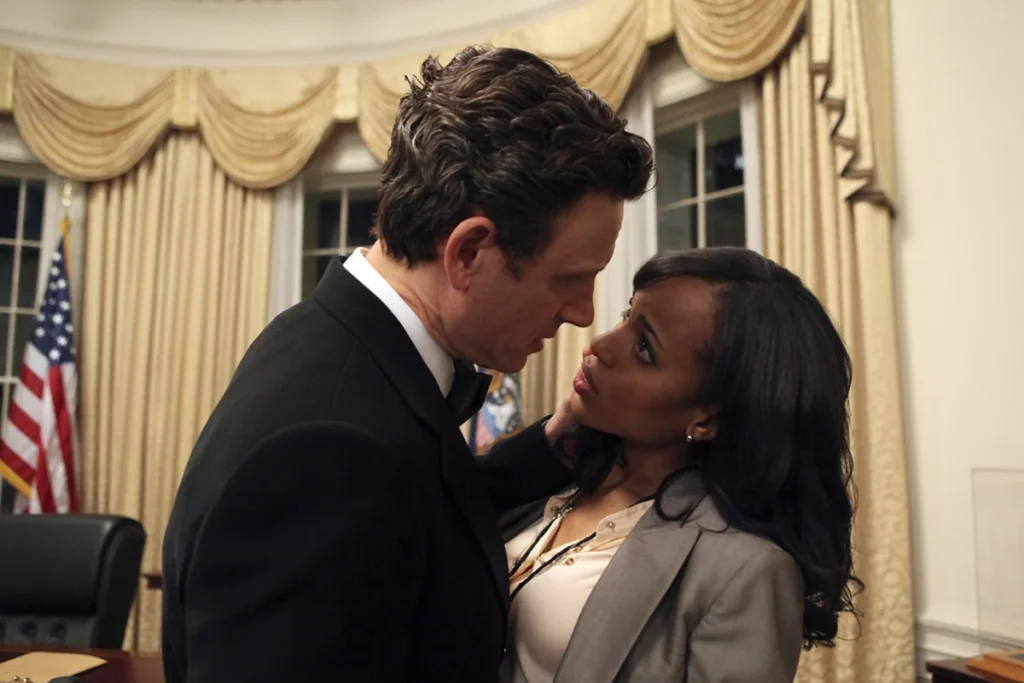

Eight years have passed since the dramatic conclusion of the ABC political thriller Scandal aired its final episode, yet the fervor surrounding the tempestuous relationship between Olivia Pope, portrayed by Kerry Washington, and President Fitzgerald "Fitz" Grant III, brought to life by Tony Goldwyn, remains palpable among its dedicated fanbase. The enduring passion for this central romance has been consistently nurtured by Washington and Goldwyn themselves, who have frequently delighted fans with candid social media updates and heartwarming glimpses of their real-life camaraderie, often featuring nostalgic nods to their iconic on-screen partnership.
While Washington has consistently expressed her appreciation for the unwavering support and affection from the Scandal audience, she recently shared a nuanced perspective with Swooon, revealing a sense of satisfaction in witnessing the fan base’s evolving understanding of the deeply problematic and inherently toxic nature of Olivia and Fitz’s entanglement. This evolving perception marks a significant shift from the initial fervent romanticization that characterized much of the show’s initial reception, underscoring the lasting impact of the series and its complex character dynamics on cultural discourse surrounding relationships and power.
The Unraveling of a "Scandalous" Romance: From Forbidden Love to Toxic Dependency
Scandal, which premiered on ABC in April 2012, quickly ascended to become a cultural phenomenon. The series, created by Shonda Rhimes, revolved around Olivia Pope, a formidable crisis management expert, and her team of "gladiators in suits" at Olivia Pope & Associates. The narrative was deeply interwoven with Olivia’s clandestine and passionate affair with President Fitzwilliam Grant III, a married politician. This central relationship was a defining element of the show, characterized by its intense chemistry, illicit nature, and the constant ethical compromises it demanded from both protagonists.
The early seasons of Scandal saw the audience captivated by the forbidden nature of Olivia and Fitz’s love. The stolen moments, the grand gestures, and the palpable tension between Washington and Goldwyn fueled a passionate following that often rooted for their union, despite the evident obstacles and the moral quandaries it presented. The "Olitz" fandom, as they became known, was a significant force in the show’s online presence, engaging in fervent debates and celebrations of every shared scene.
However, as the series progressed, Rhimes masterfully peeled back the layers of this seemingly epic romance, exposing its destructive undercurrents. The constant lies, the manipulation, the emotional devastation wrought upon Fitz’s wife, Mellie Grant (Bellamy Young), and the compromising of Olivia’s professional integrity all contributed to a narrative that increasingly highlighted the toxicity of their bond. The show deliberately pushed the boundaries of acceptable behavior for its central couple, forcing viewers to confront the ethical implications of their actions.
Kerry Washington’s Evolving Perspective: Embracing the Complexity of Olivia and Fitz
Kerry Washington’s recent statement to Swooon indicates a maturity in her own reflection on the character she embodied for seven seasons. Her gratitude for the fans’ continued engagement is evident, but her particular satisfaction stems from the audience’s growing recognition of the unhealthy dynamics at play within Olivia and Fitz’s relationship. This suggests that Washington, like many of the show’s creators and observers, has come to view the romance not as a fairytale, but as a cautionary tale.
"I’m actually happier to see fans’ realization of how toxic Olivia and Fitz’s relationship really was," Washington stated, as reported by Swooon. This sentiment is significant. It implies a departure from the initial romanticization that many viewers, and perhaps even the actors themselves in the early stages, might have felt. It speaks to the power of storytelling to evolve and to challenge audience perceptions over time.
The show’s narrative arc deliberately moved away from portraying the "Olitz" relationship as an aspirational ideal. Instead, it became a symbol of self-destruction, a source of immense pain, and a constant impediment to the personal and professional growth of both characters. Fitz’s repeated inability to leave his wife for Olivia, and Olivia’s repeated compromises of her own principles for Fitz, painted a picture of codependency and emotional manipulation rather than genuine, healthy love.
Supporting Data: The Evolution of Fan Discourse and Critical Analysis
The shift in fan perception can be observed through various avenues, including online forums, social media discussions, and critical analyses of the series. While the "Olitz" ship may still have its staunch defenders, there has been a noticeable increase in discussions acknowledging the detrimental impact of their relationship on Olivia’s character development and her professional life.
- Academic and Media Analysis: Numerous academic papers and media retrospectives on Scandal have delved into the complexities of the Olivia-Fitz relationship, often framing it within theoretical frameworks of abusive relationships, power dynamics, and the portrayal of female agency in television. These analyses, published years after the show’s initial run, often highlight the problematic aspects that may have been overlooked or romanticized by viewers in real-time.
- Fan Community Evolution: While dedicated fan communities often remain loyal to their initial interpretations, the broader online discourse surrounding Scandal has evolved. Newer fans discovering the show, or long-time fans re-watching with a critical eye, are more likely to engage with discussions that dissect the unhealthy aspects of the "Olitz" dynamic. The prevalence of terms like "toxic," "codependent," and "unhealthy" in fan discussions is indicative of this evolving understanding.
- Retrospective Interviews: Similar to Washington’s current reflection, other cast members and creators have also spoken about the problematic nature of the central romance in retrospective interviews, further contributing to a more nuanced public understanding.
Timeline and Chronology of the Olivia-Fitz Relationship: A Decade of Turmoil
The on-screen journey of Olivia Pope and Fitzwilliam Grant III spanned the entirety of Scandal‘s seven-season run, from 2012 to 2018, with their relationship’s roots extending back even further.
- Pre-Show: It is revealed that Olivia and Fitz had a prior affair before his election as President, a secret that sets the stage for their tumultuous on-again, off-again relationship.
- Season 1: The affair reignites shortly after Fitz’s inauguration. Olivia operates as his "mistress" and confidante, navigating the immense political and personal ramifications.
- Season 2: The relationship intensifies, with Fitz making a public declaration of his feelings. However, he remains married to Mellie, creating a constant state of emotional turmoil and ethical compromise for Olivia.
- Season 3: Fitz is shot, leading to a period of intense vulnerability and a brief period where he seemingly prioritizes Olivia. However, the pressures of the presidency and his marriage ultimately pull him back. Olivia, heartbroken and disillusioned, attempts to distance herself.
- Season 4: Fitz and Olivia are physically separated for much of this season, though their emotional connection remains. Fitz’s presidency faces numerous crises, often exacerbated by his personal entanglements.
- Season 5: Fitz and Olivia finally begin a public relationship, albeit one fraught with political scandal and personal sacrifice. Mellie, his wife, becomes a powerful political force in her own right, fueled by the betrayal. The relationship ultimately implodes due to the immense pressure and the irreparable damage it has caused.
- Season 6 & 7: While the romantic entanglement with Fitz largely recedes, the consequences of their past actions continue to reverberate throughout Olivia’s life and career. Her focus shifts towards protecting her legacy and her father, Rowan Pope (Joe Morton), but the ghost of her relationship with Fitz remains a significant part of her character’s history. The series finale offers a sense of closure, but not necessarily a happy ending for the "Olitz" narrative.
Broader Impact and Implications: Redefining "Scandal" and Toxic Relationships in Media
Kerry Washington’s expressed satisfaction with the audience’s evolving understanding of Olivia and Fitz’s relationship has broader implications for how television portrays complex and often destructive romantic dynamics.
- Challenging Romantic Tropes: Scandal‘s sustained portrayal of a deeply flawed and damaging relationship, and the subsequent audience realization of its toxicity, challenges traditional romantic tropes that often glorify problematic partners. It suggests a growing viewer appetite for more nuanced and realistic depictions of love, relationships, and their inherent complexities.
- Empowerment of Female Characters: By highlighting the detrimental impact of the "Olitz" relationship on Olivia’s life, the show, and Washington’s current reflection, implicitly validates the importance of self-worth and healthy boundaries for female characters. It moves beyond the trope of a woman sacrificing everything for love and instead emphasizes the need for personal agency and well-being.
- The Power of Long-Form Storytelling: The enduring nature of fan engagement, coupled with the evolving interpretations of the narrative, demonstrates the power of long-form storytelling to foster ongoing dialogue and critical reflection. Scandal‘s legacy is not just in its dramatic plotlines but in its ability to spark conversations about morality, power, and the nature of human relationships long after the final credits rolled.
Washington’s sentiment underscores a maturing critical lens applied not only by critics but also by the audience itself. The shift from romanticizing a destructive affair to acknowledging its toxicity is a testament to the show’s impact and the evolving cultural conversation around healthy relationships, particularly within the context of compelling, albeit flawed, on-screen characters. The continued investment of fans, even years later, is a testament to Scandal‘s enduring power to provoke thought and inspire discussion, cementing its place as a significant piece of television history.