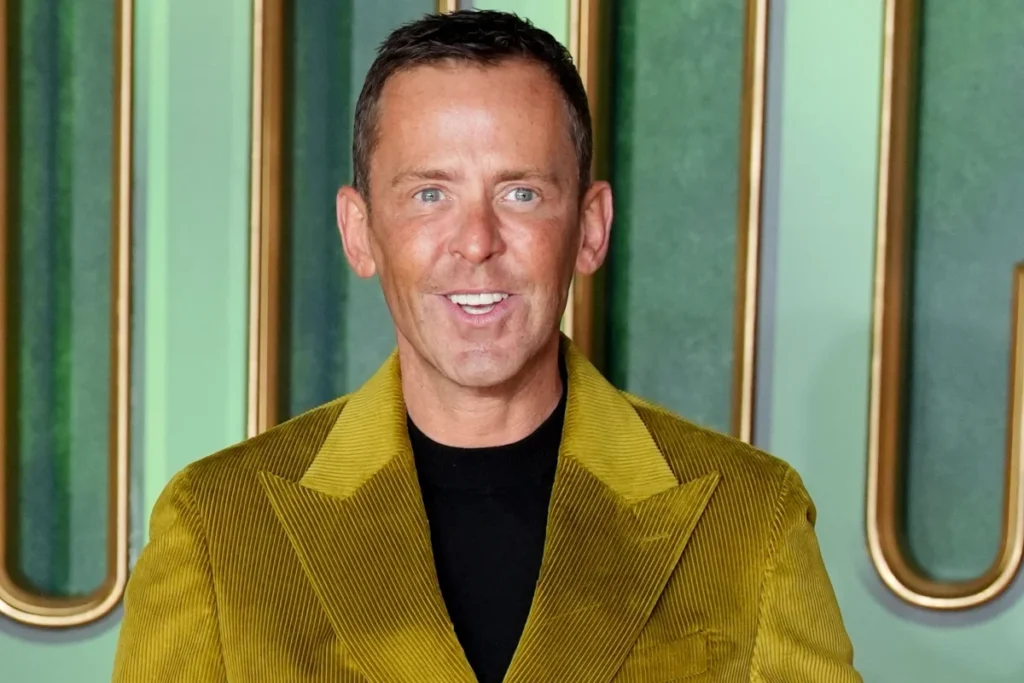

The British Broadcasting Corporation (BBC) has reportedly commenced a systematic removal of content featuring Scott Mills from its extensive archives and scheduled programming, a move that follows the presenter’s recent dismissal from his role at Radio 2. This action includes the notable absence of his Top of the Pops episodes from current schedules, signaling a comprehensive distancing from the former radio stalwart in the wake of revelations surrounding a police investigation into historical allegations of serious sexual offences.
The BBC confirmed that it had been aware since 2017 of an ongoing police investigation concerning one of its prominent stars. However, the corporation stated it “acted decisively” to terminate Mills’ employment after receiving “new information” in recent weeks. This recent development has triggered a cascade of consequences, extending beyond the immediate termination of his employment and into the public record of his career and associated honours.
Archival Purge: Top of the Pops and iPlayer Content Vanish
Among the most visible signs of this institutional dissociation is the reported removal of Top of the Pops episodes from August 1999 that were presented by Mills. Viewers of BBC Four, which regularly re-broadcasts classic episodes of the iconic music show, were quick to note the sudden omission. Social media platforms, particularly X (formerly Twitter), became a forum for viewers to highlight the discontinuity. One user observed, "BBC Four are skipping the 6, 13 and 20 August editions of #TOTP, as they’re the final three presented by Scott Mills…" Another user echoed this sentiment, stating, "Have they had to skip weeks of Top of the Pops 1999 because of Scott Mills? A jump from 2 August 1999 to 23 August 1999!"
The decision to skip these episodes is significant given the BBC’s meticulous efforts to preserve and re-air Top of the Pops, a show that holds a unique place in British cultural history. For decades, Top of the Pops served as the definitive chart show, showcasing the biggest musical acts and becoming a cultural touchstone for generations. The deliberate omission of specific episodes, especially those from a relatively recent era, underscores the BBC’s commitment to swiftly severing ties and mitigating potential reputational risks associated with Mills.
Beyond the Top of the Pops archive, other content featuring Mills has also been quietly removed from BBC iPlayer, the broadcaster’s popular on-demand service. This includes various appearances and programmes that were previously available for streaming. Furthermore, Mills has been replaced on the spin-off series for Race Across The World, with former contestant Tyler West stepping into the role. These actions collectively demonstrate a clear directive from the BBC to minimise the presence of Scott Mills across its platforms, reflecting the gravity of the "new information" that prompted his dismissal.
A Timeline of Allegations and Institutional Response
The backdrop to these widespread removals is a complex chronology of events centered around historical allegations. The BBC has stated that it became aware in 2017 of an ongoing police investigation concerning Mills. This investigation, launched by the Metropolitan Police in 2016, pertained to historical allegations of serious sexual offences. Reports indicate that Mills was questioned in 2018 in connection with these claims. The allegations are said to relate to events that occurred between 1997 and 2000 and reportedly involved a teenage boy under the age of 16.

Following the police investigation, the case was referred to the Crown Prosecution Service (CPS) in 2019. After a thorough review, the CPS concluded that there was insufficient evidence to bring charges, leading to the closure of the police investigation. At that point, no arrest or charges were made against Mills.
However, the situation escalated dramatically in recent weeks when the BBC reportedly obtained "new information" relating to Scott Mills. While the precise nature of this information has not been publicly disclosed, it was significant enough to prompt a direct conversation with Mills and subsequently, his immediate dismissal from Radio 2. In a statement, the corporation affirmed its stance: “In recent weeks, we obtained new information relating to Scott and we spoke directly with him. As a result, the BBC acted decisively in line with our culture and values.” The BBC further stated that it is now reviewing what was known internally at the time of the initial police investigation between 2017 and 2019, indicating a potential internal inquiry into its handling of the matter prior to the recent revelations.
Scott Mills’ Statement and the Call for Privacy
Following his dismissal and the public fallout, Scott Mills issued a statement through his legal representatives. In it, he acknowledged the historical allegation: “An allegation was made against me in 2016 of a historic sexual offence… I fully cooperated.” He reiterated that the CPS found the evidential threshold for charges had not been met, leading to the case’s closure. Mills concluded his statement by expressing his desire for privacy: “I hope that the public and the media will understand and respect my wish not to make any further public comment,” while also extending gratitude to supporters and former colleagues for their messages of kindness. The brevity and definitive nature of his statement underscore the seriousness of the situation and his intention to distance himself from further public discourse on the matter.
Beyond Broadcasting: Public Honours Under Scrutiny
The repercussions of Mills’ dismissal have extended beyond his professional relationship with the BBC, impacting public honours and recognitions bestowed upon him during his career. One such casualty is a plaque dedicated to Mills on the Fleet Services bridge on the M3 motorway. This sign was originally installed in 2016 following a successful campaign spearheaded by Mills and his then-Radio 1 co-host Chris Stark, advocating for the bridge to be named after him. The Sun newspaper reported that Welcome Break, the operator of Fleet Services, is believed to have removed the plaque, severing another public link to the former broadcaster. This act symbolizes a broader societal recalibration in acknowledging individuals facing serious allegations, even when formal legal charges have not been pursued.
Furthermore, an honorary doctorate awarded to Scott Mills in November 2009 by an undisclosed university is now under review. The Press Association understands that the university’s honorary doctorate scrutiny panel is slated to meet later in April and is expected to recommend that the award be rescinded. Honorary doctorates are typically granted in recognition of significant contributions to a field or to society, and their revocation is a rare and severe measure. The initiation of such a review process indicates the university’s concern about the potential reputational damage associated with maintaining an honour for an individual involved in such circumstances, irrespective of the legal outcome of the historical investigation. This move highlights how institutions are increasingly sensitive to public perception and moral standing in the current climate.
Contextualising the BBC’s Response: A Legacy of Safeguarding Challenges
The BBC’s swift and decisive actions must be understood within the broader context of its history and ongoing commitment to safeguarding, particularly in the wake of the devastating Jimmy Savile scandal. The revelations about Savile’s extensive abuse, which occurred unchecked for decades while he was a prominent BBC figure, exposed profound institutional failings within the corporation regarding the protection of vulnerable individuals. This scandal led to widespread public outrage, internal reviews (such as the Pollard Review and Dame Janet Smith Review), and a renewed, stringent focus on safeguarding policies and accountability for presenters and staff.

Since the Savile scandal, the BBC has been under intense scrutiny to demonstrate that it has learned from past mistakes and implemented robust systems to prevent similar abuses and respond appropriately to allegations. The statement that the BBC "acted decisively in line with our culture and values" directly references this post-Savile ethos. The decision to review "what was known internally at the time" of the initial investigation into Mills between 2017 and 2019 further underscores this commitment to transparency and accountability. The BBC is keen to show that it is not only reacting to new information but also scrutinizing its past processes to ensure due diligence was exercised at every stage.
The removal of content, even if legally permissible, also sends a clear message about the BBC’s current zero-tolerance approach to certain types of allegations, particularly those involving historical sexual offences and minors. While the legal system found insufficient evidence for charges in Mills’ case, the BBC, as a public service broadcaster, operates under a different set of ethical and reputational considerations. Its "culture and values" mandate a response that extends beyond legal culpability to encompass public trust and the protection of its audience, especially younger demographics. This makes the systematic purging of Mills’ content not merely a practical step but a symbolic one, reinforcing its commitment to its new safeguarding framework.
Broader Implications for Public Figures and Institutions
The case of Scott Mills raises significant questions about the long-term implications for public figures when historical allegations surface, even if they do not result in criminal charges. While the legal principle of "innocent until proven guilty" remains paramount, the court of public opinion and the policies of institutions like the BBC often operate on different thresholds, particularly when dealing with matters as sensitive as historical sexual offences.
For Scott Mills, a career spanning decades at the heart of BBC Radio, this dismissal and the subsequent erasure of his public footprint represent a profound personal and professional catastrophe. His reputation, carefully built over years of engaging with millions of listeners, has been irrevocably tarnished. The call for privacy in his statement suggests a withdrawal from the public eye, at least for the foreseeable future, as he navigates the fallout.
For the BBC, this incident underscores the ongoing challenge of managing talent and maintaining public trust in an era of heightened awareness around safeguarding. The corporation’s actions, while swift, will undoubtedly be scrutinized for consistency and fairness. The internal review into its knowledge between 2017 and 2019 is crucial for demonstrating that lessons have truly been learned from past failings. The precedent set by the removal of archived content, in particular, highlights a new dimension of institutional response to such allegations, where an individual’s past contributions might be deemed incompatible with current institutional values.
The wider media landscape and other institutions that engage with public figures will also be observing these developments closely. The removal of the M3 plaque and the potential revocation of an honorary doctorate signal a broader societal trend where public honours and recognitions are not immutable and can be reconsidered in light of serious allegations, regardless of criminal prosecution outcomes. This shift reflects a growing demand for accountability and ethical conduct from those in positions of public influence, redefining the boundaries of what constitutes acceptable behaviour for public figures in the 21st century.