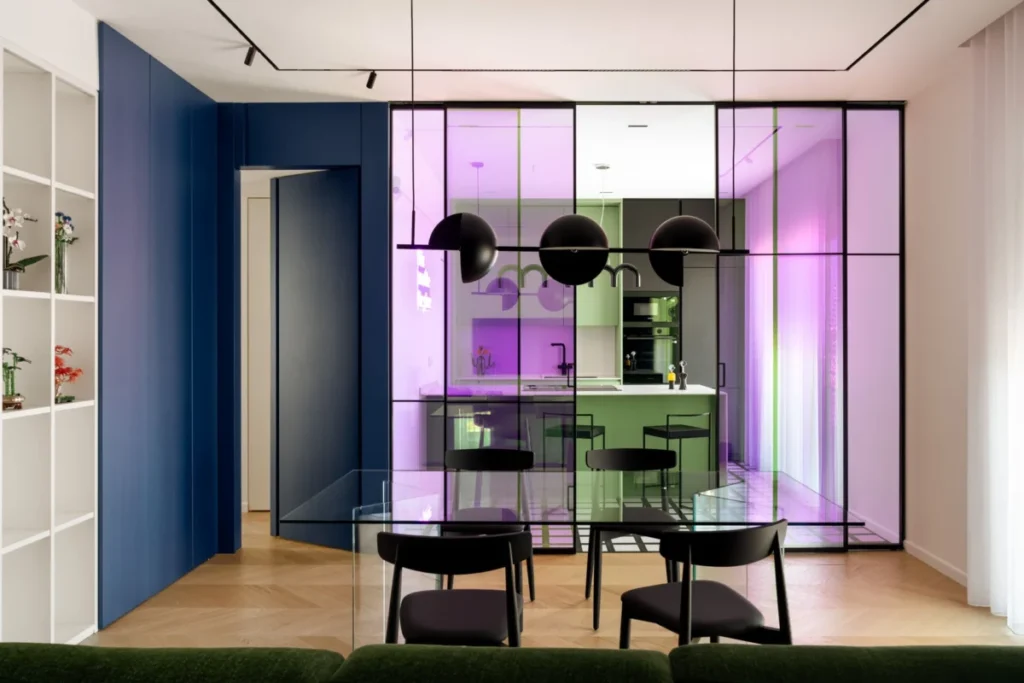

In the heart of Naples, a city renowned for its historical intensity and vibrant street life, a residential project has emerged that redefines the relationship between interior design and the mental well-being of its inhabitants. For Elea and Armando, two young medical professionals whose daily lives are defined by high-stakes decision-making and the emotional weight of patient care, the concept of "home" had to transcend mere shelter. They required a sanctuary capable of active restoration. This necessity led to a collaboration with AreaDieci Architetti, resulting in an apartment that serves as a sophisticated manifesto for color psychology and neuroaesthetics. The project, led by architects Ciro Scognamiglio and Francesca Sannino, demonstrates that color, when treated as a structural element rather than a decorative afterthought, can profoundly influence the human nervous system.

The Architecture of Restoration: A Design Philosophy
The renovation began with a fundamental shift in perspective. Typically, modern interior design treats walls as neutral containers to be filled with objects. However, Scognamiglio and Sannino approached the Naples apartment as a "precise system built around color." The design team rejected the standard white-box aesthetic, opting instead to use hue to define the volume and flow of the living space. By integrating color into every vertical surface and piece of custom millwork, the architects created an environment that feels immersive rather than decorated.
This approach aligns with emerging research in the field of neuroaesthetics—the study of the neural bases for the contemplation and creation of a work of art or design. Studies have shown that specific wavelengths of light, perceived as color, can trigger the release of neurotransmitters. For Elea and Armando, whose professional lives are spent in the sterile, often monochromatic environments of hospitals, the introduction of a controlled, vibrant palette was a clinical necessity. "We spend our days taking care of others—we needed a space that would take care of us," Elea noted during the project’s development.

Chronology of the Transformation
The metamorphosis of the Naples apartment followed a rigorous timeline, moving from conceptual psychological mapping to the installation of high-tech materials:
- Phase I: Psychological Profiling and Conceptualization: The architects spent the initial weeks interviewing the homeowners to understand their sensory triggers. The goal was to identify colors that provided "energy" without causing "overstimulation."
- Phase II: Structural Reconfiguration: The existing modern layout was opened up to allow for a more fluid transition between the social and private zones. This phase included the preparation for custom glass installations.
- Phase III: The Integration of Chromatic Elements: Unlike traditional painting, the color application was integrated into the materials themselves, including resin floors, ceramic tiles, and custom-stained cabinetry.
- Phase IV: Technical Glass and Light Engineering: The installation of the dichroic window—the apartment’s centerpiece—required specialized engineering to ensure the glass would refract light effectively throughout the changing Mediterranean day.
- Phase V: Curated Furnishing and Final Balancing: The selection of iconic furniture pieces from Cassina, Miniforms, and La Palma served to anchor the color strategy, providing tactile comfort to match the visual harmony.
The Social Hub: A Technicolor Living Experience
The living area serves as the apartment’s primary social and energetic center. The defining feature of this space is a large, custom-designed dichroic window. Derived from the Greek word dikhroos, meaning "two-colored," dichroic glass contains multiple ultra-thin layers of different metal oxides. This allows the glass to display a shifting spectrum of colors depending on the angle of the sun and the position of the viewer.

This choice was not merely aesthetic; it introduces a temporal dimension to the room. As the sun moves across the Neapolitan sky, the interior palette shifts from cool violets to warm amethysts, ensuring the room is never static. This "living color" strategy prevents the sensory fatigue that can occur in static environments.
Complementing this high-tech glass are carefully selected furniture pieces that bridge the gap between mid-century modernism and contemporary design. The Utrecht armchair by Gerrit Thomas Rietveld for Cassina, rendered in a striking royal blue, provides a geometric focal point. Nearby, the Mex Cube sofa by Piero Lissoni offers a more grounded presence, upholstered in a hue that echoes the green ceramic tiles of the fireplace. These tiles, from Wow Ceramica’s "Sweet Bar" collection, add a vertical texture that breaks up the smoothness of the walls.

In the center of the room, a pair of Soda coffee tables by Yiannis Ghikas for Miniforms sit like oversized jewels. Hand-blown from solid glass, these tables in sapphire and amethyst tones mimic the refractive qualities of the dichroic window, creating a cohesive visual language that celebrates transparency and depth.
Materiality and Customization
To balance the bold use of color, the architects employed a base of natural materials that provide a tactile "grounding" effect. Oak parquet flooring runs throughout the entire apartment, its warm grain offering a consistent foundation that ties the disparate color zones together.

The kitchen and dining areas showcase the project’s commitment to custom millwork. Sage green cabinetry in the kitchen provides a soft, organic contrast to the more intense blues of the living room. This choice of green is intentional; in color psychology, sage is associated with peace, growth, and reduced heart rates—qualities essential for a space dedicated to nourishment. The Bacco dining table by Tonelli, surrounded by Claretta chairs by Florian Schmid for Miniforms, creates a sophisticated setting for the couple to host colleagues and friends, further bridging their professional and personal worlds.
The Sleeping Quarters: A Sanctuary of Quiet Introspection
If the living room is a celebration of relationships and light, the sleeping area is a study in silence. The architects shifted the palette toward deeper, more receding tones. Navy blue dominates the principal bedroom, a color proven to promote the production of melatonin and lower blood pressure.

Behind the bed, a fantastical wallcovering from Glamora adds a layer of depth. The subtle pastels and dream-like imagery of the wallpaper provide a soft visual "landing" for the eyes before sleep. This area is stripped of the high-contrast elements found in the social spaces, favoring a black-and-white detail scheme that minimizes cognitive load.
The ensuite bathroom continues this therapeutic dialogue. Here, the architects paired contemporary terracotta surfaces with acid green resin. This "clash" is surprisingly harmonious, creating a cocoon-like atmosphere. A freestanding Portofino bathtub by Karol serves as the room’s centerpiece, an explicit invitation for the doctors to practice the "slow living" they often prescribe to their patients but rarely find time for themselves.

Supporting Data: The Impact of Color on Healthcare Professionals
The design of the Naples apartment is particularly relevant when viewed through the lens of current data regarding medical professional burnout. According to a 2023 report by the World Health Organization (WHO), nearly 50% of healthcare workers experience symptoms of burnout, characterized by emotional exhaustion and a diminished sense of personal accomplishment.
Architectural interventions that focus on "restorative environments" have been shown to reduce cortisol levels by up to 15%. By utilizing a palette that avoids the high-glare, sterile whites of clinical settings, the Naples project actively combats the "sensory carryover" that many doctors experience when returning home. The use of blue and green, specifically, has been linked in environmental psychology studies to a faster recovery from "directed attention fatigue"—the mental exhaustion caused by long periods of intense focus.

Broader Impact and Design Implications
The success of the Naples apartment project signals a broader shift in the luxury real estate market. Post-pandemic, homeowners are increasingly prioritizing "wellness-led design" over traditional displays of wealth. The use of color as an architectural tool rather than a decorative finish is a hallmark of this new era.
Architect Ciro Scognamiglio notes that the project has sparked interest in how residential spaces can function as "passive therapy." By designing for the senses, AreaDieci Architetti has created a template for urban living that acknowledges the psychological toll of modern professions. The apartment stands as proof that vibrant, technicolor living is not synonymous with chaos; rather, when executed with mathematical and psychological precision, it can be the ultimate form of tranquility.

For Elea and Armando, the apartment has fulfilled its mandate. It is no longer just a place to sleep between shifts, but a dynamic environment that replenishes their energy. As the dichroic glass continues to cast its shifting shadows over the oak floors, it serves as a daily reminder that the environment we inhabit is perhaps the most potent medicine of all. This study in color psychology proves that we should not shy away from bold hues, but rather embrace them as essential tools for a balanced, healthy life. In the busy streets of Naples, this apartment remains a quiet, colorful revolution in the art of living well.