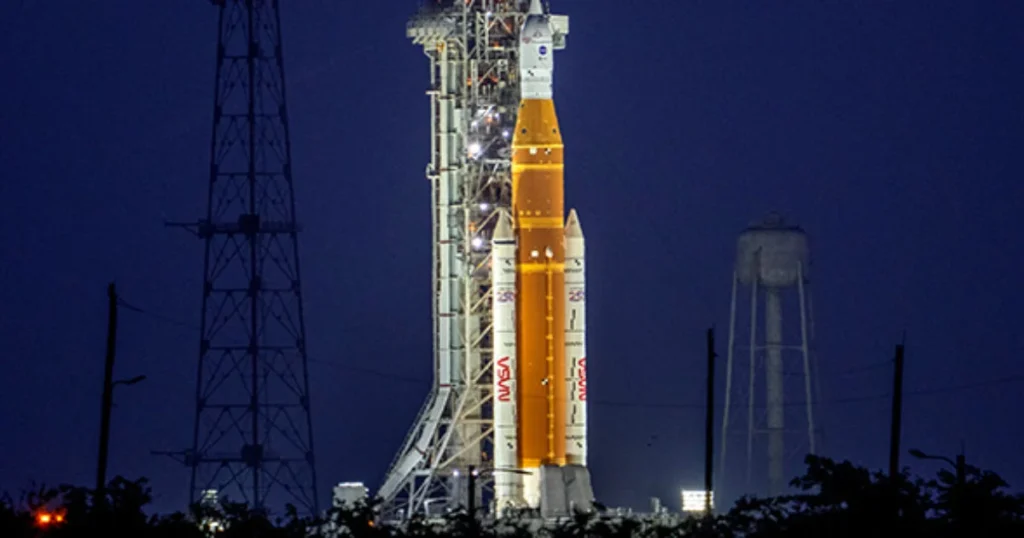

The incident occurred during the critical ascent phase of the Artemis II mission, the first crewed mission to the vicinity of the Moon in over half a century. As mission control monitored the spacecraft’s telemetry and orientation, the phrase “Roger, roll, pitch” was transmitted. In the context of aerospace and aviation, these terms are fundamental: “Roger” confirms receipt of instructions, while “roll” and “pitch” refer to the rotation of the spacecraft around its longitudinal and lateral axes, respectively. Due to the phonetic similarity between the technical term “pitch” and a common English slur, the AI translation software incorrectly transcribed and translated the phrase as “Roger, roll, b*tch.” The error appeared prominently on the screen during the livestream, which was being watched by tens of thousands of space enthusiasts and citizens across South Korea.
Technical Context and the Mechanics of the Error
The failure highlights the ongoing challenges associated with integrating real-time AI translation into live broadcasting, particularly in specialized fields like aerospace. Artificial intelligence systems, specifically those utilizing Automatic Speech Recognition (ASR) and Natural Language Processing (NLP), often rely on probabilistic models to determine the most likely word spoken based on sound patterns and context. While these systems have seen massive improvements in recent years, they are notoriously prone to “hallucinations” or misidentifications when faced with technical jargon, accents, or background noise—all of which are present during a high-stakes rocket launch.
In this specific case, the acoustic signature of the word “pitch” was evidently close enough to the profanity to trigger the AI’s incorrect selection. Furthermore, the AI’s contextual engine failed to recognize that a broadcast involving NASA and a multi-billion dollar lunar mission was highly unlikely to feature derogatory slang. The incident serves as a stark reminder that while AI can provide efficiency, the lack of a human-in-the-loop for real-time verification remains a significant vulnerability for major news organizations.
Chronology of the Artemis II Launch and Broadcast
The Artemis II mission is a cornerstone of NASA’s broader lunar exploration strategy, marking the first time humans have traveled toward the Moon since the Apollo 17 mission in 1972. The launch took place at the Kennedy Space Center in Florida at 6:35 PM Eastern Time on April 1, 2026 (which corresponded to the early morning of April 2 in South Korea). The mission, carrying a crew of four—Commander Reid Wiseman, Pilot Victor Glover, and Mission Specialists Christina Koch and Jeremy Hansen—is designed to test the Orion spacecraft’s life-support systems in deep space.
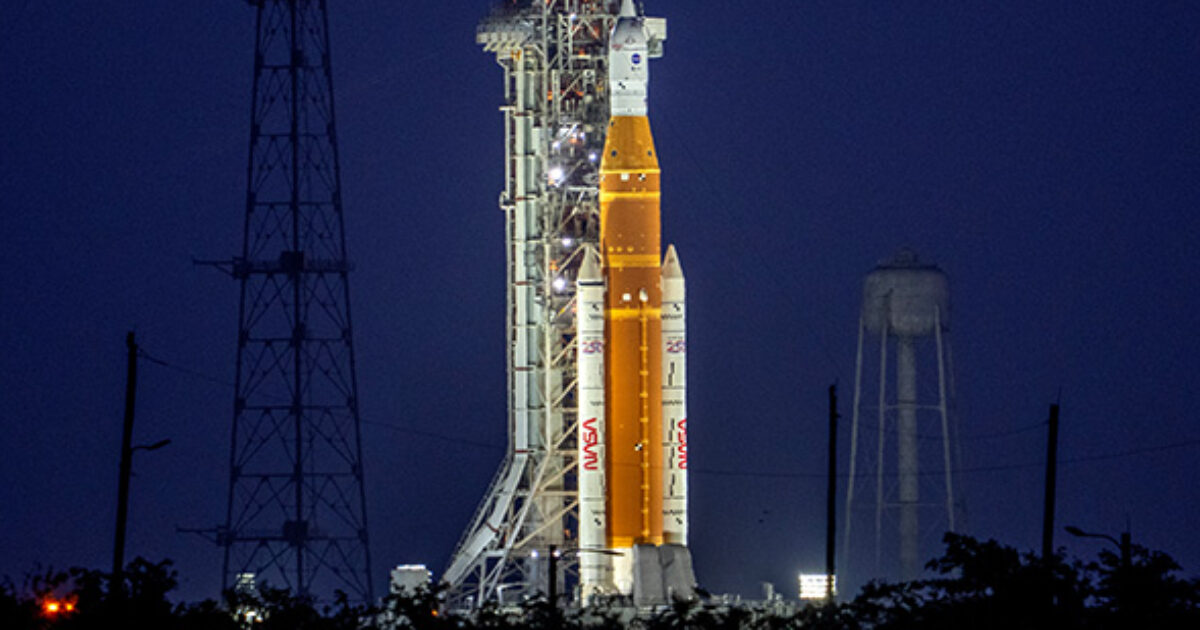
KBS, as South Korea’s primary public broadcaster, had promoted its livestream as a premier destination for local viewers to witness the event with accessible Korean translations. The broadcast began with expert commentary and historical context, leading up to the ignition of the Space Launch System (SLS) rocket. The error occurred minutes after liftoff, as the spacecraft was maneuvering into its initial orbit. Almost immediately after the "Roger, roll, b*tch" subtitle appeared, viewers began capturing screenshots and short video clips, which were then circulated on platforms such as X (formerly Twitter), Instagram, and various South Korean online communities like DC Inside and theqoo.
Official Response and Mitigation Efforts
Recognizing the severity of the slip-up and its potential impact on the broadcaster’s reputation for professionalism, KBS moved quickly to address the situation. The broadcaster initially disabled the "rewind" and "replay" functions on the YouTube livestream to prevent further circulation of the erroneous subtitles within the platform’s interface. Shortly thereafter, a formal statement was released through their official digital channels.
In their apology, KBS stated: "We sincerely apologize for the AI automatic translation error that occurred during the YouTube livestream of the Artemis II launch on April 2, 2026. We deeply apologize to our viewers for the inappropriate language that resulted from a mistranslation. As soon as the issue was identified, we took immediate measures, including disabling the rewind function. We are currently in close discussions with relevant departments and external partners to prevent recurrence, and are exploring improvements such as strengthening AI profanity filtering."
The broadcaster also clarified that the use of AI was intended to provide rapid, accessible information to a broad audience, but acknowledged that the technology had failed to meet the standards required for a national public service announcement. Internal reports suggest that KBS is now reviewing its protocols for all future live events, potentially moving toward a "delayed-live" model where human editors have a few seconds to verify automated text before it reaches the public.
Broader Implications for AI in Modern Media
The KBS incident is not an isolated event but rather part of a growing trend of "AI fails" in the media industry. As newsrooms around the world face pressure to produce more content with fewer resources, automation has become an attractive solution. However, the linguistic nuances of the Korean language, combined with the complexity of English technical terms, create a unique set of hurdles for broadcasters in the region.

Linguistics experts have noted that "Konglish" (the use of English words in a Korean context) and the phonetic mapping of English words into the Korean alphabet (Hangul) can often lead to confusion for AI models trained on general datasets. For a public broadcaster like KBS, which is funded by television license fees and overseen by the government, the standard for accuracy is significantly higher than for private digital creators. The backlash from this incident reflects a public sensitivity toward the perceived "laziness" of relying on unvetted technology for high-profile cultural and scientific events.
Scientific Significance of the Artemis II Mission
Despite the subtitle controversy, the Artemis II mission itself has been hailed as a resounding success in its early stages. The 10-day flight plan involves a trajectory known as a "free-return" lunar flyby. After the SLS rocket placed the Orion capsule into a high Earth orbit, the crew performed maneuvers to test the spacecraft’s handling. The mission is a critical precursor to Artemis III, which aims to land the first woman and the next man on the lunar surface.
The success of Artemis II is a point of global pride, and South Korea has a vested interest in the program. As a signatory of the Artemis Accords, South Korea is an active partner in international lunar exploration. This partnership makes the KBS broadcast error particularly awkward, as the nation seeks to position itself as a serious player in the global space economy. The mission’s success, including the safe return of the four astronauts, is expected to pave the way for a permanent human presence on the Moon and, eventually, crewed missions to Mars.
Analysis of Social and Cultural Reaction
In South Korea, the reaction to the KBS error has been a mix of amusement and criticism. On social media, many younger viewers turned the mistranslation into a meme, joking that mission control sounded "unexpectedly aggressive." However, more conservative segments of the audience and media critics have expressed concern over the loss of dignity for a national broadcaster.
Editorials in Korean tech journals have used the incident to call for "Ethical AI" and "Context-Aware AI" development. They argue that if AI is to be used in public-facing roles, it must be equipped with a "common sense" filter that can flag anomalies—such as profanity during a NASA launch—for human review. The incident has also sparked a debate about the "speed vs. accuracy" trade-off in the digital age, with many arguing that a slight delay in subtitles is preferable to instantaneous but offensive errors.
Conclusion and Future Outlook
The "Roger, roll, b*tch" incident will likely be remembered as a cautionary tale in the history of broadcast technology. For KBS, the path forward involves rebuilding trust through more rigorous quality control. The broadcaster has pledged to collaborate with AI developers to create more robust technical dictionaries that can distinguish between aerospace jargon and street slang.
As the Artemis II mission continues its journey toward the Moon, the focus of the scientific community remains on the safety of the crew and the performance of the Orion spacecraft. While a mistranslated subtitle is a temporary embarrassment for a television station, the mission it sought to cover represents a permanent leap forward for humanity. Moving forward, the media’s challenge will be to ensure that the tools used to tell the story of human progress do not inadvertently detract from the gravity of the achievements themselves. The lessons learned from this April morning in Seoul will undoubtedly influence how live global events are subtitled for years to come, ensuring that the next time humanity reaches for the stars, the message received on Earth is clear, accurate, and professional.