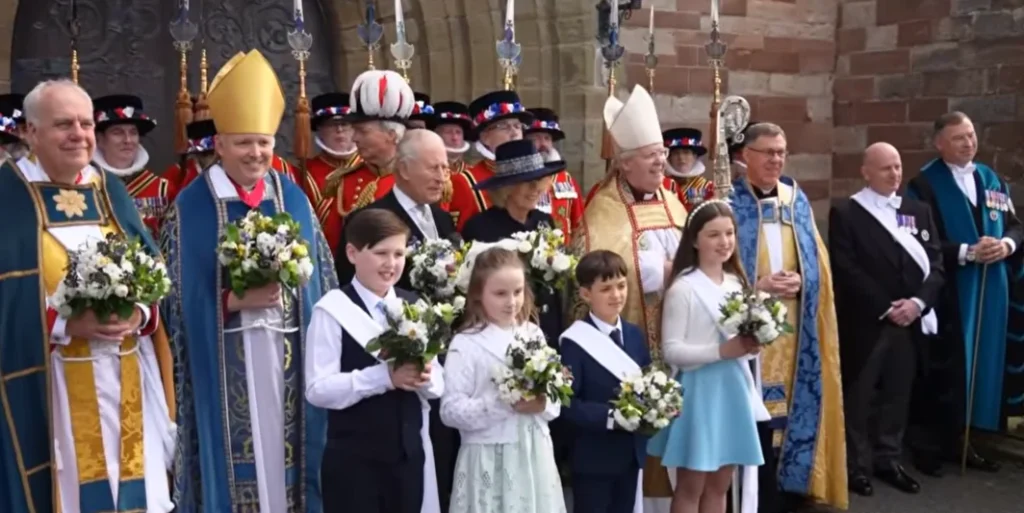

King Charles III has continued the centuries-old tradition of distributing Maundy Money, with this year’s ceremony holding particular significance as it marked the first time the Royal Maundy service has been held in North Wales. The historic event took place at St. Asaph Cathedral, a landmark of considerable spiritual and cultural importance, underscoring the monarch’s commitment to inclusivity and recognising the diverse fabric of the United Kingdom. This marks a notable departure from decades of the ceremony predominantly being held in London, bringing this deeply symbolic tradition directly to communities across the nation.
The Royal Maundy ceremony, rooted in Christian observance and royal custom, commemorates the Last Supper and the act of humility demonstrated by Jesus Christ washing the feet of his disciples. While the physical act of foot-washing has evolved, the spirit of service and recognition for those who have contributed to their communities remains at its core. King Charles III, alongside other members of the Royal Family, selects a group of individuals, typically elderly citizens, who have demonstrated exceptional service and dedication to their local areas.
A Milestone for North Wales and Royal Tradition
The selection of St. Asaph Cathedral as the venue for the 2026 Royal Maundy service is a deeply symbolic choice. North Wales, with its rich history and distinct cultural identity, has long been an integral part of the United Kingdom, yet large-scale national ceremonies have historically gravitated towards the south. Bringing the Maundy service to this region serves as a tangible acknowledgement of Wales’s heritage and its people. It also provides an unprecedented opportunity for residents of North Wales to witness and participate in a tradition that has often felt distant.
The cathedral itself, one of the smallest in the UK, boasts a history stretching back to the 6th century, making it a fitting setting for a ceremony that honours both ancient customs and contemporary service. Its serene atmosphere and architectural grandeur would have provided a solemn yet welcoming backdrop for the significant occasion.
The Ceremony: Honouring Service and Humility
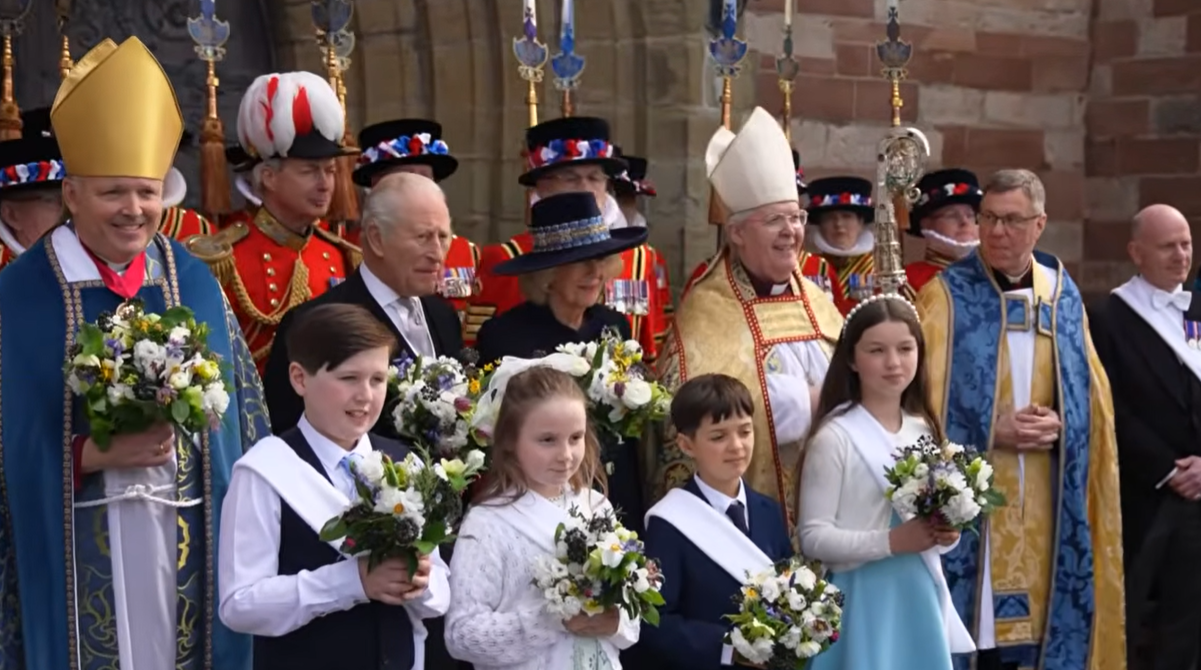
On Maundy Thursday, a day that falls within the crucial period of Holy Week leading up to Easter, King Charles III honoured 77 men and 77 women. The number of recipients directly corresponds to the King’s age, a poignant detail that adds a personal touch to the proceedings. Each recipient was presented with two specially prepared purses, a tradition that has evolved over centuries.
The first purse, typically red, contains a sum of ordinary British coinage. This element serves a practical purpose, offering a tangible financial token of appreciation. However, the true symbolic weight lies in the second purse, a white one, which contains specially minted Maundy coins. These coins, while legal tender, are rarely intended for circulation. Instead, they are cherished as mementos, historical artefacts, and enduring symbols of the recognition bestowed upon the recipients. The act of receiving these coins is not merely an exchange of currency but a profound acknowledgement of a life dedicated to service and community betterment.
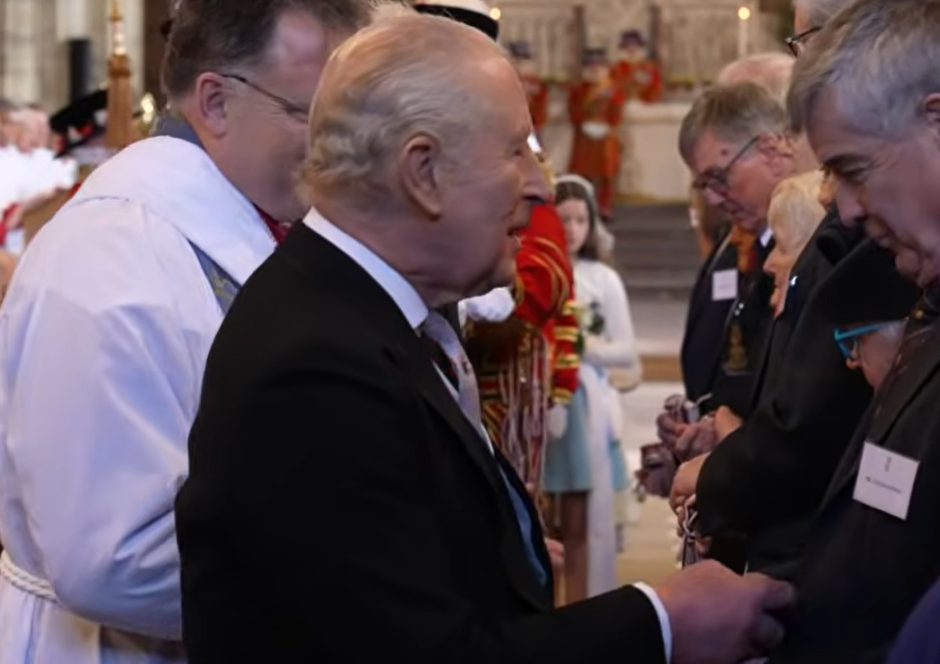
The distribution of the Maundy money involved the King personally interacting with each recipient. Reports indicate that King Charles paused to engage in brief conversations, offering personal words of thanks and acknowledging the specific contributions of many individuals. This personal touch is a vital component of the ceremony, reinforcing the connection between the monarch and the citizens they represent, transforming a formal ritual into a moment of genuine human connection.
Historical Context and Evolution of the Maundy Service
The origins of the Royal Maundy service can be traced back to the 13th century. Initially, the monarch would personally wash the feet of the poor and distribute alms. Over time, the practice evolved. By the reign of King Edward IV in the 15th century, the monarch ceased the foot-washing aspect and began distributing specially prepared money. The number of recipients was often linked to the monarch’s age.
The tradition of distributing coins continued through the reigns of subsequent monarchs, with the denominations and design of the Maundy money evolving. Today, the coins are struck in sterling silver and feature the reigning monarch’s effigy. The specific denominations are the fourpenny, threepenny, twopenny, and penny pieces, all bearing the year of issue. The value of the coins distributed reflects the historical practice, with the total value of the money distributed in the white purse being equal to the number of pence in the reign of King Edward III (1307-1377), which was 4 shillings and 1 penny.
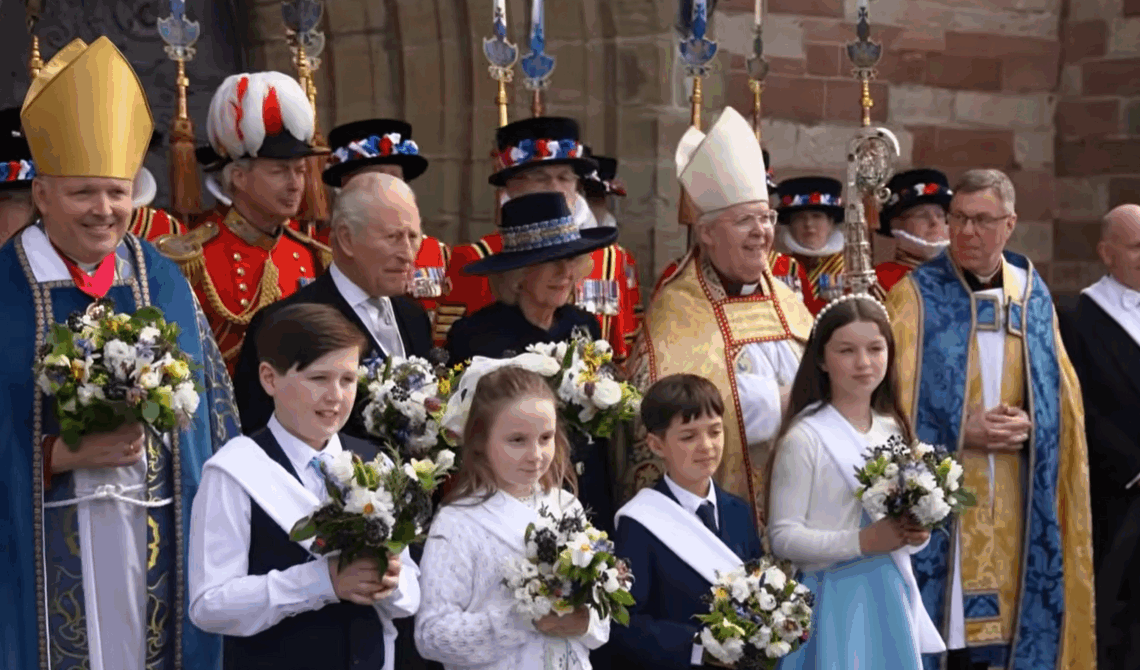
Queen Camilla’s role in royal ceremonies has also seen significant evolution. In 2024, Queen Camilla stepped in to distribute Maundy Money on behalf of King Charles III, who was advised to rest during his initial cancer treatment. This demonstrated the continuity of royal duties and the support within the family to uphold traditions even during challenging times. Her presence alongside King Charles at St. Asaph Cathedral this year further solidified the united front of the Royal Family in observing this important tradition.
A Modern Monarchy Embracing Inclusivity
King Charles III’s reign has been characterised by a subtle yet deliberate shaping of royal traditions to reflect contemporary values and a more inclusive approach to the United Kingdom. The decision to bring the Maundy service to North Wales is a prime example of this broader strategy. It signals a conscious effort to ensure that all regions of the UK feel represented and valued by the monarchy.
Since ascending the throne, King Charles has consistently emphasized themes of community, service, environmental stewardship, and interfaith dialogue. These themes resonate powerfully with the core tenets of the Maundy ceremony, which celebrates humility, charity, and the quiet dedication of individuals who often work without seeking recognition. His active participation and personal engagement during the service underscore his commitment to these principles.
The Significance of Community Service
The recipients of the Maundy Money are not randomly selected. They are individuals who have made a profound and lasting impact on their communities through voluntary work, charitable endeavours, or outstanding acts of local leadership. Their stories, often humble yet inspiring, serve as powerful testaments to the strength, resilience, and inherent goodness found within communities across the nation.
For these individuals, the recognition from the monarch is a deeply meaningful experience. It is an acknowledgement not only of their efforts but of the intrinsic value of their contributions, often made with no expectation of personal reward. Their presence at St. Asaph Cathedral, representing a diverse array of service, highlighted the multifaceted nature of community support and the vital role these individuals play in the social fabric of the UK.
The Broader Implications and Future of the Ceremony
The choice of North Wales for the 2026 Maundy service carries significant implications for the region and for the future of royal engagements. It provides a substantial boost to local pride and raises the profile of St. Asaph and its cathedral on a national and international stage. For the residents who gathered to witness the procession and the King’s walkabout after the service, it was an opportunity to connect with the monarchy in a way that was previously unavailable to them.
This move also sets a precedent for future Royal Maundy services. It suggests a potential shift towards a more geographically diverse approach, ensuring that this ancient tradition continues to be relevant and accessible to people across all parts of the United Kingdom. This decentralisation can foster a stronger sense of connection between the Crown and the populace, reinforcing the idea of a monarchy that truly serves the entire nation.
Easter Weekend Preparations
Following the significant ceremony in Wales, King Charles and Queen Camilla were scheduled to travel to Windsor to observe the Easter weekend. The Royal Family traditionally gathers at Windsor for Easter Sunday, with a church service held at St. George’s Chapel. However, this year’s Easter festivities were marked by the notable absence of Princess Beatrice and Princess Eugenie, who were reportedly spending the holiday away from Windsor. This decision was understood to be linked to the ongoing controversy surrounding their father, Prince Andrew, who was arrested in February on suspicion of misconduct in public office and subsequently released under investigation. The differing Easter plans underscore the varying dynamics and challenges faced by different branches of the Royal Family.
The Royal Maundy ceremony at St. Asaph Cathedral stands as a testament to the enduring power of tradition, the evolving nature of monarchy, and the profound importance of recognising and celebrating community service. By bringing this ancient rite to North Wales, King Charles III has not only honoured the past but has also forged a new chapter, demonstrating a commitment to a united and inclusive future for the United Kingdom.