
Barcelona, the capital of Catalonia, has long served as a global epicenter for architectural innovation and artistic expression, a reputation that has increasingly permeated its luxury short-term rental market. As travelers shift their preferences from traditional luxury hotels toward more personalized, high-design residences, the city’s housing stock has undergone a sophisticated transformation. In neighborhoods ranging from the historic Gothic Quarter to the orderly grid of the Eixample, a new class of "design-savvy" apartments is redefining the visitor experience. These properties are not merely places to stay; they are curated environments that blend the city’s rich Modernist heritage with contemporary minimalism and adaptive reuse strategies. This evolution reflects a broader trend in global tourism where the "home-away-from-home" concept is elevated by professional interior design and high-end amenities.
The Architectural Context of Barcelona’s Rental Market
To understand the appeal of these high-design rentals, one must consider the historical backdrop of Barcelona’s urban development. Much of the city’s most sought-after real estate lies within the Eixample district, an expansion project designed by Ildefons Cerdà in the mid-19th century. Characterized by its octagonal blocks and wide avenues, the Eixample became the canvas for legendary architects like Antoni Gaudí, Lluís Domènech i Montaner, and Josep Puig i Cadafalch. Many of today’s premier Airbnbs are located within these protected "Modernista" buildings, featuring original elements such as hydraulic cement tiles (nolla floors), ornate plaster crown moldings, and high ceilings with exposed timber beams.
The demand for these authentic yet modernized spaces has surged following the recovery of international travel. According to data from the Barcelona Tourism Observatory, the city saw over 12 million overnight visitors in 2023, with a significant portion opting for independent housing over hotels. This shift has driven property owners to invest heavily in interior architecture, moving away from generic furnishings toward "boutique" aesthetics that reflect the local culture and history.
Premier Design-Forward Accommodations: A Detailed Overview
The current market for high-end rentals in Barcelona is diverse, catering to different aesthetic preferences and neighborhood vibes. The following properties represent the pinnacle of this design-centric movement.
The Modernist Legacy: Eixample and Beyond
In the heart of the Eixample, the "Luxury Apartment with a Terrace" serves as a prime example of Art Nouveau preservation. Located near Gaudí’s Casa Batlló, this three-bedroom residence retains its mosaic-tiled entryway and original moldings while introducing luxury features like claw-foot soaking tubs. Similarly, the "Spacious Central Rental" and the "Exquisite Apartment with Open Spaces" showcase the district’s signature "hydraulic" tiles—colorful, geometric floor patterns that have become an icon of Barcelona design. These flats utilize the "Cerdà" layout, which typically includes long hallways and "galerias"—enclosed balconies that provide a buffer between the interior and the street.
The "Heritage Apartment," a penthouse near Passeig de Gràcia, takes a different approach by emphasizing light and air. Its dining room and master bedroom feature greenhouse-style glass walls and ceilings, a contemporary nod to the traditional winter gardens found in 19th-century Catalan architecture. This integration of indoor and outdoor space is a recurring theme in high-end Barcelona rentals, where private terraces are considered the ultimate luxury.
Adaptive Reuse and Contemporary Minimalism
In El Raval, a neighborhood known for its eclectic and gritty charm, the "Boutique Apartment" demonstrates the power of adaptive reuse. Housed in a 19th-century industrial relic, the space features soaring ceilings, exposed brickwork, and original timber beams. By layering these rugged textures with velvet pillows and rich wooden shutters, the designers have created a "warm industrial" aesthetic that feels both historic and current.
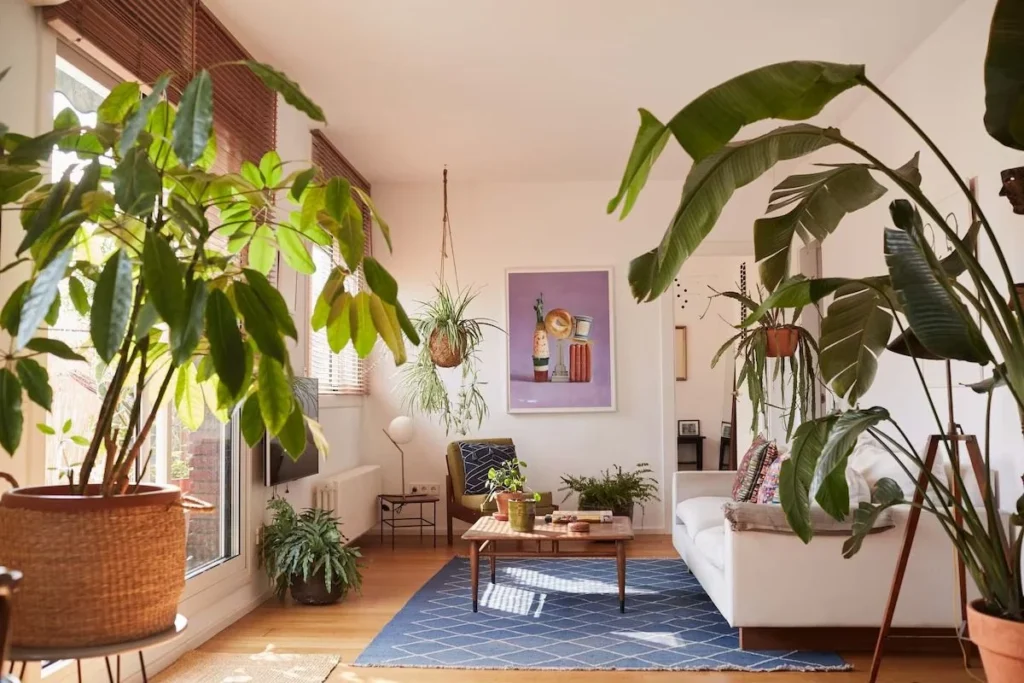
For those seeking a more subdued environment, the "Fort Pienc Oasis" and the "Little Barrio Apartment" offer masterclasses in contemporary minimalism. The former, located in a quieter pocket of the Eixample near the Arc de Triomf, focuses on neutral tones and functional layouts. The latter, situated on the edge of the Gothic Quarter, utilizes creamy plaster walls and warm wood accents to create a sense of "quiet luxury." These properties appeal to the modern traveler who prioritizes tranquility and clean lines over ornate historical detail.
Coastal and Skyline Living
Barcelona’s unique position between the mountains and the sea is best captured by properties like the "Sunny Modern Penthouse" and the "Flat Near the Beach." The penthouse offers panoramic views stretching to the Mediterranean, utilizing a chef-designed kitchen and earthy planters to bridge the gap between urban living and nature. Meanwhile, the Barceloneta loft introduces a "coastal minimalist" vibe, featuring a lime green statement wall that mimics the vibrant energy of the nearby boardwalk, paired with floor-to-ceiling windows that maximize natural light.
Supporting Data and Market Trends
The rise of high-design rentals is supported by changing economic demographics. The "Workation" trend—where professionals combine business travel with leisure—has led to a higher demand for rentals with "dedicated workspaces" and high-speed Wi-Fi, features now standard in Barcelona’s luxury tier.
Market analysis indicates that properties categorized as "Airbnb Plus" or "Design-Savvy" in Barcelona can command nightly rates significantly higher than the city average. While a standard one-bedroom may rent for $150–$200 per night, the properties featured in this guide range from $265 to over $1,000 per night. This premium is justified by the "curated experience"—a combination of architectural history, professional interior design, and concierge-level perks such as daily cleaning or personalized amenities.
Regulatory Landscape and Official Responses
The growth of the short-term rental market in Barcelona has not been without controversy. The local government, led by Mayor Jaume Collboni, has been vocal about the impact of tourist apartments on housing affordability for residents. In June 2024, the city administration announced a bold plan to eliminate all 10,000 existing tourist apartment licenses (HUTB) by November 2028.
This regulatory shift aims to return housing stock to the residential market to combat rising rents. However, industry representatives from organizations like Apartur (the Association of Tourist Apartments of Barcelona) argue that high-end, professionally managed rentals contribute significantly to the city’s economy by attracting high-spending visitors. The current regulatory environment means that the "design-savvy" apartments currently operating are among the last of their kind, making them increasingly exclusive and sought after by travelers.
Chronology of Barcelona’s Rental Evolution
- Pre-1992: Barcelona’s tourism infrastructure was largely hotel-based and concentrated in the city center.
- 1992–2000: The Olympic Games transformed the waterfront and put Barcelona on the map as a premier European destination.
- 2008–2015: The rise of digital platforms like Airbnb allowed homeowners to monetize the city’s unique Modernist housing stock.
- 2016–2022: The city government introduced strict licensing (HUTB) to curb the unregulated growth of tourist flats.
- 2023–Present: A shift toward "High-Design" and "Boutique" rentals as travelers seek quality over quantity, coinciding with the city’s announcement to phase out licenses by 2028.
Broader Impact and Implications
The shift toward high-design rentals has a profound impact on the preservation of Barcelona’s architectural heritage. Many of these apartments are located in buildings that require significant upkeep. Private investment into these "design-forward" rentals often funds the restoration of original features—such as intricate moldings and tile work—that might otherwise fall into disrepair.
Furthermore, these rentals encourage "decentralized tourism." By offering high-end stays in neighborhoods like Fort Pienc or El Raval, rather than just the crowded Ramblas, visitors are encouraged to support local businesses, cafes, and galleries outside the primary tourist traps. This contributes to a more sustainable, albeit more expensive, form of urban exploration.
However, the "design-led" gentrification of these neighborhoods remains a point of debate. While these apartments provide a stylish haven for international visitors, they also symbolize the tension between a city that thrives on tourism and a city that must remain livable for its citizens. As Barcelona moves toward its 2028 goal of phasing out short-term rentals, the current collection of high-design Airbnbs represents a unique, and perhaps final, chapter in the city’s hospitality history.
Conclusion
The best Barcelona Airbnbs are no longer just places to sleep; they are extensions of the city’s identity as a leader in design and architecture. From the "Modernista" palaces of the Eixample to the repurposed lofts of El Raval, these spaces offer a curated look at Catalan life. As the city navigates a complex regulatory future, these premier accommodations stand as a testament to the enduring appeal of Barcelona’s aesthetic spirit, providing travelers with a deep, albeit temporary, connection to one of the world’s most beautiful urban landscapes. For the design-conscious traveler, the choice of where to stay in Barcelona has become as significant as the choice of which Gaudí masterpiece to visit, making the city’s interiors a destination in their own right.