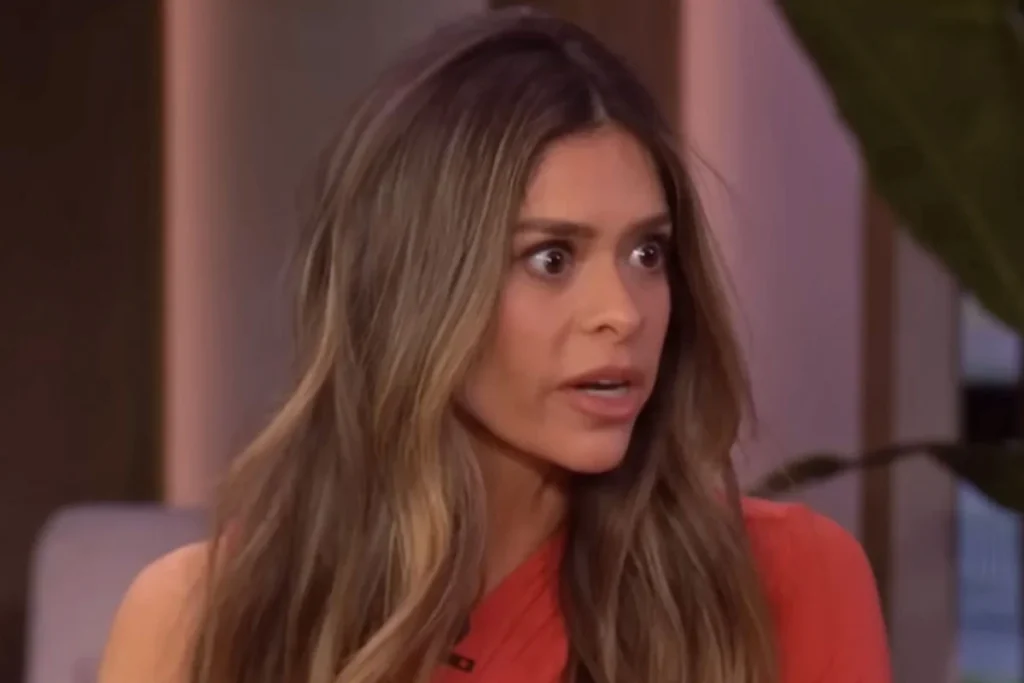

Taylor Frankie Paul, the embattled reality star and prominent TikTok personality, has firmly rejected suggestions to withdraw from social media, even as a cascade of serious allegations and significant career setbacks threaten to dismantle her public persona. In a recent and widely scrutinized exchange on TikTok, Paul defiantly questioned critics who urged her to disengage, signaling an unwavering commitment to her digital presence despite a rapidly deteriorating professional and personal landscape. This comes on the heels of the abrupt cancellation of her highly anticipated season of ABC’s The Bachelorette and the suspension of production for Secret Lives of Mormon Wives, both precipitated by resurfaced footage of a violent 2023 altercation and subsequent accusations of child abuse involving her ex-partner, Dakota Mortensen.
The Escalating Crisis: Career Setbacks and Grave Allegations
The past few weeks have witnessed an unprecedented unraveling for Taylor Frankie Paul, whose once-thriving career as a social media influencer and burgeoning reality television star has been severely impacted. The most immediate and publicly impactful consequence was ABC’s decision to "pull the plug" on her season of The Bachelorette. This extraordinary move, made just days before the season was slated to air, was a direct response to the emergence of disturbing footage depicting Paul’s "vicious 2023 attack" against Dakota Mortensen, an incident for which she was arrested. The cancellation represents not only a significant personal blow to Paul but also a considerable financial and logistical challenge for the network and production companies involved, given the extensive resources typically invested in pre-production and marketing for such a flagship series.
Compounding this crisis, production on another reality series, Secret Lives of Mormon Wives, was paused last month. This suspension followed yet another alleged incident involving Paul and Mortensen. The situation further intensified when Mortensen subsequently accused Paul of child abuse, adding a layer of grave legal and ethical concerns to her already precarious public standing. These dual production halts underscore the severity of the allegations and the entertainment industry’s increasingly cautious approach to talent embroiled in serious controversy, particularly concerning domestic violence and child welfare.
A Chronology of Controversy
Taylor Frankie Paul’s journey into the public eye has been marked by a series of high-profile controversies, but the recent events have propelled her into an unprecedented storm.
- 2020-2022: Rise to TikTok Stardom and Initial Scandals. Paul initially gained significant traction on TikTok, accumulating millions of followers by sharing content related to her life as a "Mormon mom" in Utah. Her early fame was amplified by a "soft-swinging" scandal within her Mormon community in 2022, which saw her divorce her then-husband, Tate Paul, and openly discuss the complexities of her relationships. This period established her as a figure willing to share intimate details of her life, often generating significant public discussion and media attention.
- August 2023: The Violent Altercation and Arrest. The most serious incident to date occurred in August 2023, involving an alleged domestic violence dispute with her then-boyfriend, Dakota Mortensen. Reports from the incident, which later surfaced as video footage, described a violent confrontation where Paul was accused of throwing a chair at Mortensen, which allegedly struck their daughter. She was subsequently arrested on charges of domestic violence, aggravated assault, and child abuse. At the time, Paul’s representatives acknowledged an incident but suggested it was a reaction to a "verbal dispute," framing it as a moment of "extreme emotional distress."
- Late 2025/Early 2026: Reality TV Opportunities and Renewed Scrutiny. Despite the 2023 arrest, Paul continued to maintain a significant social media presence. In a testament to the allure of digital fame, she was cast in two reality television projects: a season of ABC’s The Bachelorette and Secret Lives of Mormon Wives. These castings suggested a potential pivot towards mainstream entertainment and a rehabilitation of her public image.
- February 2026: Production Pause on Secret Lives of Mormon Wives. Production for Secret Lives of Mormon Wives was halted following new allegations of an incident between Paul and Mortensen. While specific details of this alleged event remain under wraps, its occurrence was severe enough to warrant an immediate suspension of filming.
- March 2026: The Bachelorette Cancellation. Just days before its scheduled premiere, ABC announced the unprecedented cancellation of Paul’s season of The Bachelorette. This decision was directly linked to the resurfacing of the 2023 domestic violence footage and public outcry regarding the casting of an individual with such a history.
- March 2026: Child Abuse Accusations Surface. Following the production pause and Bachelorette cancellation, Dakota Mortensen publicly accused Taylor Frankie Paul of child abuse, further intensifying the legal and ethical scrutiny surrounding her.
- Mid-March 2026: The TikTok Exchange. Amidst the storm, Paul engaged directly with critics on social media, particularly in a notable exchange with TikTok user Holden Smith, where she pushed back against suggestions to disengage.
The Financial and Reputational Fallout for Production Houses
The cancellations and pauses of these high-profile reality television projects carry substantial financial and reputational implications for the networks and production companies involved. For ABC and the producers of The Bachelorette, the decision to pull a season days before airing represents a significant write-off of millions of dollars invested in casting, pre-production, filming, editing, marketing, and legal fees. Industry estimates suggest that a typical season of The Bachelorette can cost upwards of $10 million to produce, not including marketing. The reputational damage for ABC is also considerable, raising questions about their vetting processes and commitment to ethical standards in casting. The network’s swift action, while costly, was likely a calculated move to mitigate a larger public relations crisis and uphold its brand image, especially in the context of increasing scrutiny on reality TV and its stars.
Similarly, the pause on Secret Lives of Mormon Wives impacts not only Paul but also the entire cast and crew. Production halts lead to lost wages, contractual disputes, and delays in content delivery, potentially jeopardizing the entire series if the controversy proves too damaging. For these production companies, the incidents involving Paul highlight the inherent risks of working with social media personalities whose public lives are often volatile and whose past actions can rapidly resurface to derail projects.
Social Media Strategy: Defiance in the Face of Adversity
Amidst this maelstrom of professional and legal troubles, Taylor Frankie Paul has chosen a path of defiance rather than retreat from the very platforms that fueled her rise. This strategy came into sharp focus following a TikTok video posted by user Holden Smith on a recent Saturday. Smith critically analyzed Paul’s continued online activity, noting her engagement with comments and her reposting of supportive TikToks. He humorously proposed a "Taylor Frankie Paul get off your phone challenge," questioning her rationale: "Why are you commenting back to people and reposting TikToks? Her world literally just blew up. I would say her team should take her phone away from her, but no, she is literally reposting TikToks that are in support of her and she’s commented back to people on Instagram."
Smith elaborated on his perspective, stating, "If I were TFP, I would not be on my phone. I would actually just tell someone to take it from me because I wouldn’t be able to see all of the discourse surrounding me, but then to go comment back is another level."
Paul’s response was swift and pointed. In the comments section of Smith’s video, she retorted with a rhetorical question that quickly gained traction: "Want me to stare at the wall instead?" This brief but impactful comment encapsulated her seemingly unapologetic stance and her resistance to disengage.
Smith, undeterred, responded with a follow-up TikTok, directly addressing Paul’s question. "Well, yes, Taylor Frankie Paul. Yes, I would like you to stare at a wall instead. This is what I’m talking about," he affirmed, doubling down on his initial assessment.
This public exchange highlights a fundamental dilemma for influencers facing severe backlash. While many public relations experts would advise a period of silence and strategic withdrawal to allow "the dust to settle," Paul’s approach suggests a different calculus. Her continued engagement could be interpreted as an attempt to control her narrative, maintain a connection with her fanbase, or simply an ingrained habit of digital interaction that is difficult to break. For some influencers, even negative attention is a form of engagement, vital for maintaining relevance in a rapidly shifting digital landscape. However, for a public figure embroiled in allegations of domestic violence and child abuse, the risks of continued, unfiltered engagement are extraordinarily high, potentially exacerbating public outrage and hindering any future attempts at rehabilitation.
Broader Implications for Influencer Culture and Reality TV Ethics
Taylor Frankie Paul’s unfolding saga offers a stark case study on the evolving intersection of social media fame, reality television, and public accountability. Her situation raises critical questions for both the entertainment industry and the broader influencer ecosystem.
- Vetting Processes: The cancellation of The Bachelorette highlights the challenges and responsibilities of networks in thoroughly vetting reality TV contestants. In an age where digital footprints are extensive and often indelible, production companies face increasing pressure to conduct exhaustive background checks, not just for criminal records but also for past online behavior and personal controversies. The public expectation for ethical casting has grown significantly, especially when dealing with sensitive issues like domestic violence.
- The Durability of Digital Fame: Paul’s case also demonstrates the double-edged sword of digital fame. While social media platforms can catapult individuals to stardom, they also serve as permanent archives where past actions can resurface with devastating consequences. The ease with which old footage can be unearthed and disseminated means that a public figure’s past is never truly "in the past."
- Influencer Accountability: The incident prompts a broader discussion about accountability within influencer culture. Unlike traditional celebrities who often have extensive PR teams managing their image, many influencers operate with less mediation, making their responses to crises more direct but also potentially more volatile. The expectation for influencers to be "authentic" can blur the lines between transparency and oversharing, particularly during personal crises.
- The Business of Controversy: While some influencers strategically leverage controversy for engagement, Paul’s situation suggests a threshold where negative publicity can become unequivocally detrimental, leading to career implosion rather than mere notoriety. The financial and reputational costs for the platforms and shows associated with such figures are becoming too high to ignore.
As legal proceedings and public opinion continue to shape Taylor Frankie Paul’s immediate future, her decision to remain active on social media will undoubtedly continue to draw scrutiny. The outcome of her current predicament will serve as a significant benchmark for how reality television and the influencer economy navigate the increasingly complex terrain of public morality, personal conduct, and the relentless demands of the digital age. The question remains whether Paul’s defiant online presence will ultimately aid in her recovery or further cement her downfall in the court of public opinion.