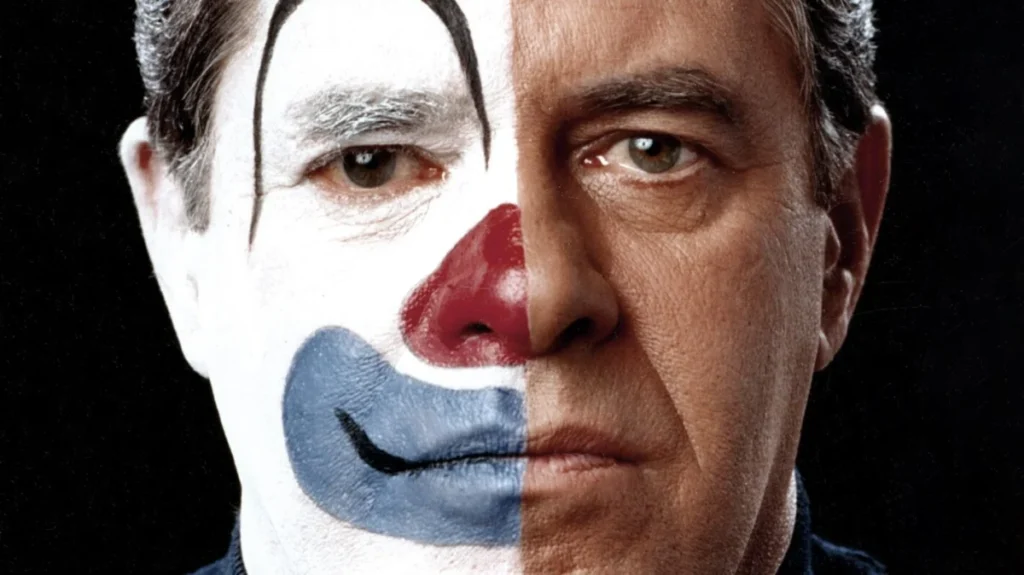

For decades, The Day the Clown Cried has occupied a unique and often whispered-about space in Hollywood lore, a phantom film shrouded in controversy and regret. Directed by and starring the legendary comedian Jerry Lewis, this 1972 production, set in the grim confines of a Nazi concentration camp, became one of cinema’s most infamous "lost movies." Lewis himself, a titan of comedy whose telethons raised hundreds of millions for muscular dystrophy research, spent years actively distancing himself from the project, publicly expressing profound embarrassment and a staunch refusal to allow its release. This vehement repudiation only fueled the legend, transforming The Day the Clown Cried into a cinematic unicorn, a film so reviled by its creator that its very existence seemed destined to remain in the realm of rumor and speculation. For generations of film enthusiasts and historians, the prospect of ever witnessing this deeply troubling work was considered virtually nonexistent.
However, the narrative surrounding The Day the Clown Cried has recently undergone a significant, albeit nuanced, shift. While it has not been made available for public viewing in the traditional sense, a portion of the film has resurfaced, offering a tantalizing, and for some, a disturbing, glimpse into Lewis’s controversial directorial endeavor. This development, while not a full resurrection of the film, has reignited discussions about its history, its artistic merit, and the ethical considerations surrounding its creation and potential future.
A Troubled Genesis: The Making of a Lost Film
The genesis of The Day the Clown Cried can be traced back to the late 1960s and early 1970s, a period when Jerry Lewis, already a household name for his slapstick antics and his groundbreaking work with Dean Martin, was seeking to explore more serious and dramatic territory in his filmmaking. Lewis had achieved considerable success as a director, with films like The Bellboy and The Nutty Professor showcasing his innovative comedic vision and his burgeoning interest in filmmaking as an art form. He was known for his meticulous control over his productions, often writing, directing, producing, and starring in his films.
The decision to tackle the sensitive subject matter of the Holocaust, particularly through the lens of a clown in a concentration camp, was a bold and, as it turned out, profoundly ill-advised artistic choice. The film’s plot centers on a German circus clown, Helmut Doork, who is imprisoned in a Nazi concentration camp. In an attempt to entertain the children of the camp and alleviate their suffering, Doork performs as a clown, eventually leading them to their deaths in the gas chambers, a tragic irony that formed the crux of the film’s purported message.
Filmed primarily in Europe, with significant portions shot in France, the production was plagued by difficulties from its inception. Accounts from those involved, though scarce due to the film’s obscurity, suggest a tense and challenging atmosphere on set. The inherent difficulty of translating the Holocaust into a comedic or even a dramatic narrative, particularly through the character of a clown, proved to be an insurmountable hurdle. Lewis’s own later pronouncements indicate a growing awareness of the profound misstep he had taken.
Decades of Silence and Speculation
Following its completion in 1972, The Day the Clown Cried was screened for a select few, including industry executives and critics, and its reception was overwhelmingly negative. The film was deemed tasteless, exploitative, and deeply offensive, failing to strike any meaningful balance between its tragic subject matter and its intended dramatic or even darkly comedic aspirations. The consensus was that the film was unwatchable, and the decision was made not to release it theatrically.
For Jerry Lewis, this was not merely a creative setback; it became a source of profound personal shame. He consistently refused to discuss the film in detail, often dismissing it with a wave of his hand or a curt statement about its unsuitability for release. In interviews conducted years later, he would sometimes allude to it with a grimace, emphasizing his belief that it was a horrific failure and that he had made a terrible mistake. This consistent and vehement rejection became a defining characteristic of the film’s legacy, contributing to its mythical status.
The film’s "lost" status was further solidified by Lewis’s ironclad control over its distribution. He held the rights and was adamant that it should never be seen. This created a vacuum of information, filled by whispers, rumors, and speculative critiques. Film historians and enthusiasts debated its existence, its content, and the ethical implications of its creation. Was it a genuinely horrific piece of cinema, or was it a misunderstood artistic experiment? Without access, these questions remained largely unanswered.
A Glimmer of the Lost: The 2016 Screening
The persistent legend of The Day the Clown Cried took a surprising turn in 2016 when a significant portion of the film, reportedly around 50 minutes, was screened privately at the Museum of Modern Art (MoMA) in New York City. This screening was part of a larger retrospective of Jerry Lewis’s work, and while it was not a public exhibition in the traditional sense, it marked the first time in over four decades that any substantial footage from the film was shown to an audience.
The screening was accompanied by a panel discussion featuring film historian and critic Leonard Maltin, who had been an early advocate for the film’s preservation and eventual viewing. Maltin, who had been granted access to the film by Lewis years prior, described it as "terrible" but also emphasized that it was historically significant and deserved to be seen by scholars and those interested in Lewis’s career.
The reaction to this limited viewing was, predictably, mixed. Those who attended generally agreed with Lewis’s assessment that the film was deeply flawed. Criticisms often focused on its tone, its perceived insensitivity, and its overall narrative coherence. However, some acknowledged the raw ambition and the sincerity of Lewis’s attempt, however misguided, to confront a profound human tragedy. The fact that Lewis, who had so vehemently suppressed the film, had allowed this screening at MoMA suggested a subtle shift in his perspective, perhaps a recognition of its historical importance despite its artistic shortcomings.
The Ethical Conundrum: Art, Trauma, and Responsibility
The continued existence of The Day the Clown Cried, even in its fragmented and unreleased state, raises complex ethical questions that extend far beyond the realm of filmmaking. The Holocaust remains one of history’s most horrific atrocities, a subject that demands profound respect and careful consideration in any artistic representation. The idea of using a clown, a figure traditionally associated with joy and levity, in the context of a concentration camp, is inherently fraught with peril.
Lewis’s intention, as he reportedly described it, was to create a film that would highlight the suffering of children in the camps and to use the clown character as a symbol of innocence lost and the ultimate perversion of humanity. However, the execution, as evidenced by the limited footage and the overwhelming negative reactions, appears to have failed to achieve this lofty goal, instead risking trivialization or, worse, exploitation of immense suffering.
The debate surrounding The Day the Clown Cried touches upon the broader question of artistic freedom versus ethical responsibility. While artists are often granted wide latitude to explore challenging themes, there is a point at which the potential for causing harm or perpetuating harmful stereotypes must be considered. In the case of the Holocaust, the stakes are particularly high, demanding an acute awareness of the historical context and the lived experiences of survivors and their descendants.
Supporting Data and Historical Context
- 1972: The Day the Clown Cried is filmed.
- Post-1972: The film receives overwhelmingly negative test screenings and is shelved indefinitely by Jerry Lewis.
- 1980s-2000s: Jerry Lewis repeatedly expresses embarrassment and refusal to release the film in interviews. The film becomes a legendary "lost movie."
- 2015: Jerry Lewis reportedly donates the film’s only known copy to the United States Holocaust Memorial Museum. This action suggests a potential shift in his stance, acknowledging the film’s historical significance, though not necessarily its artistic merit.
- November 2016: A significant portion of The Day the Clown Cried (approximately 50 minutes) is screened at the Museum of Modern Art (MoMA) in New York City as part of a Jerry Lewis retrospective. This marks the first public, albeit limited, viewing of the film in over 40 years.
- Post-2016: While not commercially released, the film remains in archives, accessible to researchers and scholars under specific conditions, and continues to be a subject of discussion and analysis.
Broader Impact and Implications
The enduring fascination with The Day the Clown Cried speaks to several broader themes within film history and cultural discourse. Firstly, it highlights the power of the "lost film" narrative. The mystery surrounding an unreleased or destroyed cinematic work often imbues it with an almost mythical status, prompting speculation and intense interest from cinephiles and historians. The fact that a film is difficult or impossible to see can, paradoxically, increase its allure.
Secondly, the controversy surrounding The Day the Clown Cried serves as a cautionary tale about artistic ambition and ethical boundaries. It underscores the responsibility that artists bear when tackling sensitive historical events, particularly those involving immense human suffering. The film’s subject matter demands a level of sensitivity and maturity that, according to most accounts, it failed to deliver.
Finally, the gradual emergence of The Day the Clown Cried from obscurity, even in a limited capacity, allows for a more informed discussion about Jerry Lewis’s career. While he is celebrated for his comedic genius and his philanthropic efforts, this film represents a dark and complex chapter. Its existence, and the eventual allowance for its study, permits a more complete understanding of his artistic journey, including his missteps and his capacity for self-reflection, however belated. The film remains a testament to the unpredictable nature of creative endeavors and the profound impact that artistic choices, both successful and disastrous, can have on cultural memory. While the question of whether the public will ever have widespread access to The Day the Clown Cried remains uncertain, its journey from a suppressed secret to a subject of academic and historical study marks a significant, if somber, evolution in its peculiar legacy.