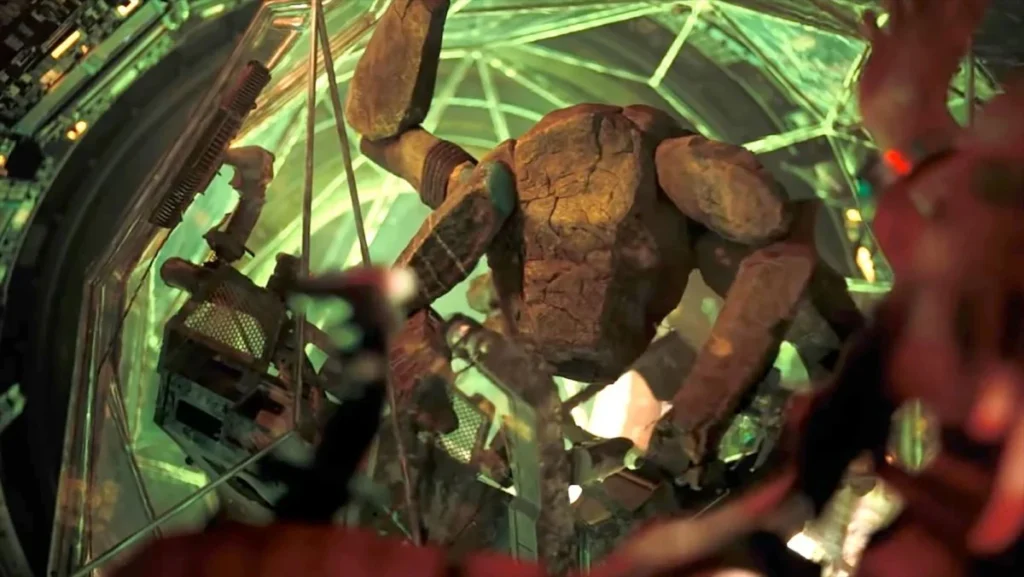

The cinematic adaptation of Andy Weir’s bestselling novel, Project Hail Mary, has landed in theaters, delivering a meticulously crafted science fiction experience that prioritizes scientific ingenuity and profound interspecies connection over conventional space opera spectacle. Directed by the acclaimed duo Phil Lord and Christopher Miller, known for their innovative and often humorous approach to filmmaking, the movie has been met with widespread critical praise, hailed as a potential modern classic in the genre. The film, released on March 20, 2026, builds upon the legacy of Weir’s previous adaptation, The Martian, offering audiences another compelling narrative grounded in scientific problem-solving and human (and alien) resilience.
The Genesis of a Cosmic Rescue Mission
Project Hail Mary is rooted in Andy Weir’s 2021 novel of the same name, a testament to his established ability to weave intricate scientific concepts into accessible and engaging narratives. The story’s premise centers on a dire existential threat to Earth: the "Petrova Line," a phenomenon discovered by Dr. Irina Petrova. This line is not a physical barrier but rather a vast stream of "Astrophage," alien microorganisms that consume solar energy. Their relentless feeding is causing a gradual dimming of stars, and Earth’s sun is consequently facing a catastrophic decline, predicted to plunge the planet into a new ice age.
In a desperate, last-ditch effort to avert planetary extinction, humanity embarked on a monumental undertaking: the Hail Mary mission. This ambitious endeavor involved sending a specialized spacecraft, crewed by scientists and astronauts, on a light-year journey to the Tau Ceti star system. The rationale behind targeting Tau Ceti was its apparent immunity to the Astrophage, suggesting it held a key to understanding or combating the threat. The Hail Mary spacecraft, a marvel of terrestrial engineering, was constructed with the specific objective of reaching this distant star and returning vital data to Earth.
A Solitary Awakening and an Unlikely Alliance
The narrative of Project Hail Mary truly begins with the awakening of Dr. Ryland Grace, portrayed by Ryan Gosling. Grace, a brilliant but initially amnesiac astronaut, finds himself the sole survivor aboard the Hail Mary. His disorientation is profound; he has no recollection of his identity, his mission, or even how he arrived in the vastness of space. The film masterfully chronicles Grace’s arduous journey of self-discovery and scientific deduction as he slowly pieces together the fragments of his memory. Through flashbacks and scientific logs, the audience learns about the global crisis, the development of the Astrophage threat, and the critical importance of his mission.
Grace’s objective, once fully understood, is to investigate why the Tau Ceti sun has remained unaffected by the Astrophage and to transmit this crucial information back to Earth, providing humanity with a fighting chance against the impending ice age. However, his solitary quest takes an extraordinary turn with the unexpected arrival of another spacecraft. This alien vessel carries a being that, remarkably, shares Grace’s mission and his planet’s peril. This encounter marks the introduction of Rocky, an alien friend whose presence and interactions with Grace form the emotional and intellectual core of the film.
The Art of Practical Effects and Interspecies Communication
A significant aspect of Project Hail Mary‘s critical acclaim stems from director duo Lord & Miller’s commitment to practical effects. Rather than relying heavily on computer-generated imagery (CGI) for the alien character, Rocky is brought to life through sophisticated puppetry, performed live on set. This choice lends a tangible and authentic presence to the alien, fostering a genuine sense of connection between Grace and Rocky that resonates deeply with the audience. This dedication to practical filmmaking is a deliberate artistic decision, aiming to create a more grounded and believable science fiction world, reminiscent of classic cinematic approaches that prioritized physical sets and character interaction.
The challenge of interspecies communication is a central theme, explored with both scientific rigor and heartwarming humor. Grace and Rocky must overcome vast biological and linguistic barriers to establish a common ground. Their efforts to understand each other’s technology, biology, and motivations are depicted with a blend of intellectual curiosity and comedic timing, showcasing Lord & Miller’s signature ability to balance complex themes with accessible, engaging storytelling. This collaborative effort between two vastly different beings facing a shared existential threat becomes a powerful allegory for cooperation and the universality of the drive to survive.
Scientific Integrity and Cinematic Spectacle
The film’s screenplay, penned by Drew Goddard, known for his work on The Cabin in the Woods and the series "The Good Place," successfully translates the intricate scientific details of Weir’s novel into a compelling visual narrative. While acknowledging that the book contains a greater depth of scientific explanation, Goddard and the directors have masterfully integrated the science into the film’s plot, character development, and decision-making processes. The science is not merely exposition; it is intrinsically woven into the fabric of the story, driving the characters’ actions and the plot’s progression.

Cinematographer Greig Fraser, a celebrated talent in contemporary filmmaking, imbues Project Hail Mary with breathtaking visuals. Fraser’s work captures the awe-inspiring beauty and terrifying vastness of space, juxtaposing it with the intimate confines of the spacecraft. The film is characterized by its vibrant and evocative imagery, finding light and color even within the darkness of the cosmos. Even the terrestrial scenes are rendered with a distinct and engaging quality, but it is Fraser’s evident passion for space that elevates the film to a visual masterpiece, leaving audiences captivated by its cosmic grandeur.
A Beacon of Hope and Intellectual Engagement
Beyond its scientific underpinnings and visual splendor, Project Hail Mary is a film imbued with a profound sense of hope. The narrative champions the power of science, ingenuity, and collaboration to overcome seemingly insurmountable challenges. The evolving friendship between Grace and Rocky serves as a powerful symbol of unity and the potential for understanding across species. This optimistic outlook, combined with the film’s inherent humor and sincerity, makes it a deeply inspiring and rewatchable cinematic experience.
The film’s success lies in its ability to engage the audience intellectually without requiring them to "switch their minds off." It presents complex scientific concepts in a way that is both understandable and integral to the plot, fostering a sense of wonder and encouraging viewers to contemplate the possibilities of scientific advancement and intergalactic cooperation. This rare quality—a film that is both entertaining and thought-provoking—positions Project Hail Mary as a significant contribution to the science fiction genre.
Critical Reception and Impact
Upon its release, Project Hail Mary has been lauded by critics for its masterful direction, compelling performances, and faithful adaptation of Weir’s celebrated novel. Many reviewers have placed it in the same esteemed category as other landmark space films such as Interstellar, Contact, Apollo 13, Gravity, and The Martian. The film’s innovative use of practical effects, particularly in the creation of the character Rocky, has been a standout feature, earning praise for its commitment to tangible filmmaking in an era dominated by digital artistry.
The critical consensus points to a film that excels in its ability to blend hard science fiction with genuine emotional depth and humor. The dynamic between Ryan Gosling’s Ryland Grace and the animated Rocky has been particularly highlighted as a key strength, providing the narrative with both its intellectual drive and its heartwarming resonance. The film’s optimistic message about the power of science and the potential for interspecies understanding has resonated with audiences and critics alike, offering a much-needed sense of hope and inspiration.
The implications of Project Hail Mary‘s success extend beyond its immediate box office performance and critical reception. It signifies a continued audience appetite for intelligent, well-crafted science fiction that explores complex themes without sacrificing entertainment value. The film’s success also underscores the enduring appeal of Andy Weir’s narrative style, which consistently grounds extraordinary circumstances in plausible scientific principles. Furthermore, the film’s celebration of practical effects and its commitment to creating a believable alien character through physical means could inspire future filmmakers to explore similar approaches, potentially ushering in a new appreciation for tangible artistry in visual effects.
Thematic Resonance and Future Prospects
At its core, Project Hail Mary is a story about hope. It is a testament to the human spirit’s capacity for problem-solving, even in the face of overwhelming odds. The narrative suggests that through collaboration, scientific inquiry, and a willingness to embrace the unknown, humanity—and indeed, any sentient species—can overcome existential threats. The film’s message is particularly pertinent in contemporary times, offering a vision of a future where cooperation and scientific endeavor are paramount to survival and progress.
The film’s conclusion leaves audiences with a sense of exhilaration and a renewed belief in the potential for overcoming great challenges. While the immediate threat to Earth may be addressed within the film’s narrative, the broader implications of interspecies communication and exploration remain vast. The success of Project Hail Mary suggests a strong possibility for future installments or spin-off stories, further exploring the universe and the continued adventures of Grace and Rocky, or the broader impact of their discoveries on humanity and potentially other civilizations. The journey to Tau Ceti and the understanding gained from it could indeed pave the way for a new era of interstellar relations and scientific advancement.
Alex Billington’s Assessment
Alex Billington, writing for First Showing, awarded Project Hail Mary an exceptional rating of 9.9 out of 10. Billington described the film as "modern sci-fi perfection" and expressed a deep emotional connection to the narrative, comparing the profound sense of wonder it evoked to that experienced with Denis Villeneuve’s Arrival. He highlighted the film’s rewatchability, attributing it to its inherent lightness, humor, and pervasive sense of hope. Billington emphasized that the film’s visual magnificence, achieved through the collaboration with cinematographer Greig Fraser, captured the beauty of space while focusing on the humanity and connection between the two protagonists. He concluded that Project Hail Mary is an exemplary piece of science fiction, reminding audiences of humanity’s potential to solve great problems through applied science and collaborative effort, and that the possibility of overcoming existential threats is ever-present, especially with a "buddy like Rocky" to help navigate the cosmos.