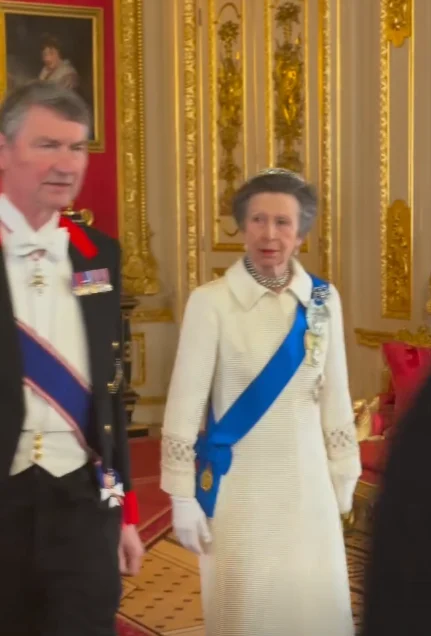

The Princess Royal has once again demonstrated her commitment to sartorial sustainability, making a striking appearance at a recent State Banquet by re-wearing a gown that has graced her wardrobe for nearly six decades. The elegant ensemble, first worn by Princess Anne as an 18-year-old in 1969, was a poignant highlight at the State Banquet held in honour of the President of Nigeria, Bola Ahmed Tinubu, marking the commencement of his official State Visit to the United Kingdom. This remarkable act of enduring style underscores a deeper narrative of frugality and thoughtful consumption within the Royal Family, set against the backdrop of significant diplomatic engagement.
A Legacy of Style and Sustainability
The gown, a testament to timeless 1960s design, has undergone minimal alterations over its extensive lifespan. Princess Anne’s discerning eye for enduring fashion is evident in the preservation of its distinctive print detailing on the wide cuffs of the sleeves. The only discernible modification observed for the recent State Banquet was a subtle adjustment to the neckline, where a discreet, low collar has replaced the original print-adorned version from its 1969 debut. This deliberate choice to repurpose and adapt a cherished garment speaks volumes about the Princess Royal’s personal philosophy, aligning with broader global conversations around reducing fashion waste and embracing conscious consumerism.
For the formal white-tie occasion, Princess Anne complemented the historic gown with the Meander tiara, a piece that has become a signature of her jewellery collection. Gifted to her by her parents, Queen Elizabeth II and Prince Philip, in 1972, the tiara’s inclusion adds another layer of personal history to the ensemble, linking the gown’s early years with a significant royal heirloom. The overall effect was one of understated elegance and profound personal connection, a stark yet sophisticated contrast to some of the more contemporary fashion choices seen on other royal attendees.
A Night of Royal Glamour and Diplomatic Significance
The State Banquet, a cornerstone of diplomatic visits, was a glittering affair attended by members of the Royal Family, government officials, and distinguished guests. This particular event held particular weight as it welcomed President Bola Ahmed Tinubu and his wife, Remi, to the UK. The State Visit itself marked a significant moment in bilateral relations, being the first of its kind for a Nigerian President in 37 years, underscoring the historical and evolving partnership between the two nations.
The diplomatic undertones of the evening extended to the sartorial choices of other senior royals. The Princess of Wales, Catherine, opted for a striking modern gala gown by Andrew Gn in a vibrant bottle green hue. Her choice, paired with the iconic pearl and diamond Lover’s Knot tiara, was widely interpreted as a subtle nod to the Nigerian flag, with the green and white colour scheme mirroring its national emblem. This thoughtful inclusion was perceived by many as a sophisticated display of soft power, demonstrating an awareness of cultural symbolism and a commitment to fostering goodwill.
Queen Camilla, ever the embodiment of regal grace, selected a cream coat dress from one of her preferred couturiers, Fiona Clare. Her choice of headwear was the sapphire and diamond tiara, a magnificent piece commissioned by Queen Elizabeth II in the early years of her reign. This diadem has become a favoured choice for Queen Camilla, notably being the first tiara she wore following King Charles III’s accession. Its appearance at the State Banquet for President Tinubu echoed its prominence at previous high-profile events, including the State Banquet for former US President Donald Trump during his 2025 State Visit.
The Duchess of Gloucester, Birgitte, also embraced the colour palette, opting for a navy evening gown accessorised with the all-diamond Iveagh tiara. Her ensemble provided a classic and dignified presence, harmonising with the overall opulence of the occasion.
The State Visit: A Detailed Chronology
The State Visit commenced with an official welcome ceremony led by King Charles III and Queen Camilla for President Tinubu and his wife. The day’s proceedings were carefully orchestrated, taking into account President Tinubu’s observance of Ramadan. Instead of the traditional formal luncheon, the King and Queen held an afternoon audience with the President.
The official welcome was followed by a ceremonial carriage procession, which wound its way through Windsor. This grand procession culminated in a full military display at Windsor Castle, a tradition that underscores the ceremonial importance of State Visits and offers a visual representation of the historical ties and modern alliances between nations.
The State Banquet itself, a culmination of the day’s formal engagements, was noted for its specific dietary considerations. In a move reflecting contemporary dietary trends and inclusivity, the banquet was exclusively vegetarian. Furthermore, a mocktail was served prior to the dinner service, catering to guests who may not partake in alcoholic beverages.
Supporting Data and Context
State Visits are meticulously planned diplomatic events designed to strengthen bilateral relations, foster economic ties, and facilitate dialogue on matters of mutual interest. The United Kingdom maintains a robust programme of State Visits, hosting heads of state from allied and friendly nations. These visits typically involve a series of high-level meetings, cultural exchanges, and ceremonial events, with the State Banquet serving as a prestigious highlight.
The economic relationship between the UK and Nigeria is significant. Nigeria, a major African economy, is a key trading partner for the UK, with substantial investments in sectors such as energy, telecommunications, and financial services. State Visits provide an opportune moment to review and enhance these economic partnerships, explore new avenues for collaboration, and address any trade-related challenges.
Historically, State Visits have played a crucial role in shaping international diplomacy. The tradition dates back centuries, evolving from royal progresses to the elaborate diplomatic engagements of today. Each visit is tailored to the specific relationship between the host and guest countries, reflecting shared values, historical connections, and future aspirations.
Analysis and Implications
Princess Anne’s decision to rewear her vintage gown, while a personal choice, carries broader implications. In an era increasingly dominated by fast fashion and the environmental impact of the textile industry, her consistent advocacy for sustainable wardrobe choices serves as a powerful example. For a public figure of her stature, this conscious act can inspire greater awareness and encourage more responsible consumption patterns among a wider audience. It subtly challenges the perceived need for constant novelty and highlights the enduring value of well-made, classic garments.
The diplomatic messaging embedded within the sartorial choices of the Royal Family is also noteworthy. The Princess of Wales’s deliberate use of colours aligning with the Nigerian flag demonstrates a keen understanding of diplomatic nuance and a commitment to cultural sensitivity. Such gestures, while seemingly minor, contribute to building rapport and fostering a sense of mutual respect between nations.
The overall success of a State Visit is measured not only by the agreements reached or the discussions held but also by the atmosphere of goodwill and strengthened understanding generated. The meticulous planning, from the ceremonial welcome to the dietary considerations at the banquet, all contribute to creating a positive and memorable experience for the visiting delegation. The presence of a Nigerian President in the UK after such a long interval signifies a renewed focus on the bilateral relationship and an opportunity to build upon existing foundations for future cooperation.
The choice of a vegetarian banquet, while a practical consideration, also reflects a growing global awareness of sustainable food practices and their environmental impact. This aligns with the broader sustainability agenda championed by the Royal Family, further reinforcing their commitment to environmental stewardship.
In conclusion, Princess Anne’s remarkable re-wearing of her nearly 60-year-old gown at the State Banquet for the President of Nigeria is more than just a fashion statement; it is a powerful embodiment of enduring style, personal values, and a commitment to sustainability. Set against the backdrop of a significant diplomatic engagement, her choice, alongside the thoughtful sartorial expressions of other senior royals, underscored the multifaceted nature of royal duty and its capacity to convey both tradition and contemporary relevance. This event served as a poignant reminder that true elegance often lies not in the fleeting trends of fashion, but in the timeless quality of well-loved pieces and the meaningful stories they carry.