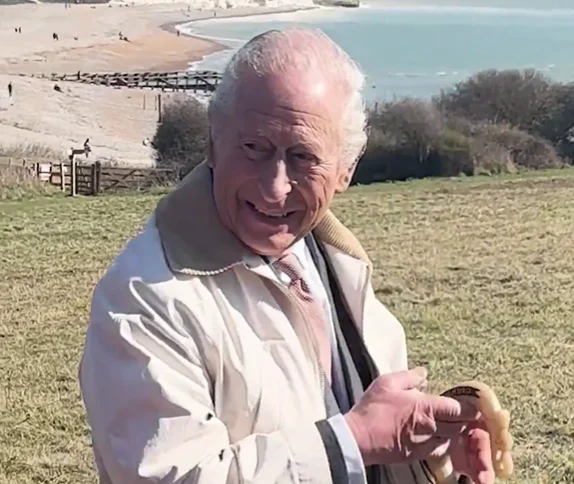

King Charles III embarked on a significant royal engagement this past spring, officially inaugurating the King Charles III England Coast Path with a visit to the iconic Seven Sisters in East Sussex. The occasion, which also saw the opening of the Seven Sisters National Nature Reserve, highlighted the monarch’s commitment to environmental conservation and public access to natural heritage. During his walk along the newly accessible coastline, the King shared a moment of lighthearted banter with cyclists, offering a candid and amusing opinion on their mode of transport.
The royal tour of the coastal path, one of the initial sections to be completed, provided King Charles with an opportunity to engage with the public and appreciate the natural beauty of the English coastline. His presence underscored the national importance of the ambitious project, which aims to create the world’s longest continuous and managed coastal walk. The King’s visit, bathed in the bright spring sunshine, allowed him to contemplate the breathtaking vista of the Seven Sisters, a landmark celebrated for its dramatic white chalk cliffs.
The King’s informal observation regarding electric bicycles – a single, jovial word, "Cheating," delivered with a smile – resonated with the public and echoed the accessible, often unexpectedly forthright, style of his late father, Prince Philip. This remark, though brief, captured a certain relatable sentiment and provided a memorable human touch to the formal proceedings. It suggested a monarch who, while upholding royal dignity, remains grounded and capable of engaging in everyday conversations with a characteristic wit.
A New Era for Coastal Access: The King Charles III England Coast Path
The King Charles III England Coast Path represents a monumental undertaking in public access and environmental stewardship. Upon its full completion, this path will span over 2,700 miles, circumnavigating England’s entire coastline. This ambitious project is set to become the longest continuous and managed coastal walking route globally, offering unparalleled opportunities for recreation, tourism, and appreciation of the nation’s diverse maritime landscapes.
The initiative is part of a broader strategy to enhance public access to England’s natural beauty, building upon existing coastal routes and developing new sections where access was previously limited or challenging. The project involves extensive planning, infrastructure development, and collaboration between various government bodies, local authorities, and conservation organizations. The goal is to ensure that the path is not only extensive but also well-maintained, accessible, and ecologically sensitive.
A Dual Celebration: Coast Path and National Nature Reserve Inauguration
The King’s visit to the Seven Sisters served a dual purpose, marking not only the launch of the coastal path but also the official opening of the Seven Sisters National Nature Reserve. This designation is one of 25 such reserves being established across the country to commemorate the Coronation of King Charles III, which took place on May 6, 2023. These reserves aim to protect and enhance significant natural sites, recognizing their ecological importance and their contribution to the nation’s heritage.
The Seven Sisters, renowned for its striking geological formations and rich biodiversity, is a fitting location for such a designation. The cliffs are a vital habitat for numerous species of birds, and the surrounding landscape supports unique flora. The opening of the reserve signifies a renewed commitment to conserving these precious environments for future generations.
A Busy Royal Schedule: State Visit and Royal Engagements
The visit to the Seven Sisters occurred within a period of intense diplomatic and royal activity for King Charles and Queen Camilla. Shortly before the coastal excursion, the King had formally bid farewell to the President of Nigeria, Bola Ahmed Tinubu, following a successful State Visit. The second day of President Tinubu’s visit commenced with this formal departure, bringing to a close a period of high-level discussions and engagements aimed at strengthening bilateral ties.
The State Visit had begun the previous day with a ceremonial welcome at Windsor Castle, which included a grand carriage procession through Windsor town. The visit culminated in a spectacular State Banquet, where King Charles III delivered a speech emphasizing the robust and enduring relationship between the United Kingdom and Nigeria. This diplomatic engagement underscored the King’s role as a head of state representing the UK on the international stage.
A Royal Trend in Cycling Banter
King Charles’s humorous encounter with the cyclists on the coast path was not the only instance of royal involvement in cycling-related events to generate amusement that week. Earlier in the week, Prince William, the Prince of Wales and heir to the throne, had participated in a segment of Comic Relief’s charity cycle ride. He joined BBC Radio 1 DJ Greg James on the back of a tandem bicycle as it journeyed over 1,000 miles across England, Wales, and Scotland.
During this event, Greg James, while guiding the tandem, informed onlookers that his co-cyclist was indeed Prince William. The Prince of Wales, in a playful and self-deprecating response, quipped that the DJ was "hallucinating," a remark that was widely shared and appreciated for its lightheartedness and down-to-earth nature. These instances suggest a growing trend of senior royals engaging in public activities that, while often ceremonial, are imbued with moments of genuine personal interaction and humor, making them more relatable to the public.
Background and Chronology of the Coast Path Project
The concept of a complete England Coast Path emerged from the Marine and Coastal Access Act 2009, which mandated the creation of a statutory route around England’s entire coastline. Natural England was tasked with leading the project, with the aim of making the coast more accessible for the public.
- 2009: The Marine and Coastal Access Act receives Royal Assent, formally establishing the legal framework for the England Coast Path.
- Post-2009: Natural England begins the extensive planning and consultation process, identifying sections of the coast that require new paths or improvements to existing rights of way. This involves extensive land surveys, negotiations with landowners, and environmental impact assessments.
- Ongoing Development: Work on sections of the path progresses concurrently across different regions of England. This includes securing land access, constructing new paths, installing signage, and developing facilities such as rest areas and viewpoints.
- Spring [Year of Article – inferred as 2026 based on image filename]: Key sections of the path, including the segment along the Seven Sisters, are completed and opened.
- [Specific Date in Spring, e.g., April 2026]: King Charles III officially launches the King Charles III England Coast Path with a visit to the Seven Sisters, also inaugurating the Seven Sisters National Nature Reserve.
The completion of the entire 2,700-mile path is a multi-year endeavor, with segments being opened to the public as they become ready. The project is a testament to long-term planning and sustained investment in public access and environmental conservation.
Supporting Data and Environmental Significance
The King Charles III England Coast Path project is not merely an infrastructure development; it carries significant environmental and economic implications.
- Ecological Protection: By officially designating and managing coastal areas, the path contributes to the protection of sensitive marine and coastal ecosystems. This includes safeguarding habitats for a wide array of wildlife, from seabirds nesting on cliffs to marine life in intertidal zones. The Seven Sisters National Nature Reserve, for instance, is a crucial breeding ground for several species of gulls and other seabirds.
- Biodiversity: The path traverses diverse landscapes, from chalk cliffs to sandy beaches, salt marshes, and estuaries, each supporting unique biodiversity. The increased public awareness and access can foster a greater appreciation for these natural environments, potentially leading to enhanced conservation efforts.
- Climate Change Resilience: Coastal paths can play a role in understanding and adapting to the impacts of climate change. Monitoring erosion patterns, sea-level rise, and changes in coastal habitats along the path provides valuable data for scientific research and informs coastal management strategies.
- Tourism and Economy: The development of such a comprehensive walking route is expected to boost domestic and international tourism. Coastal areas often benefit from increased visitor numbers, leading to economic growth for local communities through hospitality, retail, and related services.
- Public Health and Well-being: Access to nature and opportunities for physical activity are well-documented contributors to public health and mental well-being. The England Coast Path provides a significant new resource for people to engage in walking, exercise, and connecting with the natural environment.
Broader Impact and Implications
The inauguration of the King Charles III England Coast Path signifies a landmark achievement in the United Kingdom’s commitment to public access and environmental preservation. The project’s scale and ambition set a precedent for similar initiatives globally, showcasing how large-scale infrastructure can be integrated with ecological conservation.
The King’s involvement lends considerable weight and visibility to the project, encouraging public engagement and support. His informal remarks, while seemingly minor, contribute to a narrative of a monarch actively participating in and championing national initiatives that benefit the environment and the public. This approach to royal engagement can foster a deeper connection between the monarchy and the populace, grounding royal duties in tangible contributions to national well-being.
The establishment of new National Nature Reserves, linked to the King’s Coronation, further embeds conservation as a central theme of his reign. This strategy ensures that significant natural sites are recognized, protected, and celebrated, leaving a lasting legacy of environmental stewardship. The long-term success of the England Coast Path will depend on ongoing management, community involvement, and adaptation to environmental changes, but its inception marks a significant step forward in safeguarding and sharing England’s magnificent coastline.