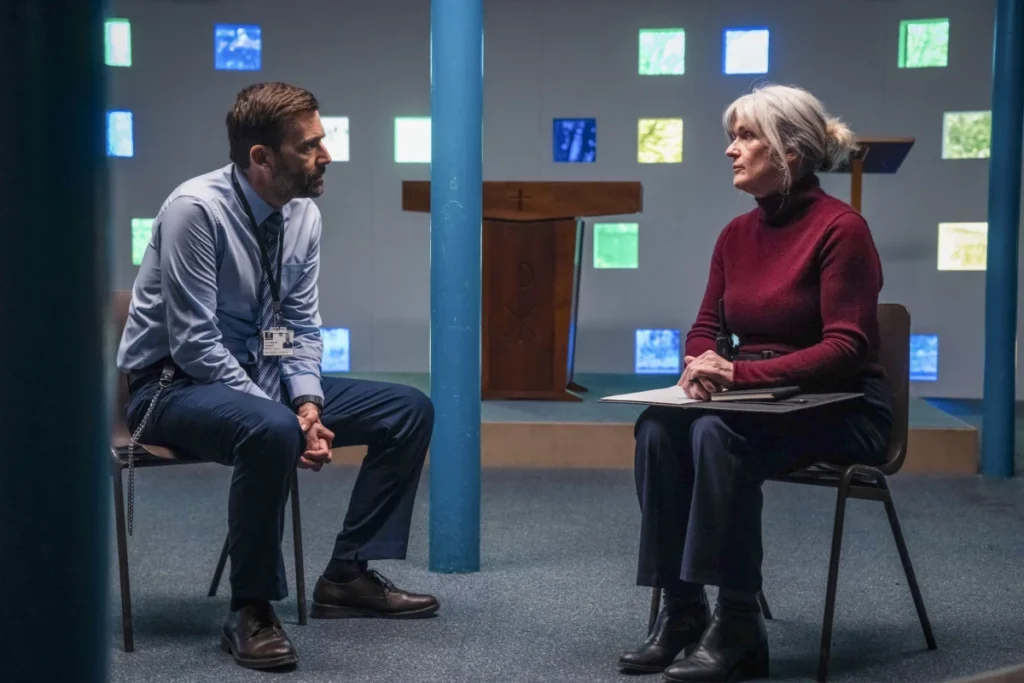

The third season of the critically acclaimed British drama Time has officially concluded, bringing a somber yet redemptive close to the harrowing stories woven throughout its latest installment. Starring Siobhan Finneran as Mary-Louise and David Tennant as Officer Bailey, the series finale navigated the complex intersection of institutional failure, moral reckoning, and the personal cost of seeking the truth. While the conclusion offers a definitive path forward for one protagonist, it leaves the professional future of the other in a state of precarious ambiguity, marking the end of the series’ run.
Created by Jimmy McGovern, Time has earned a reputation for its unflinching examination of the British justice system. This season, the narrative shifted its focus toward the internal mechanics of a Young Offenders Institution, exploring themes of faith, complicity, and the often-debated concept of “joint enterprise” law. With the series now finished, viewers are left with the final, poignant images of its characters attempting to reconcile their past actions with an uncertain future.
The Moral Calculus of Officer Bailey
The arc of Officer Bailey, portrayed by David Tennant, served as the primary vehicle for examining the ethical rot within the prison system. The narrative trajectory for Bailey centered on a critical juncture: a reconciliation meeting between two inmates, Ushindi (Chukwubuikem Molokwu) and Patsy (Louis Shelton), which resulted in the fatal stabbing of Ushindi.

Bailey, having identified the risks of the meeting, found himself caught between his conscience and the bureaucratic pressure to protect the institution’s reputation. The governor’s attempt to secure his silence through the promise of a promotion added a layer of systemic corruption to his personal struggle. The tragedy was compounded by the sudden, accidental death of his partner, Nicola (Jo Joyner), which stripped away the primary motivation for his silence.
In the final episodes, Bailey’s decision to testify against the prison’s mismanagement and expose the bribery attempt represented a shift from self-preservation to moral accountability. His testimony did not merely serve as a plot point; it was a profound rejection of the institutional silence that had defined his career. As McGovern noted, the character’s choice to tell the truth—without the possibility of personal gain or the presence of his late partner—solidified his status as a man who had finally chosen integrity over career advancement. However, the cost of this honesty is absolute; his career in the prison service is effectively over, leaving him to face an uncertain civilian life.
Mary-Louise and the Departure from Orthodoxy
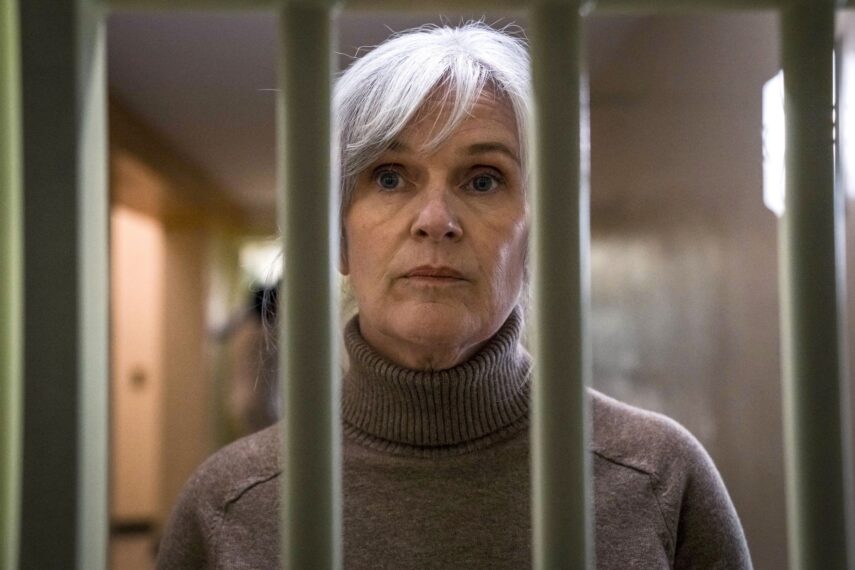
Siobhan Finneran’s portrayal of Mary-Louise provided the season with its thematic core regarding the Catholic Church and the role of women within religious institutions. Throughout the season, Mary-Louise’s disillusionment with the institutional church—and her subsequent exploration of personal faith—mirrored her complex relationship with the priest, Michael (David Wilmot).
The finale’s resolution, which sees the two characters deciding to leave the institution to pursue humanitarian work, acts as a critique of the Church’s gender dynamics. McGovern has been vocal about his fascination with the disproportionate value placed on priests versus nuns in Catholic doctrine, noting that the Church is historically more protective of its male clergy than its female religious counterparts. By choosing to walk away, Mary-Louise effectively reclaimed her autonomy. The final sequence, set against a backdrop of coastal serenity, emphasizes a transition from institutional servitude to a self-defined, practical application of faith, specifically focusing on the support of asylum seekers.
Contextualizing the Series: The Mechanics of the Story
The production of Time Season 3 was marked by a deliberate commitment to realism. Unlike previous seasons, which were structured around specific narrative blueprints, the third season was heavily influenced by primary research into youth detention centers. The pivotal story of a mother unable to communicate with her incarcerated son served as the foundational seed for the entire season.
This research-led approach also brought attention to the "joint enterprise" law—a legal principle in the United Kingdom that allows for multiple individuals to be convicted of murder even if they did not personally inflict the fatal blow. The series highlighted the devastating consequences of this law, particularly for youth caught in the periphery of violent crimes. By contrasting these systemic failures with the personal growth of the characters, the show provided a stark commentary on the limitations of modern jurisprudence.
Production Challenges and Creative Choices
The filming of the finale in Belfast presented unique environmental challenges, yet it provided a backdrop that enhanced the narrative’s emotional weight. The decision to kill off the character of Nicola, played by Jo Joyner, was a point of significant internal debate within the production team. McGovern revealed that the initial drafts explored less permanent solutions, such as her simply moving away, but the final decision to depict her death was driven by the need to force Bailey into a space of total vulnerability.
The, at times, polarizing nature of these creative decisions—specifically the romantic subplot between a nun and a priest—has drawn criticism from some quarters, particularly from those within religious communities who view the choice as an evasion of the characters’ vows. However, from a narrative standpoint, the arc was designed to prioritize the human element over strict theological adherence, ultimately focusing on the characters’ quest for purpose outside of traditional structures.
The Broader Impact of Time
Time has distinguished itself as a series that refuses to offer easy resolutions. By the time the credits rolled on the Season 3 finale, the audience was left with a clear picture of the characters’ internal shifts, even as their external circumstances remained precarious.
- Institutional Critique: The series successfully illuminated the "joint enterprise" scandal, bringing public awareness to a legal gray area that frequently results in disproportionate sentencing for young offenders.
- Character-Driven Drama: By focusing on the quiet, often stagnant moments—such as the scene between Bailey and Mary-Louise—the show proved that high-stakes television does not always require pyrotechnics or complex plot twists.
- The End of an Era: With no Season 4 planned, the conclusion of Season 3 serves as a definitive end to the anthology series. It leaves behind a legacy of gritty, high-caliber performances and a willingness to tackle the most uncomfortable aspects of the British carceral state.
In retrospect, the finale functions as a study of agency. Whether it was Peter, the young man who managed to escape the trap of the justice system, or Mary-Louise, who escaped the trap of the Church, the narrative consistently rewarded those who dared to step outside of established, broken systems. For Bailey, the path remains unwritten, but the weight of his actions suggests a man who has finally stopped running from his own conscience. As the series fades, the story of these individuals lingers as a testament to the resilience of the human spirit when faced with the cold machinery of state and religious institutions.