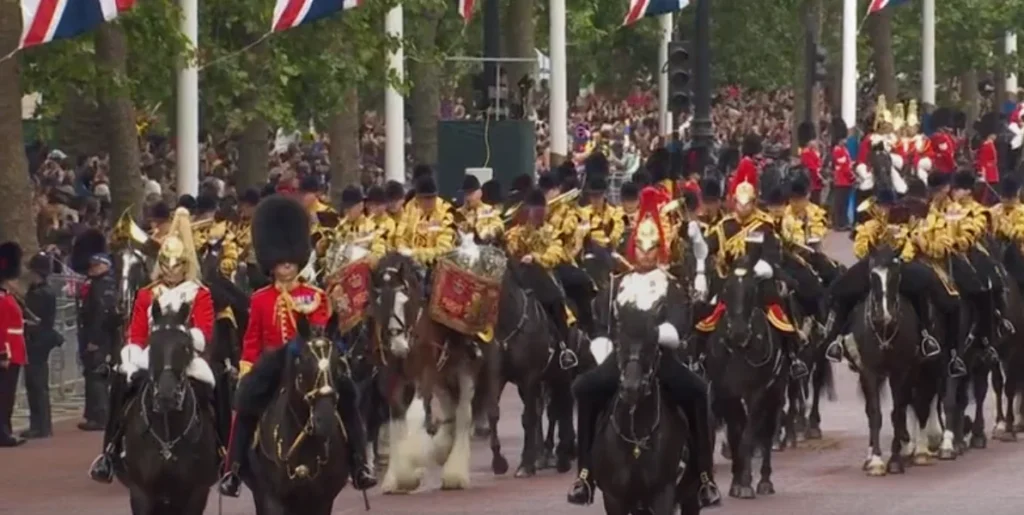

In a major operational shift set to take effect next month, the Metropolitan Police is drastically scaling down its deployment at Trooping the Colour, the Changing of the Guard, and royal gun salutes. Under the new framework, the vast majority of traditional police duties during these high-profile national celebrations will be transferred to private security contractors. The decision marks a significant departure from decades of established protocol, during which armed and uniformed officers formed the bedrock of crowd control and public safety for the British Monarchy’s most visible pageantry.
The restructuring is primarily driven by mounting financial deficits within Britain’s largest police force and an acute political imperative to return officers to neighbourhood frontline duties. Over the past year alone, the Met recorded roughly 17,800 officer deployments in direct support of military ceremonial events, accumulating an estimated expenditure of £10.6 million. These deployments frequently forced the diversion of specialized personnel—including elite motorcycle units from traffic divisions—away from daily community policing tasks and core crime-fighting responsibilities.
While force leadership insists that community safety and visible neighbourhood patrols must take precedence, the decision has drawn sharp criticism from senior military figures, defense officials, and parliamentarians. Critics argue that outsourcing security for high-profile state occasions compromises national resilience, places undue risk on members of the Armed Forces, and blurs the legal boundaries of internal security enforcement.
Financial Strain and the Strategic Pivot to the Frontline
The Metropolitan Police has faced sustained budgetary constraints, inflationary pressures, and heightened public expectations regarding street-level crime. For years, the force has absorbed the heavy logistical and financial burden of securing state and royal ceremonies, which require extensive road closures, detailed counter-terrorism mitigations, and prolonged crowd management.
Defending the upcoming changes, a spokesperson for the Metropolitan Police emphasized that public demand firmly centers on visible deterrence against street crime. "The public rightly want to see officers on the front line, arresting criminals and keeping our city safe. That’s our priority," the spokesperson stated. Against a backdrop of severe fiscal tightening and rising operational demands, the force maintained that it was compelled to make difficult compromises regarding resource allocation.
Under the revised policy, future police support for military and royal events will no longer be guaranteed by default. Instead, deployments will rely strictly on rigorous, case-by-case assessments of threat, harm, and risk, meaning armed and statutory law enforcement will only be present where deemed operationally indispensable.
Historical Background and the Scale of Royal Ceremonial Policing
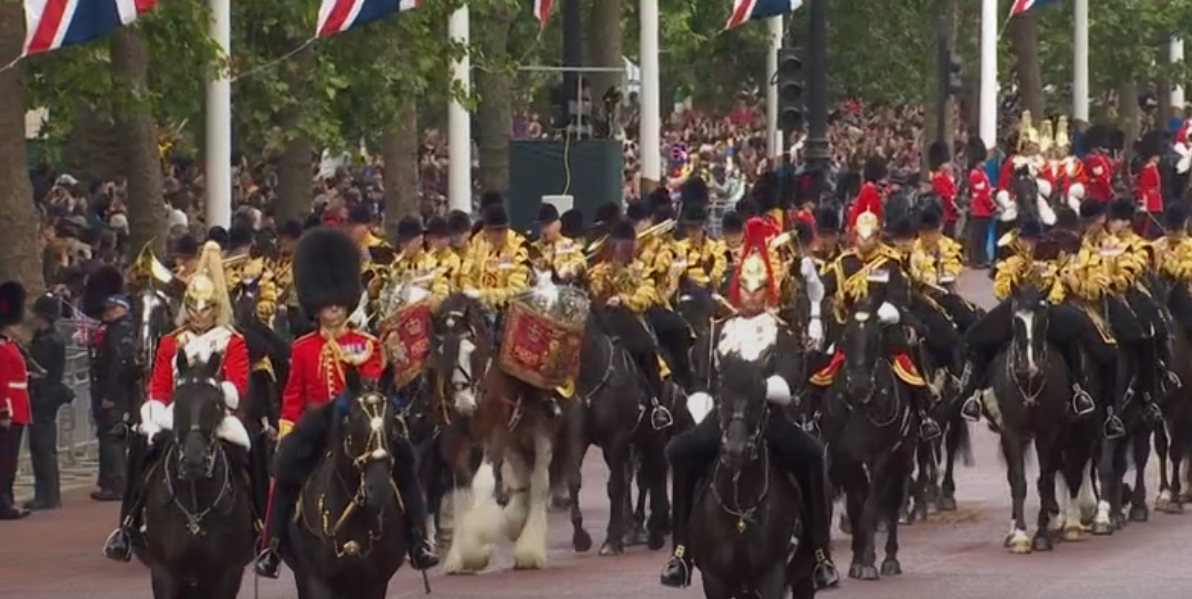
Trooping the Colour, officially known as the King’s Birthday Parade, stands as one of the most complex logistical operations in the United Kingdom’s annual calendar. Dating back centuries, the event draws tens of thousands of spectators to central London, converging along The Mall and around Horse Guards Parade to witness over 1,400 parading soldiers, 200 horses, and 400 musicians.
Historically, securing such massive congregations of tourists, dignitaries, and the Royal Family required an impenetrable ring of steel managed by the Metropolitan Police, working in tandem with intelligence agencies and military police. The Changing of the Guard, which takes place almost daily outside Buckingham Palace and Windsor Castle, similarly demands continuous crowd management to prevent bottlenecks and mitigate pedestrian-vehicle conflicts.
With the Met allocating officers on 17,800 separate occasions for these duties over a 12-month period—totalling £10.6 million—internal reviews concluded that the status quo was fiscally unsustainable. By shifting baseline crowd control and stewarding responsibilities to private security providers, the force aims to claw back millions of pounds and thousands of officer-hours, redirecting them toward urban crime initiatives.
Outcry from Military Leadership and Defense Experts
Despite the financial logic underpinning the Met’s decision, the transfer of security duties to private firms has triggered deep disquiet within defense circles. Senior military commanders have questioned the legal authority, training, and tactical capabilities of private guards when faced with potential public disorder, civil unrest, or coordinated security threats.
General Lord Dannatt, the former Chief of the General Staff, launched a scathing critique of the plan, questioning how risk assessments could justify delegating such sensitive tasks to commercial enterprises. "The bottom line is internal security is the responsibility of the Metropolitan Police, end of story," Lord Dannatt asserted. "I am surprised that a risk assessment can outsource something like this to private security. On the face of it, it sounds wrong and shouldn’t be driven on cost grounds."
An anonymous Army source echoed these anxieties, warning that private contractors lack the statutory powers, specialized tactical training, and psychological preparedness required to assure the safety of both soldiers and civilians in an active threat scenario. These concerns are far from theoretical; they arrive at a time of heightened vulnerability for British military personnel. Notably, the security debate unfolds in the shadow of the 2024 attempted murder of Lieutenant Colonel Mark Teeton, who was attacked in uniform by Anthony Esan—a stark reminder that service members remain potential targets for violent extremists on British soil.
Political Reactions and Parliamentary Scrutiny
The policy shift has quickly escalated into a Westminster controversy, drawing condemnation from both the opposition and cross-bench parliamentarians who view the move as a retreat from core state responsibilities.
Shadow Defence Secretary James Cartlidge labeled the reported changes "very concerning," arguing that members of the Armed Forces participating in state pageantry have a fundamental right to robust policing protection. Cartlidge urged government ministers to intervene and provide urgent public reassurance that major ceremonial events will maintain their historic standards of security.
The sentiment was shared by Liberal Democrat MP Mike Martin, a member of the House of Commons Defence Select Committee, who described the decision as "outrageous." Martin warned that diluting police protection during state occasions sends a dangerous signal and undermines Britain’s broader national security resilience at a time of geopolitical instability.
Ministry of Defence Stance and Future Outlook
While military leaders and politicians express alarm, the Ministry of Defence has adopted a more diplomatic tone, emphasizing ongoing cooperation with civilian authorities. A spokesperson for the department acknowledged the historical partnership, noting: "We continue to work collaboratively with the Metropolitan Police on ceremonial events and greatly value the support of our policing colleagues, whose contribution to delivering these important activities is invaluable."
Nevertheless, as the implementation date approaches next month, significant questions remain unanswered. The transition will require seamless coordination between private security firms, the Ministry of Defence Police, military units, and the slimmed-down Metropolitan Police details.
As London prepares to host its next wave of royal pageantry under this new security paradigm, the nation will be watching closely to determine whether commercial contractors can successfully shoulder the heavy mantle of protecting the British Monarchy and the public, or if the experiment will force a hasty reevaluation of police resourcing priorities at the highest levels of government.