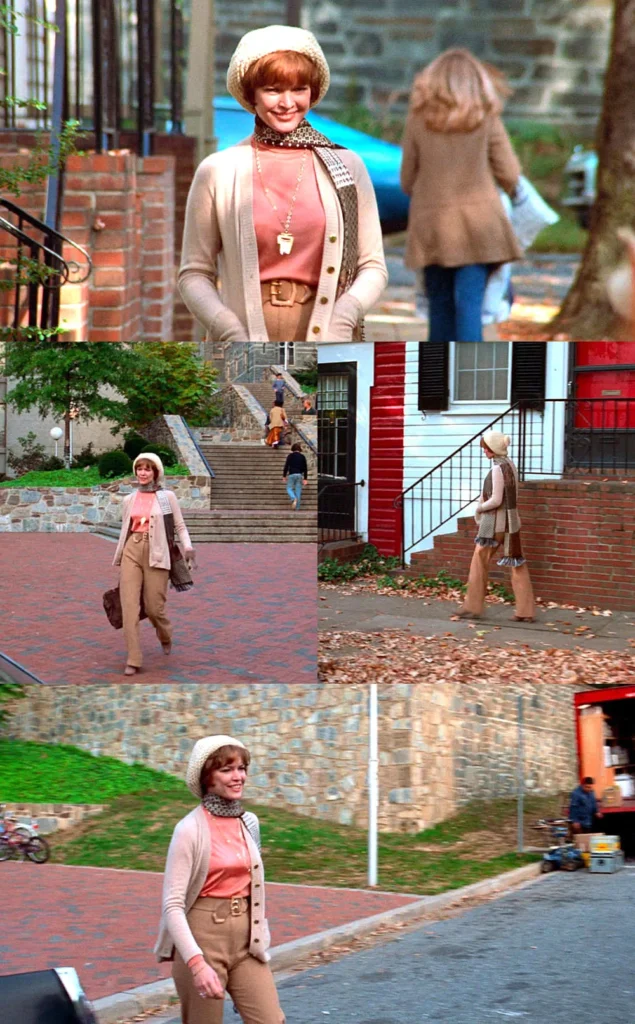

Released initially in the winter of 1973, William Friedkin’s cinematic adaptation of William Peter Blatty’s novel The Exorcist remains a foundational pillar of the horror genre, continually studied for its unique synthesis of domestic drama, documentary-style realism, and theological inquiry. More than five decades after its theatrical debut, cultural critics and film historians continue to peel back the layers of this landmark production, shifting focus away from its infamous reputation for visceral shock value and toward its meticulous structural setup and sophisticated costume design.
The Genesis and Narrative Architecture

The historical record surrounding the production of The Exorcist highlights a deliberate choice by director William Friedkin to approach a supernatural narrative through the lens of strict realism. Blatty, a devout Catholic, structured his novel meticulously to mirror the rigorous protocol the Roman Catholic Church undertakes before authorizing an exorcism. This procedural approach forms the backbone of the film’s first two acts, functioning less like a traditional supernatural thriller and more like an engrossing medical and psychological drama.
The narrative relies on the convergence of three distinct character arcs: Chris MacNeil, a successful actress desperate to find a diagnosis and cure for her rapidly deteriorating daughter; Father Damien Karras, a young Jesuit priest grappling with profound guilt and a crisis of faith; and Father Lankester Merrin, an aging archaeologist and priest who recognizes that he is being summoned to one final confrontation with an ancient demonic entity.
Crucially, the actual ritual of exorcism occupies only a fraction of the film’s total runtime, lasting approximately ten minutes. The preceding hours are dedicated to exhausting every rational, scientific, and psychological explanation for Regan MacNeil’s behavioral changes. This slow-burn pacing mirrors the institutional skepticism of the medical establishment and the Catholic hierarchy alike, lending a chilling sense of authenticity to the proceedings long before physical manifestations of the supernatural take center stage.

The Star-Studded Inspiration and Character Parallelism
Behind the fictionalized facade of Chris MacNeil lies a direct Hollywood parallel that heavily influenced both the literary creation and visual translation of the character. William Peter Blatty modeled Chris MacNeil closely on actress Shirley MacLaine, with whom he shared a neighborly friendship during the era. The surname MacNeil itself serves as an incomplete anagram of MacLaine. Furthermore, the complex dynamic between Chris and her daughter Regan was informed by MacLaine’s relationship with her own daughter, Sasha, with certain conversational fragments finding their way directly into the text.
Director William Friedkin leaned into this real-world inspiration by collaborating with costume designer Joe Fretwell to style Ellen Burstyn in a manner that visually evoked MacLaine’s public persona and aesthetic during the early 1970s. This casting and styling choice anchored the horror in an upper-crust, secular reality. Chris MacNeil is portrayed not as a superstitious or traditionally religious archetype, but as an elite, secularized figure who dines at the White House, employs a domestic staff, and commands a lifestyle far removed from the typical protagonists of horror cinema. The jarring juxtaposition between this glamorous, high-society milieu and the abject degradation occurring within a Georgetown bedroom heightened the psychological discomfort for audiences in 1973.

Costume Design as a Narrative Device
Costume designer Joe Fretwell’s work on The Exorcist offers a masterclass in utilizing wardrobe to track psychological strain and social displacement. Rather than adopting the most garish or exaggerated fashion trends of the early 1970s, Fretwell dressed Chris MacNeil in soft beiges, muted blues, classic silhouettes, and an abundance of sophisticated knitwear and scarves. These choices underscored her wealth and cultivated an atmosphere of quiet luxury.
Subtle accessories played an important role in character establishment. For instance, the inclusion of a Hand of Fatima necklace worn by Chris served as a quiet, deliberate indicator that she was not a practicing Christian, establishing an ideological distance from the clergy who would eventually enter her home. Throughout the early scenes, massive diamond rings and tailored garments signaled an existence built on self-presentation and control.

As the narrative progressed and the medical mystery devolved into an uncontrollable crisis, Fretwell’s costume choices shifted to reflect mounting desperation. A notable example is a vibrant green plaid coat worn by Burstyn in the film’s middle sequence. Departing from the cool, neutral tones of her earlier wardrobe, this loud, trendy outerwear signaled a woman at her breaking point—someone who had spent weeks screaming at ineffectual medical professionals and was rapidly losing her grip on her aristocratic composure.
Later in the film, as Chris seeks counsel from Father Karras, her wardrobe tones down significantly into a plain cloth coat, indicating a shedding of movie-star pretensions. By the time the exorcism is underway, her transformation is complete: the glamorous, outspoken celebrity is depicted in a rocking chair with needlepoint, having surrendered the autonomy of her household to the church—a visual metaphor deeply rooted in traditional patriarchal and religious structures. Finally, in the film’s denouement, Chris returns to a semblance of her former appearance with a fur coat and a hardened, weathered makeup palette, visually translating the immense psychological toll of the ordeal.
Audience Reception and Cultural Legacy

Upon its release by Warner Bros. Pictures, The Exorcist sparked intense cultural debates, driving unprecedented box office returns while simultaneously facing bans, protests, and moral condemnation from various religious and civic organizations worldwide. The film’s notoriety was heavily bolstered by contemporaneous media reports of audience members fainting, vomiting, and fleeing theaters in terror.
However, studio executives and filmmakers have consistently maintained that the most visceral audience reactions were not triggered by the supernatural elements or the climax of the exorcism, but rather by the agonizing medical examination scenes preceding it. The prolonged sequences of Regan undergoing brutal, invasive neurological tests resonated painfully with viewers, tapping into a universal fear of institutionalized medical helplessness.
Furthermore, film scholars have frequently noted a central irony in the film’s ideological framework. While The Exorcist was fiercely denounced by various religious groups for its blasphemous imagery and depiction of demonic possession, the narrative itself asserts the absolute supremacy of Catholic ritual as the sole defense against evil. Yet, within the mechanics of the plot, the titular priest, Father Karras, ultimately defeats the entity not through liturgical mastery alone, but through a desperate, physical act of self-sacrifice—tackling the demon out a bedroom window.

Implications and Ongoing Analysis
As cultural institutions continue to reexamine 1970s cinema through modern critical frameworks, The Exorcist endures as a complex text that defies simplistic categorization. It operates simultaneously as a high-water mark of studio horror, a scathing critique of medical paternalism, and a psychological portrait of maternal desperation. By grounding the extraordinary in the ordinary—utilizing Georgetown townhouses, documentary cinematography, and meticulously curated wardrobes of quiet luxury—Friedkin and his collaborators ensured that the film’s terror would stem not merely from the supernatural, but from the terrifying realization that human control is perpetually fragile.