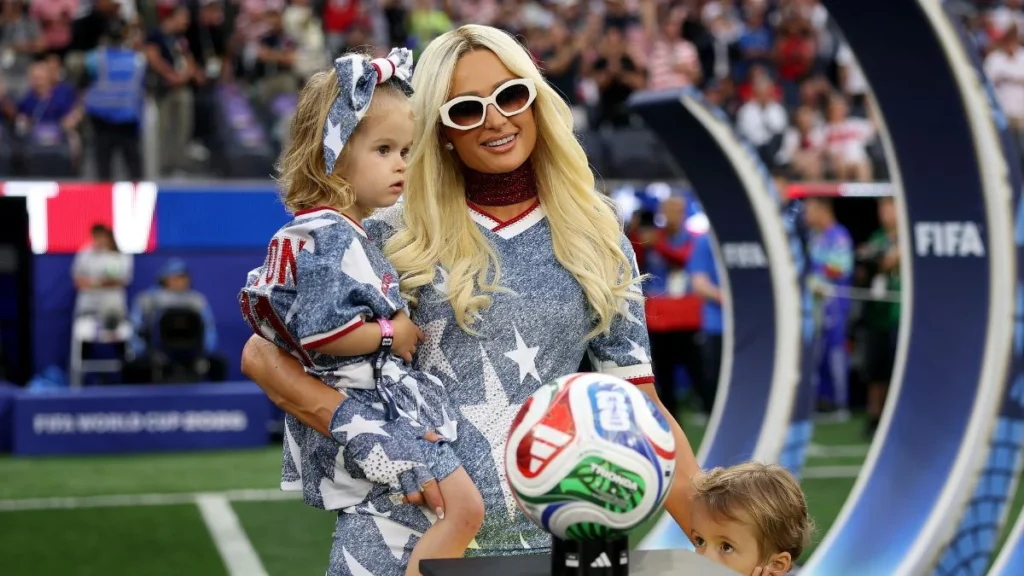

Global media personality and entrepreneur Paris Hilton has once again captured the public spotlight with her elaborate holiday traditions, kicking off the festive season by transforming her family into television’s most famously macabre brood: The Addams Family. In a series of professionally styled photographs shared across her digital platforms, Hilton, alongside her husband Carter Reum and their two young children, embraced the spooky season with a high-fashion, meticulously detailed recreation of the iconic fictional household.
The extensive photo gallery, which quickly amassed hundreds of thousands of interactions within hours of publication, highlights a growing trend among contemporary celebrities who utilize high-concept, theatrical holiday costuming as a form of cultural engagement. For Hilton, who has built an empire on pop-culture nostalgia and brand curation, the Addams Family concept serves as both a personal family milestone and a masterclass in modern digital PR, reinforcing her presence as a dominant fixture in lifestyle media.
Main Facts of the Family Transformation
The central focus of the viral social media post is the complete aesthetic transformation of the Hilton-Reum household into the classic gothic clan. Paris Hilton assumed the role of the elegant and chilling matriarch, Morticia Addams, clad in a form-fitting, floor-length black gown that echoed the character’s signature silhouette originally popularized by Carolyn Jones and later modernized by Anjelica Huston and Catherine Zeta-Jones.
Carter Reum stepped into the role of the passionate patriarch, Gomez Addams, donning a pinstripe suit and maintaining a committed, theatrical posture throughout the session. However, the focal point for many commentators was the children’s costuming. Two-year-old daughter London was outfitted as Wednesday Addams, complete with the character’s iconic braided pigtails—achieved via a miniature wig tailored for the toddler—and a stark, white-collared black dress. Three-year-old son Phoenix completed the family portrait as Pugsley Addams, wearing the character’s traditional striped jersey and shorts ensemble.
The juxtaposition between the parents’ stoic, gothic modeling and the toddlers’ natural, unpredictable behavior provided a charming contrast that resonated deeply with online audiences. While Hilton and Reum attempted to maintain the deadpan, serious expressions synonymous with Charles Addams’ creations, the young children occasionally broke character, offering genuine smiles and playful antics that softened the otherwise eerie aesthetic.
Chronology of Holiday Content and Digital Engagement
The release of the Addams Family photoshoot is part of a broader, multi-tiered content strategy deployed by Hilton for the autumn holiday season. Over recent years, high-profile influencers and legacy celebrities have transformed single-day holidays into weeks-long content cycles, releasing multiple distinct themed photoshoots leading up to October 31.
Chronologically, the Addams Family reveal followed a series of preliminary lifestyle updates shared by Hilton on Instagram and other platforms. In the days leading up to the main reveal, hints regarding the family’s extensive costume wardrobe began circulating, signaling to followers that multiple themes were in development for the 2026 season. Industry analysts note that this episodic approach to holiday content maximizes audience retention, algorithmic visibility, and engagement metrics.
By publishing a carousel of approximately 20 distinct images accompanied by the caption, “Mon chéri, we’re home,” Hilton successfully leveraged a recognizable catchphrase from the franchise to drive user comments and shares. Within a remarkably short timeframe, the publication surpassed 385,000 likes, accompanied by tens of thousands of supportive remarks from fans, fellow celebrities, and lifestyle brands. Among the standout reactions was a viral comment from a follower suggesting that the holiday be permanently renamed “PARISWEEN,” a sentiment that quickly gained traction and underscored the cultural footprint of Hilton’s personal brand.
Supporting Data and Celebrity Holiday Trends
The commercial and cultural phenomenon of celebrity Halloween costuming has evolved into a significant sector of digital media economics. Major entertainment figures frequently invest substantial resources—ranging from professional styling teams and custom prosthetic makeup artists to specialized studio lighting—into holiday productions that rival professional editorial campaigns.
According to digital media engagement metrics, family-centric holiday posts consistently outperform standard promotional content for major influencers. Content featuring young children, when combined with universally recognized pop-culture intellectual properties such as The Addams Family or Disney classics, generates significantly higher conversion rates in terms of profile visits, follower acquisition, and brand partnerships. Hilton, whose entrepreneurial ventures span lifestyle products, media production, and consumer goods, frequently utilizes these high-engagement windows to maintain audience loyalty across her digital ecosystem.
Furthermore, the choice of The Addams Family taps into sustained generational interest driven by recent media adaptations. Following the monumental global success of the Netflix series Wednesday, starring Jenna Ortega, the intellectual property has experienced a massive resurgence in mainstream popularity, making Wednesday and Pugsley Addams among the most replicated costume choices for children and adults alike.
Public Reaction and Cultural Implications
The public response to Hilton’s portrayal of Morticia Addams alongside her children has been overwhelmingly positive, reflecting a broader cultural shift in how modern celebrity motherhood is perceived and performed. Historically, public figures guarded their children’s privacy rigorously or avoided blending family life with commercial branding. However, contemporary digital entrepreneurship relies heavily on the "momfluencer" model, where domestic life, parenting milestones, and seasonal celebrations are artfully curated for public consumption.
Commentators and parenting experts observing the trend note that elaborate holiday costuming fosters creativity and shared family participation. In Hilton’s case, the careful adaptation of adult gothic fashion into toddler-sized apparel demonstrates a high level of production value that appeals to both adult pop-culture enthusiasts and family-oriented audiences.
At the same time, cultural critics point out the complex nature of placing very young children into high-visibility media environments. While toddlers London and Phoenix are currently too young to comprehend the scale of digital exposure, their inclusion in heavily styled public showcases sets a precedent for their lifelong integration into public media spaces. Nonetheless, public perception remains largely celebratory, focusing on the aesthetic charm of the children in costume rather than broader structural debates regarding child privacy in the digital age.
Broader Impact on Celebrity Branding and Media Strategy
Paris Hilton’s successful deployment of seasonal holiday themes highlights the enduring viability of personal branding in the modern digital economy. By seamlessly blending high-fashion sensibilities with accessible, family-friendly humor, Hilton bridges the gap between aspirational glamour and relatable parenthood.
The transition from early-2000s reality television icon to modern family matriarch and successful business mogul has required a continuous evolution of public persona. Content series like her Halloween costume reveals serve a strategic purpose: they humanize a historically polarizing celebrity figure while maintaining the elevated aesthetic standards expected by her global fan base.
As digital platforms continue to prioritize video carousels and high-engagement visual storytelling, high-concept holiday productions will likely remain a staple of celebrity media strategies. Hilton’s early and enthusiastic embrace of the 2026 Halloween season establishes a high benchmark for peer engagement, proving that strategic nostalgia, combined with family participation, remains one of the most effective tools in contemporary digital public relations.