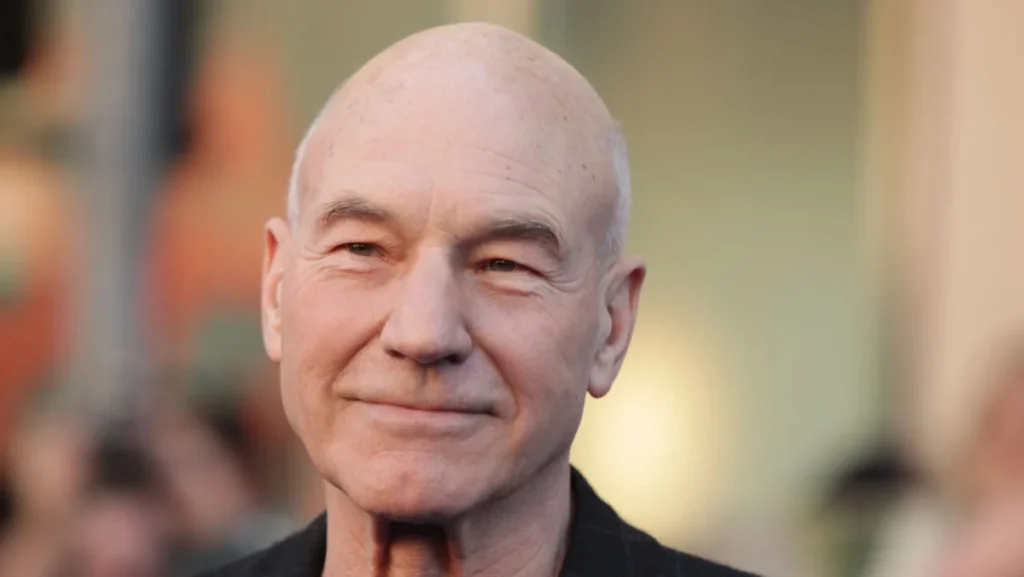

The global arts community is mourning the loss of Sir Patrick Stewart, a titan of stage and screen whose career spanned more than six decades and bridged the gap between Shakespearean tradition and modern science-fiction iconography. Stewart passed away on Wednesday, October 28, 2026, at his home in Los Angeles. He was 86 years old. According to a statement issued by his longtime representative, Kelly Bush Novak, the actor died following a brief, courageous battle with Alzheimer’s disease and Lewy body dementia. He was surrounded by his family, including his wife, Sunny Ozell.
A Legacy Defined by Versatility
Stewart’s professional journey was defined by a rare duality: he was as comfortable commanding the bridge of the USS Enterprise as he was performing soliloquies at the Royal Shakespeare Company. Born in Mirfield, West Yorkshire, in 1940, Stewart’s early life was marked by hardship, which he often cited as the catalyst for his escape into the transformative power of theater.
His early career was firmly rooted in the classical tradition. He joined the Royal Shakespeare Company (RSC) in 1966, where he spent 14 years honing his craft. His transition to international superstardom arrived in 1987 when he was cast as Captain Jean-Luc Picard in Star Trek: The Next Generation. The role, which he reprised in several feature films and the recent series Star Trek: Picard, moved the science fiction genre into new territory, emphasizing diplomacy, philosophical inquiry, and moral complexity.
In the early 2000s, Stewart achieved a second wave of mainstream prominence by portraying Professor Charles Xavier in the X-Men film franchise. His portrayal of the telepathic mutant leader brought a gravitas to the superhero genre that critics argue helped pave the way for the modern cinematic dominance of comic book adaptations.
Chronology of a Storied Career
- 1966–1980: Stewart establishes himself as a premier stage actor with the Royal Shakespeare Company, earning critical acclaim for his interpretations of characters like Shylock, King John, and Enobarbus.
- 1987: He takes on the role of Captain Jean-Luc Picard in Star Trek: The Next Generation, a performance that turns him into a global cultural icon.
- 1993: Stewart makes his Broadway debut in A Christmas Carol, a one-man show that earns him a Drama Desk Award.
- 2000: The premiere of X-Men introduces a new generation of fans to Stewart as Professor Charles Xavier, a role he would return to for over two decades.
- 2010: Stewart is knighted by Queen Elizabeth II at Buckingham Palace for his services to drama.
- 2026: Stewart concludes his final on-screen performance in the upcoming feature Avengers: Doomsday, set for release this December.
Tributes from Peers and Collaborators
The outpouring of grief following the announcement of his death reflects the profound impact Stewart had on his contemporaries. Sir Ian McKellen, whose friendship with Stewart became a legendary example of creative partnership, shared a poignant reflection on their shared history. "We first met as ambitious young actors… half a century ago," McKellen wrote. He recalled his initial skepticism regarding Stewart’s decision to pursue the lead role in Star Trek, fearing it would pull him away from the classical stage. "Well, he took the risk, and thank goodness for us all that he did," McKellen noted, citing the breadth of Stewart’s work across both mediums.
William Shatner, the original captain of the Enterprise, acknowledged the unique bond shared by those who have steered the franchise. "From the stage to the bridge of the Enterprise, he brought intelligence, grace, and a deep sense of humanity to everything he did," Shatner stated.
The comedic side of Stewart’s range, particularly his voice work, was celebrated by Seth MacFarlane. Having directed Stewart on American Dad!, Family Guy, and Ted, MacFarlane highlighted the actor’s technical mastery. "He was that rare actor who could take any bit of dialogue and elevate it, making a good writer sound great, and a great writer sound masterful."
The Impact of the "Picard" Effect
The character of Jean-Luc Picard is widely considered one of the most influential roles in television history. Sociologists and media critics have often pointed to the "Picard Effect"—a phenomenon where Stewart’s performance encouraged an entire generation of viewers to value diplomacy, scientific curiosity, and integrity.
Beyond his acting, Stewart was a prominent activist. He served as a patron for various human rights organizations and was a vocal advocate for domestic violence awareness, drawing from his own childhood experiences to shed light on systemic issues. His ability to use his celebrity platform for social advocacy endeared him to audiences who never saw him on stage or screen, establishing him as a public intellectual as much as an entertainer.
Industry Implications and the Road Ahead
The passing of Sir Patrick Stewart marks the end of a bridge between the traditional theater guard and the modern digital era of entertainment. As Marvel Studios head Kevin Feige observed, Stewart’s presence on set was transformative. His ability to maintain a sharp sense of humor while delivering performances of immense weight defined his professional ethos.
The industry now looks toward the release of Avengers: Doomsday as a bittersweet finale to a career that refused to be categorized. While the production had already wrapped, the film is expected to serve as a tribute to his enduring relevance.
A Lasting Legacy
Stewart’s influence on the craft of acting cannot be overstated. He demonstrated that a performer could be a global blockbuster star without sacrificing the nuances of classical training. Whether through his distinct baritone voice, his penchant for self-deprecating humor, or his unwavering dedication to the integrity of his roles, Stewart left an indelible mark on the landscape of popular culture.
As fans across the globe revisit his work, the sentiment shared by George Takei resonates widely: "He inspired a whole next generation of star-gazers who looked longingly ahead to a brighter future for all humanity." While the world has lost a singular talent, the breadth of his recorded work ensures that his voice and his vision will continue to be studied and admired by students of the craft for generations to come.
The family has requested privacy during this difficult time, and information regarding memorial services is expected to be released by his representatives in the coming weeks. For now, the theater lights dim across the West End and Broadway, a symbolic gesture for a man who spent his life illuminating the complexities of the human condition.