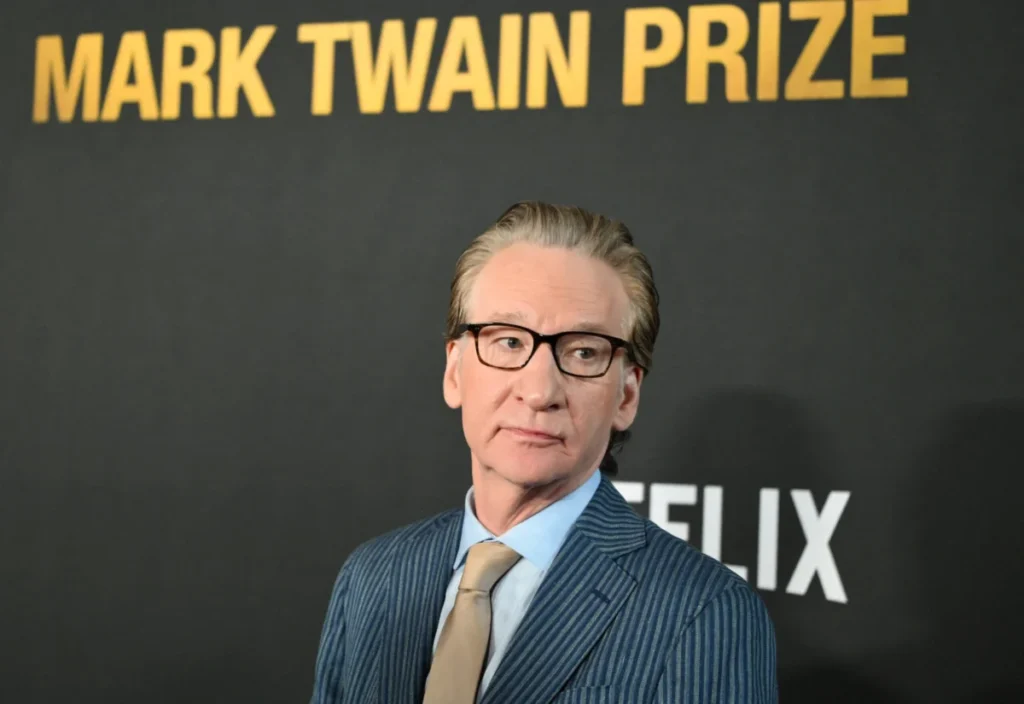

During the Friday, September 11, 2026, broadcast of HBO’s Real Time with Bill Maher, the veteran comedian and political commentator delivered a pointed critique of a major campaign proposal recently introduced by President Donald Trump. At the center of the controversy is a promise made by the President to distribute a $5,000 check to every American adult should the Republican party secure a majority in the upcoming midterm elections. The proposal, framed by the White House as a remedy for the ongoing national affordability crisis, has sparked a firestorm of debate regarding fiscal responsibility, the nature of campaign promises, and the current state of political discourse in the United States.
Maher’s monologue, which was bolstered by a subsequent discussion with panelists Max Brooks and Sarah Longwell, characterized the proposal as an attempt to leverage financial incentives to secure electoral victory. Beyond the specifics of the policy, the host directed sharp criticism at the Republican base, questioning the efficacy of what he termed a "con" being run repeatedly on a receptive audience.
The Origins of the $5,000 Proposal
The concept of a direct cash dividend to American citizens is not entirely unprecedented, yet the scale and timing of President Trump’s latest proposal have distinguished it from previous federal stimulus efforts. As the nation grapples with inflationary pressures and the rising cost of living, the President has increasingly sought to present bold, headline-grabbing economic policies to mobilize the electorate.
The proposal emerged in the lead-up to the midterm conventions, where the administration sought to shift the narrative away from legislative gridlock and toward direct economic relief. By promising a $5,000 check to every American adult, the President has positioned the Republican platform as the primary vehicle for immediate, tangible financial aid. However, the proposal lacks a formal legislative framework, leading many economists to question the source of funding and the long-term impact on federal debt levels.
Maher’s Critique and the “Cult of Personality”
Bill Maher’s primary contention, articulated during his segment, focused on the psychological dynamic between the President and his supporters. Addressing his audience, Maher argued that the persistent support for such proposals—regardless of their feasibility or long-term economic consequence—points to a deeper issue within the American electorate.
“When it comes to Trump, you’re not that bright,” Maher stated during the segment, directing his comments toward those who continue to support the President’s populist agenda. “It is a cult, and you’ve got to get a little smarter. I mean, how many times can the con man run the same con? And you still applaud for it? I don’t get it.”
The host’s commentary highlights a recurring theme in his show: the erosion of critical discourse in the face of partisan tribalism. By framing the $5,000 promise as a “con,” Maher is echoing the concerns of various political analysts who argue that such populist measures are designed to distract from deeper structural economic issues, such as wage stagnation, supply chain volatility, and the widening wealth gap.
Historical Context and Economic Implications
To understand the weight of the $5,000 proposal, one must look at the history of direct federal payments in the United States. During the COVID-19 pandemic, the federal government authorized several rounds of Economic Impact Payments, ranging from $600 to $1,400 per person. These measures were enacted during a period of acute national crisis. President Trump’s current proposal, however, is being positioned as a campaign promise for a non-crisis environment, raising concerns about the precedent it sets for future federal spending.
Economists have pointed out several risks associated with such a policy:
- Inflationary Pressure: An infusion of cash of this magnitude into the hands of every American adult could further exacerbate existing inflation, effectively nullifying the purchasing power the check is intended to provide.
- Fiscal Deficit: The cost of providing $5,000 to approximately 260 million American adults would exceed $1.3 trillion. Funding such a program would require either massive deficit spending or significant reallocations from other federal programs, including social safety nets.
- Market Volatility: Unfunded mandates of this nature often create uncertainty in global markets, as investors question the long-term stability of the U.S. dollar and federal credit.
The Political Landscape: A Midterm Overview
The midterm elections represent a critical juncture for both parties. For the Republicans, the goal is to reclaim control of Congress to prevent further executive branch oversight and to push through a populist economic agenda. For the Democrats, the current climate—characterized by debates over affordability and social issues—presents a challenge in maintaining their current majorities.
Maher’s prediction that “Democrats have this one in the bag” suggests a confidence in the current political trajectory, though he warned that the allure of the $5,000 check could prove a potent tool for the opposition. The irony of the situation, as Maher noted, is that the Republican party—traditionally the party of fiscal conservatism and limited government intervention—is now championing a massive, direct wealth transfer program. “You know, to fight socialism,” Maher quipped, highlighting the contradiction in proposing a massive state-funded handout while campaigning against socialist ideals.
Reactions and Legislative Reality
While the proposal has been met with enthusiasm by the President’s base, it has faced significant skepticism from across the political spectrum. Senate leadership, including Senator Mitch McConnell, has remained notably quiet on the specifics of the proposal, reflecting the internal divide within the Republican party regarding the feasibility of such a program.
Maher did not spare the Senate leadership from his critique, calling out Senator McConnell’s prolonged absence from public life and the Senate floor. By invoking the Senator’s name, Maher was emphasizing the disconnect between the high-stakes promises being made on the campaign trail and the reality of a legislative body that is currently struggling to function effectively.
The Broader Impact on Voter Behavior
The effectiveness of such a campaign strategy hinges on the degree of economic anxiety felt by the average voter. In states where the cost of living has outpaced wage growth, the promise of a $5,000 check serves as a powerful psychological anchor. However, political scientists suggest that voters are increasingly sophisticated regarding the reality of such promises.
The "con" that Maher refers to is the belief that such funds can be provided without consequence. As the election approaches, the discourse is likely to intensify, with critics demanding specific details on how the funds will be sourced. If the administration cannot provide a clear, sustainable path to funding the dividend, the proposal may eventually be viewed as a campaign tactic rather than a genuine policy goal.
The Role of Media in Shaping Economic Policy
The role of programs like Real Time with Bill Maher in shaping the national conversation is significant. By injecting skepticism into the mainstream media cycle, such shows force a level of critical analysis that is often missing from official press releases or campaign stump speeches. Maher’s ability to bridge the gap between comedy and hard-hitting political critique allows for a unique examination of the current political climate.
As the midterm season continues, the $5,000 proposal will undoubtedly serve as a litmus test for the American electorate. Will voters prioritize short-term financial relief, or will they be deterred by the long-term economic implications of such a policy? The outcome of the upcoming election will provide a definitive answer.
Looking Ahead
As we approach the midterm elections, the political landscape remains highly volatile. The President’s proposal for a $5,000 dividend is symptomatic of a broader trend toward populist economic policy that prioritizes immediate voter appeal over long-term fiscal stability. Whether this approach proves successful in the ballot box remains to be seen.
What is clear is that the discourse surrounding the economy has shifted. No longer is the debate limited to taxation, regulation, or trade policy; it has expanded to include direct, large-scale wealth distribution. As citizens prepare to cast their votes, they are faced with a stark choice: the promise of an immediate, albeit potentially destabilizing, financial boost, or the uncertainties of a more traditional, restrained economic approach.
Bill Maher’s recent comments serve as a reminder that the responsibility of the voter is to look beyond the immediate gratification of a campaign promise and to consider the broader, more complex realities of governance. As the nation moves closer to the election, the questions raised by the $5,000 check will remain at the forefront of the national debate, shaping not only the outcome of the midterms but the future of American economic policy.