
Buckingham Palace has announced a groundbreaking upcoming exhibition that will grant the public an unprecedented look at more than five centuries of royal heritage, highlighted by one of the most poignant and somber artifacts in British history. Titled "Royal Jewellery: From Coronations to Keepsakes," the landmark exhibition will open next June at The King’s Gallery, adjacent to Buckingham Palace, bringing together over 300 exceptional items that trace the evolution of the British monarchy through its most treasured gems, state regalia, and deeply personal adornments.
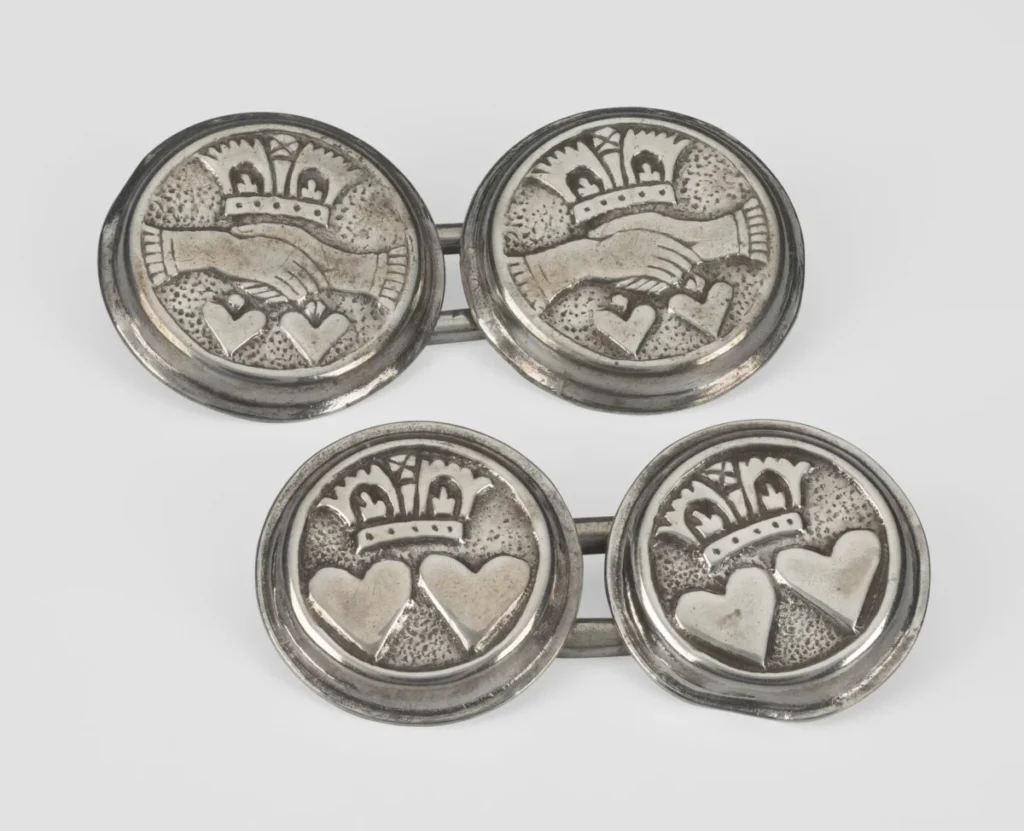
Among the marquee attractions of the forthcoming display are the actual cufflinks worn by King Charles I on January 30, 1649—the fateful day he was executed outside the Banqueting House in Whitehall. Marking their very first public exhibition in the nearly 380 years since the monarch’s dramatic demise, these historic accessories offer modern audiences a tangible connection to a pivotal turning point in British history: the culmination of the English Civil War and the temporary abolition of the monarchy.
Main Facts and the Historic Discovery
The inclusion of King Charles I’s execution cufflinks represents a major coup for curators at the Royal Collection Trust. The cufflinks have been preserved for centuries, initially passing quietly through the hands of staunch Royalist sympathizers who viewed any personal effect of the late king as a sacred relic.
The exhibition itself is designed to span more than 500 years of regal history, grouping over 300 historical pieces into thematic displays that explore the dual nature of royal jewelry: objects of immense political and ceremonial power, contrasted with intimate keepsakes exchanged among family members. While glittering state crowns and glittering tiaras traditionally dominate public perceptions of the Royal Collection, this exhibition deliberately bridges the gap between public pageantry and private sentiment, utilizing personal items to humanize historical figures.
In addition to the Stuart-era cufflinks, visitors will be able to view an array of world-renowned masterworks from the Royal Collection. These include the iconic George IV State Diadem—frequently seen atop the sovereign’s head during the annual State Opening of Parliament—and the distinctive small diamond coronet used by Queen Victoria during the later decades of her reign. Victoria grew so deeply attached to this specific headpiece that it was placed prominently atop her coffin during her lying-in-state in 1901. Further enriching the display are a magnificent diamond and emerald necklace presented to the late Queen Elizabeth II by her grandmother, Queen Mary, and a comprehensive suite of striking amethyst jewelry that once belonged to Queen Charlotte.
Chronology of a Tragedy: The Execution of Charles I
To fully understand the historical weight of the newly unveiled cufflinks, historians look back to the harrowing winter of 1649 and the final days of the Stuart king. The English Civil War, fought between the forces of King Charles I (the Royalists or Cavaliers) and the supporters of Parliament (the Parliamentarians or Roundheads led by Oliver Cromwell), had devastated the nation. Following military defeats at the hands of the New Model Army, Charles was captured, put on trial for high treason against his own people, and condemned to death by a high court of justice on January 27, 1649.
The execution was scheduled for the morning of January 30 outside the Banqueting House in Whitehall, London. Accounts from the era record that the morning was bitterly cold, with temperatures plunging well below freezing and the River Thames reportedly freezing over.
Mindful of his public image and determined to project absolute stoicism and divine right to the very end, Charles made a deliberate sartorial choice. According to historical records, the king requested to wear two heavy shirts instead of one. He explained to his attendants that the biting winter weather might cause him to shiver, and he adamantly refused to let onlookers misinterpret physical shivering as an expression of fear or cowardice in the face of death. It was over the cuffs of these historic double layers of linen that the king secured the very cufflinks now bound for public exhibition.
Following the execution, the political climate in England remained dangerously volatile. Oliver Cromwell and the republican government were acutely aware of the deep-seated public sympathy for the executed monarch. Fearing that Charles’s traditional burial site at Westminster Abbey could become a rallying point and a pilgrimage site for grieving Royalists, Cromwell ordered the king’s body to be removed in absolute secrecy. Under the cover of darkness, the royal remains were transported to Windsor Castle and interred without formal state ceremony in a vault within St. George’s Chapel. Concurrently, belongings associated with his final hours were quietly dispersed among loyalists, preserved in secret, and handed down through generations as precious heirlooms.

Supporting Data and Exhibition Scope
The "Royal Jewellery: From Coronations to Keepsakes" exhibition represents an enormous logistical and conservation undertaking by the Royal Collection Trust. Bringing together more than 300 pieces means curators must implement state-of-the-art security, climate control, and lighting protocols to protect fragile textiles, ancient metals, and priceless gemstones.
Key statistical and structural highlights of the upcoming exhibition include:
- Timeline Span: Over 500 years of British royal history, stretching from the Tudor era through the House of Windsor.
- Total Exhibits: More than 300 individual items, balancing grand state regalia with deeply personal miniature portraits, rings, and mourning jewelry.
- Venue: The King’s Gallery, located directly adjacent to Buckingham Palace in London.
- Key Artifacts: King Charles I’s execution cufflinks, the George IV State Diadem, Queen Victoria’s small diamond coronet, Queen Charlotte’s amethyst suite, and Queen Mary’s emerald necklace presented to Queen Elizabeth II.
The deliberate juxtaposition of items highlights how jewelry has served multiple functions throughout British history. While pieces like the State Diadem were forged to project imperial authority, divine sanction, and continuity of state, items like Charles I’s cufflinks and Queen Victoria’s mourning coronet illustrate grief, martyrdom, and deeply personal remembrance.
Official Responses and Curatorial Insights
While formal statements from Palace officials emphasize the educational and cultural value of opening the Royal Collection to broader public scrutiny, historians and curators have widely praised the decision to exhibit the Charles I relics.
Cultural commentators note that presenting the cufflinks provides a rare bridge between dry political history and the emotional reality of the English Civil War. By displaying items worn during moments of extreme personal crisis, the exhibition allows contemporary visitors to confront the human cost of political upheaval. Rather than viewing the monarchy purely through the lens of gold and diamonds, the inclusion of seventeenth-century domestic artifacts underscores the fragility of life and the violent transitions that shaped modern British democracy.
Furthermore, the integration of pieces from various monarchs—ranging from the Stuarts and Hanoverians to the Windsors—demonstrates an ongoing narrative of continuity. Royal jewelry is rarely static; pieces are frequently dismantled, redesigned, or passed down through generations to reflect changing tastes and political alliances. By laying bare these transformations, the exhibition offers transparency into the curation of the Royal Collection itself.
Broader Impact and Implications
The announcement of "Royal Jewellery: From Coronations to Keepsakes" arrives at a time of heightened public interest in the history and preservation of royal artifacts. Exhibitions hosted at The King’s Gallery consistently draw international tourists, scholars, and monarchists, contributing significantly to London’s cultural tourism economy.
Beyond the immediate economic and tourism benefits, the exhibition carries substantial educational implications. Schools, universities, and academic researchers will have a rare opportunity to study craftsmanship spanning half a millennium. The physical presence of items like the execution cufflinks forces a re-examination of the Civil War era, prompting public discourse on the execution of Charles I, the establishment of the Commonwealth under Cromwell, and the eventual Restoration of the monarchy in 1660.
Tickets for the highly anticipated exhibition are scheduled to go on sale to the general public at the beginning of November through the official Royal Collection Trust website. Given the unique nature of the display—particularly the inclusion of artifacts never before seen by the wider public—demand is expected to be exceptionally high. When the doors to The King’s Gallery open next June, visitors will step into a carefully curated narrative where every gemstone, crown, and humble cufflink tells a story of power, loss, and endurance across the centuries.