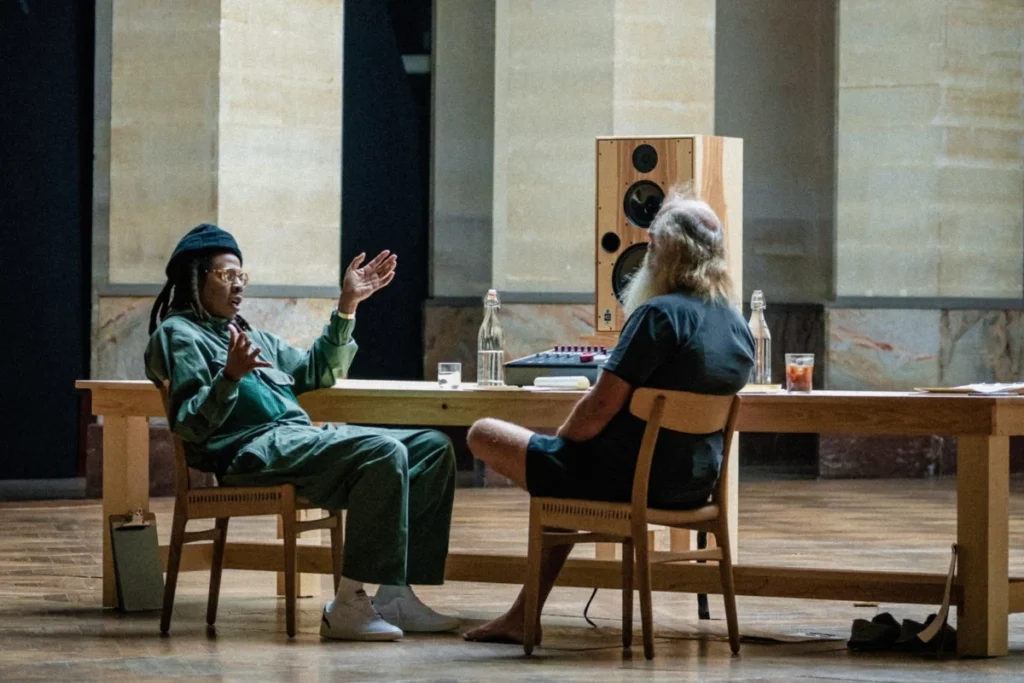

The eighth and final episode of the critically acclaimed HBO Max docuseries JA&Z-in-8 arrived on Friday evening, bringing a definitive close to an intimate, eight-part exploration of Shawn "Jay-Z" Carter’s life and enduring musical legacy. Co-directed by legendary producer Rick Rubin, the final two installments—episodes seven and eight—feature deep dives into the cultural, political, and artistic milestones that defined the latter half of the rapper’s career. With all eight episodes now available for streaming, the series solidifies its thesis that hip-hop is a foundational American art form deserving of profound cultural reverence.
The conclusion of the docuseries caps off a monumental year for the Brooklyn-born billionaire, who has maintained a dominant presence in contemporary culture through sold-out stadium tours, major festival headlining sets, and ongoing high-profile discussions regarding his historical impact on music and commerce.
Chronology of the Finale: Episodes Seven and Eight Explored
The penultimate and final episodes of JA&Z-in-8 traverse distinct eras of Jay-Z’s expansive catalog, offering viewers a rare look into the creative genesis of some of modern rap’s most recognizable anthems.
Episode seven shifts the focus toward the late 1990s and the monumental successes of the 2000s, specifically dissecting tracks like Hard Knock Life (Ghetto Anthem) and the Alicia Keys-assisted global smash Empire State of Mind. Rubin and Jay-Z analyze essential projects such as Streets Is Watching and The Blueprint 3. Reflecting on the commercial release of his 2009 album, the hip-hop mogul validated an observation made by Rubin regarding a distinct evolution in his aesthetic presentation. Jay-Z noted that his growing interest in fine art collecting during that period began to directly influence his approach to album packaging and visual presentation.
Episode eight transitions into a more introspective and socio-politically charged space. The final installment deconstructs Jay-Z’s commentary on intracommunity dynamics and generational healing within the Black diaspora. The discussion centers around politically potent tracks such as The Story of O.J. and No Church in the Wild, exploring how the artist challenged existing power structures and institutional limitations. Furthermore, the episode draws thematic throughlines between Family Feud and Legacy, examining the importance of generational wealth, endurance, and historical consciousness.
Behind the Lens: Production and Creative Vision
Directed entirely by Rick Rubin under his Tetragrammaton production banner, JA&Z-in-8 has drawn widespread praise for its minimalist yet impactful aesthetic, which relies heavily on unvarnished dialogue between two of music’s most influential minds. The project boasts a high-profile executive production team, including Academy Award-winning actor and producer Daniel Kaluuya alongside Jay-Z and Rubin. Producers Leila Mattimore and David Rohde helped steer the sprawling narrative arc across all eight episodes.
The series consistently argues that rap music operates as a quintessential pillar of American culture. By pairing Jay-Z’s lyrical breakdowns with Rubin’s historical perspective, the docuseries positions hip-hop alongside jazz, blues, and rock as an essential genre that has fundamentally shaped the global cultural landscape.
A Monumental Year of Live Performances and Public Milestones
The arrival of the docuseries finale coincides with a remarkably active period for the artist outside of the television screen. Jay-Z returned to the festival circuit in May with a widely discussed headlining performance at the Roots Picnic, where his distinct aesthetic presentation—featuring an Afro—dominated music headlines.
That festival appearance served as the launchpad for an extensive string of stadium dates titled the JA&Z 30 concerts. The trek spanned major international markets, including Los Angeles, London, and Paris, before anchoring itself in New York City. The tour famously kicked off with three consecutive sold-out nights at Yankee Stadium. These hometown shows featured an unprecedented roster of guest appearances from music royalty, including Beyoncé, Rihanna, Eminem, Blue Ivy Carter, Usher, Teyana Taylor, Slick Rick, Jaz-O, The-Dream, Clipse, and Pharrell Williams.
Legal and Personal Context
While the docuseries and live performances celebrate his professional triumphs, recent months have also seen the resolution of significant personal and legal matters. In late September, federal court records revealed that a woman who had previously accused Jay-Z of sexual assault stemming from an incident when she was 13 years old fully recanted her allegations. In her statements to a federal judge, she admitted that her claims were entirely false, cited ongoing struggles with mental health, and stated that her former legal representation had filed the litigation without exercising the appropriate standard of due diligence. The formal retraction effectively concluded a turbulent chapter of public scrutiny surrounding the artist.
Broader Impact and Cultural Implications
As JA&Z-in-8 completes its streaming run on HBO Max, the series leaves a lasting blueprint for how hip-hop history should be documented. By allowing an artist of Jay-Z’s stature to directly narrate his creative evolution alongside a peer like Rick Rubin, the docuseries avoids the superficial trappings of traditional celebrity profiles.
The implications of the project extend beyond streaming metrics or nostalgic catalog bumps. By elevating rap music to the status of high art, the production provides a masterclass in cultural preservation. For an industry that frequently prioritizes immediate commercial trends over long-term historical context, JA&Z-in-8 establishes a rigorous benchmark for how musical mastery should be analyzed, archived, and celebrated for generations to come. All eight episodes are currently available to stream on HBO Max.