
The conclusion of Paris Fashion Week for the Spring 2027 season brought out an array of global celebrities, industry executives, and high-profile designers to celebrate the latest collections from premier Italian luxury fashion house Miu Miu. Following the runway presentation of the Spring 2027 lineup, which drew significant attention across international style publications for its eclectic mix of minimalist silhouettes and avant-garde statements, the brand hosted an exclusive after-party. This high-profile gathering served as a cultural convergence point, uniting actors, musicians, and trendsetters who frequently collaborate with the brand or occupy its coveted front-row seats.

The event, held in the French capital on October 5, 2026, highlighted Miu Miu’s ongoing influence in shaping contemporary youth-adjacent luxury fashion under the creative direction of Miuccia Prada. As guests transitioned from the runway venue to the evening’s festivities, fashion critics and observers closely examined how celebrities adapted the label’s signature aesthetic for a red-carpet setting. The resulting sartorial choices offered a comprehensive snapshot of current high-fashion trends, blending traditional tailoring with unconventional layering and retro revivals.
Event Chronology and Background Context
Paris Fashion Week remains the culmination of the global fashion month calendar, which typically begins in New York, moves through London and Milan, and concludes in the French capital. The Spring/Summer collections presented during this period set the commercial and aesthetic tone for the retail market approximately six months to a year in advance. Miu Miu, a subsidiary of the Prada Group founded in 1993, has increasingly positioned itself as a dominant cultural force, frequently outperforming traditional luxury metrics through viral digital moments, distinct casting choices, and boundary-pushing ready-to-wear designs.

The Spring 2027 showcase built upon the brand’s established vocabulary of subversive youthfulness, juxtaposing schoolgirl tropes with distressed textures, exaggerated outerwear, and minimalist underpinnings. The subsequent after-party provided a vital extension of this narrative, allowing front-row attendees and brand ambassadors to showcase how these runway concepts translate into personal style. Industry analysts note that front-row attendee styling at major fashion week events has become an increasingly calculated marketing tool, driving immediate consumer engagement across social media platforms and influencing digital commerce spikes within hours of the initial photographs being published.
Celebrity Style Analysis and Red-Carpet Presentations
The red-carpet arrivals at the Miu Miu after-party featured a diverse roster of international talent, each interpreting the brand’s distinct design ethos through individual styling choices.

Alexa Chung arrived in a look that balanced cozy knitwear with distressed elements. Her ensemble paired a well-crafted, classic sweater with a skirt characterized by raw, frayed detailing that gave the impression of structural decay. This tension between polished luxury and deliberate dilapidation is a recurring motif in contemporary Italian design, reflecting a broader cultural fatigue with hyper-perfection.
British presenter and interviewer Amelia Dimoldenberg opted for a layered approach, wearing a structured outer garment that appeared designed to conceal the complex construction of the underlying top. The strategic styling choice maintained a sleek silhouette while hinting at the experimental tailoring hidden beneath.

Model and actor Ella Bright embraced a pairing of a delicate, feminine skirt contrasted against a heavy, oversized leather jacket. While the skirt received favorable assessments for its movement and proportion, the reemergence of bulky, 1990s-inspired leather outerwear sparked debate among fashion commentators regarding the longevity and wearability of this particular retro revival.
Emma Corrin, known for pushing gender boundaries and embracing theatrical red-carpet aesthetics, presented a collection of disparate elements. Their outfit featured a generic upper garment paired with unconventional shorts and footwear that stylistically disconnected from the rest of the ensemble, highlighting the challenges of mixing high-concept runway pieces in a casual party setting.

Emma Mackey showcased a tailored skirt featuring a prominent centered front kick pleat. While the garment’s craftsmanship was noted as a strong point of the outfit, the architectural placement of the pleat required specific posture, underscoring the functional compromises often demanded by avant-garde tailoring.
Actor Igby Rigney kept his sartorial choices understated, selecting a cohesive yet ultimately conventional outfit that blended seamlessly into the background of the high-energy event without generating significant stylistic discourse. Similarly, Jamie Bell appeared in a streamlined, modern ensemble that industry observers categorized as typical of contemporary tech-sector executive styling, emphasizing clean lines over distinct fashion-forward risk-taking.

Katherine Waterston delivered one of the evening’s more classic outerwear statements with a tailored coat. However, the styling incorporated a visible lining extending past the garment’s hem—a deliberate design choice that frequently divides critics, as it visually mimics traditional tailoring errors or unfinished construction. The accompanying footwear successfully anchored the heavier proportions of the coat.
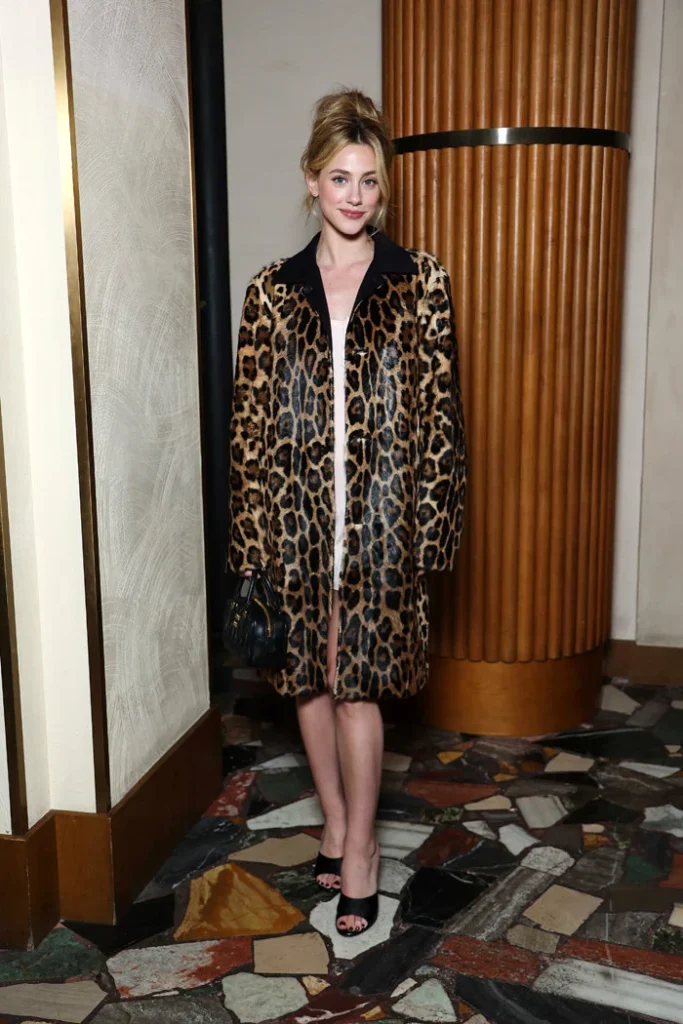
Lili Reinhart presented an accessible, youth-oriented look that leaned into Miu Miu’s more commercially viable aesthetic, resulting in a cohesive and well-received appearance. Louisa Jacobson adopted a maximalist approach by combining several distinct luxury pieces in a single outfit. While individual components—such as the jacket, top, and bottoms—demonstrated high-quality manufacturing and fabric selection, the collective ensemble challenged traditional rules of styling cohesion, appearing as a collection of strong standalone items rather than a unified look.

Mckenna Grace’s ensemble drew mixed reviews from style analysts, with critics pointing to a perceived lack of structural depth and noting that the double-hem detailing failed to achieve the sophisticated execution seen elsewhere in the collection. Noah Jupe presented a sharp, minimalist trouser-and-top combination that, while cleanly tailored and visually appealing, skewed closer to formal corporate wear or a professional interview setting than a nocturnal fashion celebration.
Academy Award-winner Olivia Colman provided one of the evening’s most universally praised appearances, wearing a sophisticated ensemble tailored to her personal style without relying on overly trendy or restrictive silhouettes. Her look successfully demonstrated how mature elegance can align with a contemporary luxury house’s branding.

Finally, South Korean artist Yeonjun of Tomorrow X Together captured attention with a tailored suit that replaced the traditional blazer with a structured Harrington jacket. Fashion commentators noted that while the silhouette offered a refreshing alternative to standard evening wear, the addition of a necktie would have provided a more complete and polished finish to the overall look.
Economic and Industry Implications
The Miu Miu Spring 2027 after-party underscores the immense financial and cultural value of celebrity marketing within the luxury fashion sector. According to recent data from market research firms specializing in the luxury goods industry, high-profile events during fashion week generate millions of dollars in Earned Media Value (EMV) through digital impressions, hashtag tracking, and immediate e-commerce traffic.

Brands like Miu Miu, under the broader umbrella of the Prada Group, have successfully leveraged these moments to capture younger demographic cohorts—specifically Gen Z and younger Millennials—who prioritize brand narrative, digital visibility, and subversive design aesthetics. The commercial success of the items showcased on the runway and at subsequent promotional events directly influences quarterly financial earnings, often translating into increased sales for accessible luxury categories such as footwear, small leather goods, and knitwear.
Furthermore, the stylistic choices seen on the red carpet reflect broader macroeconomic trends in retail. The coexistence of minimalist wardrobe staples—such as those worn by Olivia Colman and Noah Jupe—alongside avant-garde, distressed items worn by Alexa Chung and Ella Bright indicates that luxury brands are catering to a polarized consumer base. On one hand, consumers are seeking enduring, high-quality investment pieces amid economic uncertainty; on the other, a distinct segment of the market continues to demand novelty, irony, and visual disruption.

As the spring 2027 retail season approaches, buying houses and department store executives will utilize the data gathered from these high-profile appearances to inform their purchasing orders, ensuring that the most commercially viable iterations of these runway looks make their way from the atelier to the sales floor.