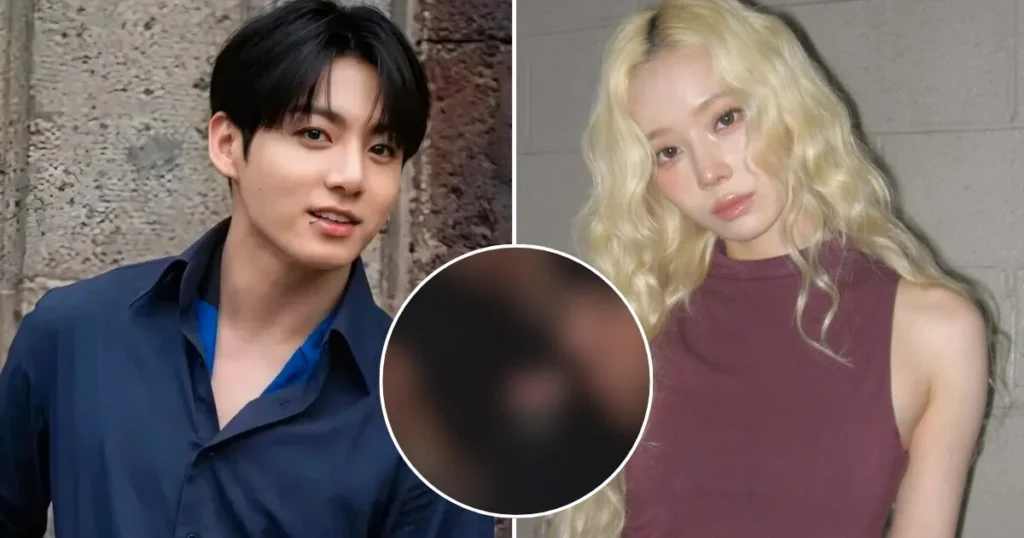

The persistent intersection of K-pop fandom culture, digital surveillance, and high-profile celebrity relationships has once again thrust two of the industry’s biggest stars into the center of a viral controversy. Jungkook, a prominent member of the global phenomenon BTS, has found himself at the center of a fresh wave of online speculation following the release of behind-the-scenes footage from Europe. Sharp-eyed netizens and dedicated online sleuths quickly shifted focus to a patch of skin on the artist’s body, reigniting long-standing rumors regarding an alleged matching tattoo shared with Winter, a member of the leading third-generation girl group aespa.
This latest development highlights an ongoing digital phenomenon where fans meticulously analyze every frame of official media released by entertainment labels. What was intended to be standard promotional content—a casual behind-the-scenes sketch documenting BTS’s activities abroad—has instead devolved into another intense debate concerning privacy, bodily autonomy, and the lengths to which global pop stars must go to manage public perception.

Background Context of the Rumor and Tattoo Speculation
The origins of the current controversy trace back several months, during which various online communities began circulating side-by-side comparisons of Jungkook and Winter. Proponents of the dating rumor claimed to have identified identical or matching tattoos on both artists, interpreting the body art as a subtle confirmation of a romantic relationship. Within the hyper-analyzed ecosystem of K-pop fandoms, tattoos and personal styling choices are frequently subjected to intense scrutiny, often serving as the primary fuel for unverified dating speculation.
As these rumors gained traction across platforms like X (formerly Twitter), TikTok, and various South Korean web forums, fan bases became polarized. While supporters of both BTS and aespa vehemently denied the existence of any such tattoos—pointing out the fleeting nature of low-resolution images and the frequency of skin modifications or temporary body art—skeptics and rival fan factions insisted that the matching ink was authentic. The debate intensified when videos and photographs emerged showing Jungkook either shirtless or in casual attire, with netizens attempting to pinpoint the exact location of the disputed body art.
The discourse shifted dramatically with the recent release of new official video content from BTS. As the group traveled through Europe, a specific segment showing the members dining out was scrutinized frame-by-frame. Observers quickly noted that a specific area of Jungkook’s arm or torso—precisely where the alleged matching tattoo was previously discussed—appeared to be covered with a skin-toned medical patch or tape.

Chronology of the Recent Digital Dissemination
The timeline of the current escalation underscores the rapid speed at which digital rumors travel and amplify across global networks:
- Initial Rumor Generation (Months Prior): Unverified claims circulate online regarding alleged matching tattoos between Jungkook and Winter, sparking widespread debate across international K-pop forums.
- Periodic Refueling: Intermittent video and photographic leaks, alongside high-definition stage performances, prompt continuous speculation and counter-arguments from opposing fandom factions regarding the visibility and existence of the tattoos.
- Release of European Tour Footage: BigHit Music releases behind-the-scenes documentation of BTS in Europe, intended to showcase the group’s interpersonal dynamics and international schedule.
- The "Tape" Discovery: Within hours of the video’s publication, specific screen-grabs and video clips highlighting a medical tape or patch on Jungkook’s body begin trending on social media.
- Fandom Backlash and Accusations: Critics and internet commentators accuse the artist of deliberately attempting to conceal evidence of the rumored relationship, with some employing harsh rhetoric regarding the management of public image. Simultaneously, loyal supporters defend the artist, citing medical necessity, personal privacy, or routine skin care as plausible explanations for the patch.
Analysis of Fan Reactions and Online Polarization
The digital reaction to the footage reflects the complex and often volatile nature of modern celebrity fandoms. Critics of the artist utilized the moment to express frustration, with some posts accusing Jungkook of trying to hide the alleged couple tattoo "like a coward" to appease conservative fan expectations. These viewpoints are frequently driven by a segment of the audience that demands absolute transparency from public figures regarding their personal lives, or conversely, takes pleasure in disrupting the curated fantasy of idol culture.
Conversely, defenders and supporters have pushed back against the narrative, labeling the constant surveillance as an invasion of privacy. Many fans emphasized that individuals—regardless of their celebrity status—retain the absolute right to cover or display parts of their bodies for any reason, whether medical, aesthetic, or purely personal. Analysts note that the intense focus on such minor physical details illustrates the unrealistic standards imposed on K-pop idols, whose personal lives are subjected to continuous micro-analysis by millions of global observers.

Official Responses and Label Silence
As has been the consistent policy for major South Korean entertainment agencies—including BTS’s label, BigHit Music, and aespa’s agency, SM Entertainment—neither company has issued an official statement addressing the dating rumors or the recent speculation regarding the medical tape. In the K-pop industry, management agencies typically maintain a strict policy of silence regarding unverified dating rumors unless the speculation infringes upon legal boundaries, defamation laws, or artists’ rights, preferring to let online discourse eventually subside without official interference.
Industry observers suggest that issuing formal denials for every speculative rumor on social media often has the counterproductive effect of giving the claims unwarranted legitimacy, thereby amplifying the cycle of online attention. Consequently, silencing direct commentary remains the standard crisis-management protocol for major management firms.
Broader Implications for K-Pop Privacy and Global Stardom
The ongoing scrutiny surrounding Jungkook and Winter underscores a broader structural challenge within the global entertainment industry: the friction between hyper-public celebrity branding and the fundamental right to personal privacy. As K-pop groups achieve unprecedented levels of international prominence, the demand for content has increased exponentially, resulting in a constant stream of behind-the-scenes media. Ironically, this unpolished, authentic-style footage—designed to bring fans closer to the artists—often provides the raw material necessary for digital investigators to construct elaborate conspiracy theories.

Furthermore, the incident highlights the weaponization of fandom aesthetics. Tattoos, accessories, and casual clothing choices are frequently recontextualized as secret codes or relationship markers. This dynamic not only places an undue psychological burden on the artists, who must navigate their daily lives under the constant threat of digital exposure, but also fosters toxic environments within online communities where fan factions clash over unverified narratives.
As BTS continues its global activities and aespa maintains its dominant position in the music industry, both artists remain prime targets for digital surveillance. Whether this latest chapter of the tattoo discourse will fade into obscurity or resurface with future media releases remains to be seen, but it serves as a clear reminder of the microscopic lens through which contemporary pop icons are viewed by the modern digital audience.