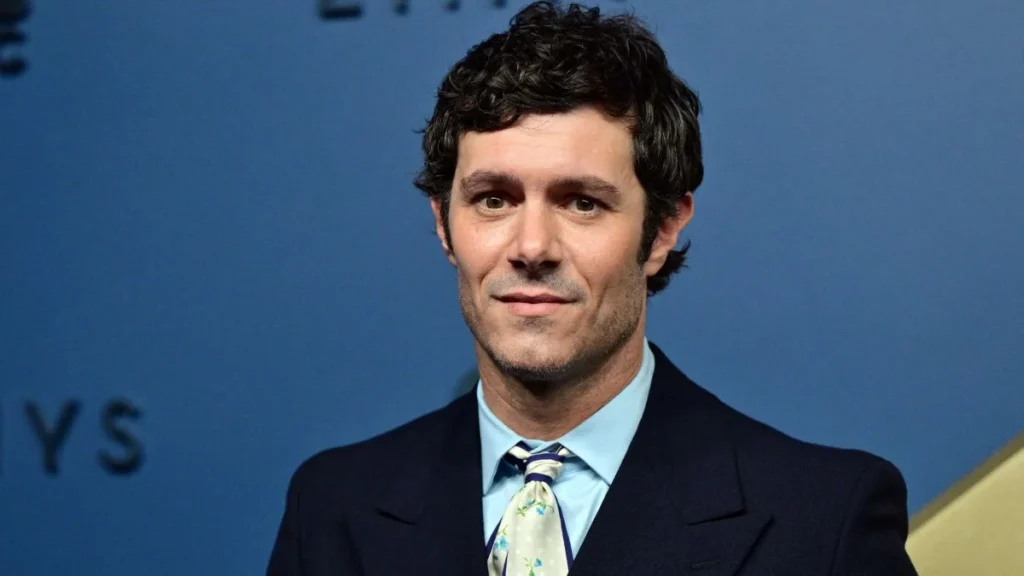

The intersection of Hollywood entertainment and geopolitical discourse experienced a sharp collision recently, drawing public attention to the limits of celebrity activism and the deeply personal nature of cultural representation. Actor Adam Brody, widely recognized for his starring role in the Netflix romantic comedy series Nobody Wants This, found himself at the center of a public controversy after offering candid remarks regarding the ongoing conflict in Gaza. His statements prompted a swift and pointed public rebuke from Rabbi Steve Leder, a prominent religious figure who served as a technical consultant during the production of the show’s inaugural season.
The public disagreement highlights a growing tension within the entertainment industry, where public figures frequently utilize their platforms to address complex international crises, often drawing swift pushback from community leaders and advisors with whom they have previously collaborated. As the entertainment sector navigates these fraught cultural waters, the exchange between Brody and Leder offers a clear window into the broader friction surrounding artistic collaboration, public commentary, and Middle Eastern politics.
The Genesis of the Controversy: Adam Brody’s GQ Interview
The public dispute originated from a comprehensive profile of Adam Brody published by GQ magazine. During the interview, the conversation shifted away from his acting career and current television success to touch upon international politics, specifically the devastating ongoing conflict in Gaza and the broader Palestinian-Israeli crisis.
When queried about his perspective on the geopolitical situation, Brody did not shy away from taking a definitive stance. He offered a concise and direct summary of his views to the interviewer, stating, “Put me down as thinking it’s a genocide. Put me down as wanting a free Palestine.” Furthermore, the actor articulated expectations for the future of American foreign policy, expressing a distinct hope that a subsequent United States presidential administration might alter existing diplomatic and military policies that directly affect the region and the humanitarian conditions on the ground.
These remarks quickly circulated across various media platforms, resonating with supporters of Palestinian rights while simultaneously drawing sharp criticism from pro-Israel advocates and community leaders. Among those critics was Rabbi Steve Leder, whose professional history with Brody lent the subsequent backlash a particularly personal and contentious dynamic.
Behind the Scenes: The Professional Relationship on Nobody Wants This
To fully understand the gravity of Rabbi Leder’s public response, one must examine the professional bridge that previously connected the two men. Released to substantial viewer acclaim, Nobody Wants This stars Adam Brody as Rabbi Noah Roklov—a modern, charismatic rabbi navigating the dating world—alongside Kristen Bell, who portrays Joanne Williams, an agnostic sex-and-relationships podcaster.
Because the series hinges heavily on the nuances of contemporary Jewish life, religious traditions, and professional rabbinical duties, the production team sought expert guidance to ensure cultural authenticity. Rabbi Steve Leder, a highly respected religious leader and author, was brought on board as a technical consultant for the show’s first season. His primary responsibility was to advise the writers, directors, and actors on the realistic portrayal of Judaism, ensuring that Hebrew terminology, Shabbat rituals, synagogue environments, and the day-to-day responsibilities of a young rabbi were depicted accurately and respectfully.
In this capacity, Leder worked closely with Brody, helping the actor humanize the character and grasp the intricacies of Jewish customs. Brody himself had previously acknowledged in interviews that portraying a rabbi required substantial preparation and external guidance to honor the traditions accurately. Consequently, the collaborative trust established during the production of Nobody Wants This made Leder’s subsequent public condemnation all the more striking to followers of the show.
Rabbi Steve Leder’s Public Video Response
Rather than addressing Brody privately, Rabbi Leder took to social media, publishing an Instagram video specifically aimed at the actor and his recent political commentary. In the recording, Leder directly referenced their shared history on the set of the Netflix series, establishing his authority to critique the actor’s public statements.
“My job was to make sure that your character was authentic and that everything in Season 1 about Judaism was authentic,” Leder stated in the video, establishing the premise of his critique.
Leder proceeded to challenge Brody’s choice of terminology, specifically objecting to the actor’s characterization of the military actions in Gaza as a "genocide." The rabbi argued that the gravity of the term demands a rigorous historical and semantic understanding, which he claimed Brody lacked. In a particularly biting remark, Leder addressed the actor directly regarding his knowledge base: “You, by your own admission, are a relatively ignorant Jew, and your ignorance really showed the other day.”
Furthermore, Leder took issue with the casual phrasing Brody used in his GQ interview—specifically the directive to “put me down as.” The rabbi argued that complex geopolitical tragedies and centuries-old ethnic and religious conflicts should not be addressed with casual, soundbite-driven rhetoric. He urged public figures to exercise greater responsibility and restraint when commenting on matters of life, death, and warfare that they have not deeply studied.
Broader Context: Celebrity Activism and the Israel-Gaza Conflict
The exchange between Brody and Leder is part of a much larger, ongoing phenomenon within the entertainment industry. Since the escalation of the Israel-Hamas conflict following the October 7, 2003 attacks, numerous actors, musicians, and public figures have felt compelled to voice their positions on social media, in interviews, and at high-profile events.
The entertainment industry has historically been a space for political expression, yet the Israeli-Palestinian conflict remains uniquely polarizing. Celebrities who speak out frequently face immediate professional and social consequences. Pro-Palestinian advocates argue that artists have a moral obligation to use their platforms to protest civilian casualties, infrastructure destruction, and humanitarian crises. Conversely, pro-Israel organizations and community leaders argue that sweeping accusations—such as labeling military actions a "genocide"—oversimplify a complex defensive war against terrorist organizations and often contribute to rising antisemitism globally.
In Brody’s case, his status as a prominent Jewish actor portraying a rabbi on a mainstream television show added a layer of identity-based complexity to his comments. For critics like Leder, an actor leveraging a Jewish identity to forward specific political critiques—while allegedly lacking deep educational grounding in the history of the region or antisemitism—represents a troubling trend of performative or misinformed activism.
Implications for Nobody Wants This and Industry Relations
As of the reporting of this incident, neither Adam Brody nor representatives for Nobody Wants This have issued a formal public response to Rabbi Leder’s video. Similarly, Leder has not expanded upon his initial remarks beyond his social media broadcast.
The controversy raises questions regarding the potential impact on future seasons of the Netflix hit. Nobody Wants This was officially renewed for a second season following its massive streaming success, and Brody is slated to reprise his role as Rabbi Noah Roklov. While creative teams and casting decisions are typically insulated from political disagreements among consultants and actors, the public nature of this rift has inevitably drawn scrutiny from fans and media analysts alike.
Industry insiders suggest that while public controversies rarely derail established television series, they do place pressure on production companies to manage public relations carefully. Cultural consultants, who play a vital role in ensuring that minority and religious groups are represented accurately and respectfully on screen, occasionally find themselves at odds with the personal politics of the talent they help train.
Conclusion
The public disagreement between Adam Brody and Rabbi Steve Leder serves as a compelling case study in the friction between modern celebrity culture, political activism, and religious representation. By moving from the collaborative soundstages of a Hollywood romantic comedy to the unfiltered arena of social media commentary, the exchange highlights the deep divisions that persist over the war in Gaza. As the public conversation surrounding the conflict continues to evolve, the incident underscores the reality that words spoken in glossy magazine profiles carry weight, and that creative partnerships forged in television production do not exempt individuals from profound ideological accountability.