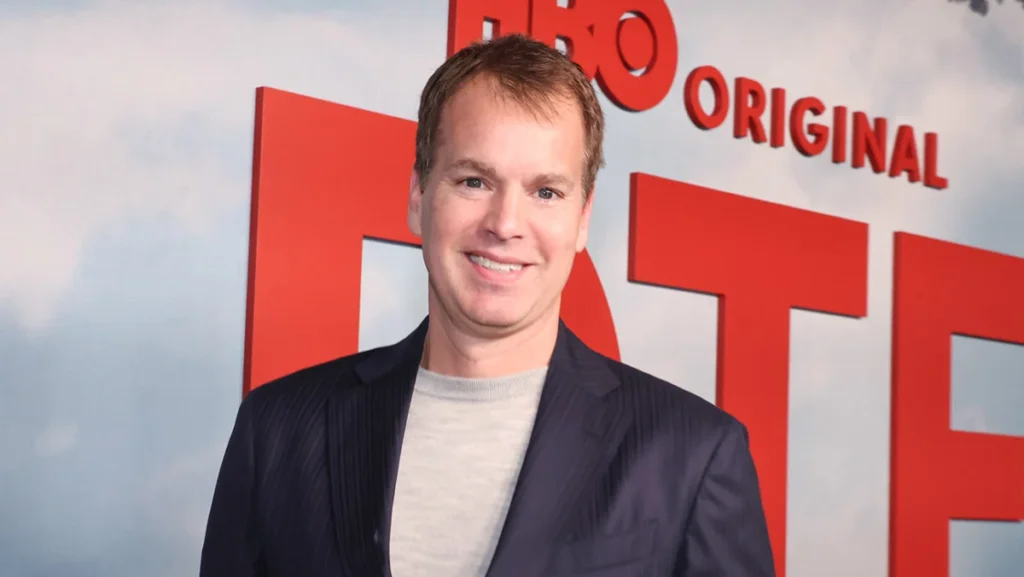

The landscape of modern entertainment is bracing for yet another monumental shift as the highly anticipated merger between Paramount Skydance and Warner Bros. Discovery hurtles toward its expected closing date. Speaking on Thursday, HBO and Max content chief Casey Bloys maintained a disciplined, diplomatic silence regarding the near-term structural future of HBO and the broader combined streaming ecosystem under the impending new corporate umbrella. Despite widespread industry speculation and reports positioning him to helm the newly merged streaming entity—a transition that has already prompted the departure of former Paramount+ and Pluto TV chief Cindy Holland—Bloys insisted that formal announcements remain strictly within the purview of incoming leadership.
With the blockbuster transaction slated to close on October 6, the executive’s remarks underscore a delicate transitional period for both legacy media giants. As regulatory hurdles clear and the final logistics of the megamerger fall into place, industry analysts, creators, and investors are closely monitoring how the union of these two Hollywood powerhouses will reshape the global streaming wars, linear television networks, and the timeless prestige brand associated with the HBO name.
The Road to the Megamerger: A Chronology of Consolidation
The path toward the Paramount Skydance and Warner Bros. Discovery combination represents the latest chapter in a multi-year wave of media consolidation driven by the bruising economics of the direct-to-consumer streaming era. Following the initial merger of WarnerMedia and Discovery in 2022 to form Warner Bros. Discovery, the company immediately faced the arduous task of debt reduction, cost restructuring, and the eventual rebranding of its flagship streaming service from HBO Max to simply Max.
Concurrently, Paramount Global underwent its own tumultuous corporate evolution, culminating in the high-stakes transaction involving Skydance Media, led by David Ellison. As Ellison maneuvered to take control of Paramount, the wheels were set in motion for a secondary wave of consolidation that would capture both Hollywood studios under a single unified corporate titan. Throughout 2024 and 2025, rumors of talks between Warner Bros. Discovery and Paramount circulated through financial circles, periodically sending media stocks surging as Wall Street anticipated massive cost-cutting synergies and enhanced market scale.
By late September 2025, regulatory clearances for the mega-transaction began to fall into place. Reports confirmed that the path was legally cleared for the fusion of Paramount and Warner Bros. Discovery, setting a definitive closing date for October 6. This rapid acceleration of corporate integration has triggered immediate structural adjustments, most notably the exit of Cindy Holland, who had previously steered the strategies for Paramount+ and Pluto TV. With Holland’s departure, the executive suite has effectively cleared the runway for new leadership to consolidate operations across studio production, theatrical distribution, and digital streaming.
Leadership Structure and the Case of Casey Bloys
Within the industry, Bloys is widely regarded as the presumptive choice to oversee the combined streaming and content operations for the newly formed entity. Having successfully steered HBO and Max through the turbulence of the post-cable era—delivering critical hits like Succession, The White Lotus, The Last of Us, and Hacks—Bloys commands immense respect across the entertainment sector. With roughly one year remaining on his current contract with Warner Bros. Discovery, his strategic alignment with the incoming regime is viewed by many as a vital stabilizing force.
However, during Thursday’s appearance, Bloys repeatedly deflected inquiries regarding his definitive title and responsibilities post-merger, maintaining that such declarations must come directly from the incoming executive team.
"Obviously there was news this week, and obviously there’s news across the board. I will say that the merger is not closed," Bloys told attendees. "I believe that David and the team want to announce their leadership structure—it’s not mine to announce, so I don’t have any news for you to confirm."
Under the finalized management framework following the close of the transaction, David Ellison will serve as CEO of the combined enterprise, while Mattel CEO Ynon Kreiz is set to join the organization as co-CEO. This diverse executive leadership blend signals an aggressive push to merge traditional filmed entertainment intellectual property with large-scale consumer product monetization and cutting-edge digital platform infrastructure.
Streaming Strategy: Bundles, Platforms, and the Future of Max and Paramount+
One of the most pressing questions facing consumers and industry observers is whether Max and Paramount+ will eventually merge into a single, unified mega-app or maintain separate commercial identities akin to the multi-app architectures seen across other major conglomerates.
Rather than telegraphing specific platform roadmaps, Bloys pointed to existing distribution models as a blueprint for future collaboration and market reach. He specifically highlighted the operational success of the existing HBO Max-Disney bundle, noting that consumer appetite for curated, frictionless cross-platform access has proven highly effective.
"I would say that I don’t want to comment on what is going to happen or anything like that, but I would point to the HBO Max-Disney bundle, which has been very successful," Bloys stated, before answering his own hypothetical query regarding broader aggregation: "So could you see something like that happening? That would make a lot of sense."
The strategy of bundling has emerged as the industry’s preferred antidote to rampant consumer subscription fatigue and churn. By packaging distinct streaming services together—whether through joint digital storefronts or telecommunication partnerships—media companies can reduce cancellation rates while maximizing average revenue per user (ARPU) without forcing complex, capital-intensive technical platform migrations right out of the gate.
Preserving the HBO Brand Legacy
A persistent concern whenever legacy prestige brands are absorbed by larger corporate buyers is the potential dilution of creative autonomy and artistic standards. Over its multi-decade history, HBO has cultivated a distinct identity synonymous with high-end, risk-taking television, earning an unprecedented legacy of critical acclaim and accolades.
Bloys expressed strong confidence that this hard-earned institutional ethos will remain untouched under the stewardship of David Ellison and the new corporate ownership. Having held constructive dialogues with the incoming leadership, Bloys noted a profound institutional reverence for what the HBO brand represents within the global entertainment ecosystem.
"I’ve had conversations with David, and he is very, very excited, very respectful of what the HBO team has done—not just in my tenure—but the entire history of HBO, and he’s excited," Bloys affirmed. "So I think, as in all of the owners that we have had, we have had people come in genuinely excited and wanting to maintain what we’ve done, and I believe that he will do that."
This sentiment reflects a historical trend observed through previous ownership transitions at Time Warner, AT&T, and Discovery. In each instance, incoming corporate chiefs quickly recognized that HBO’s premier market positioning relies heavily on granting creative freedom to top-tier showrunners and maintaining a distinct operational culture separate from standard network television production lines.
Broader Industry Implications and Market Analysis
The finalization of the Paramount Skydance and Warner Bros. Discovery merger on October 6 marks a definitive turning point in the economics of 21st-century media. As traditional cable television revenues continue to experience secular decline, the pressure on streaming platforms to achieve sustained profitability has never been more acute.
By combining the film libraries, television production studios, and intellectual property portfolios of Paramount and Warner Bros. Discovery, the new entity will wield immense negotiating leverage across global distribution channels, theatrical exhibition windows, and advertising marketplaces. The merger creates a formidable competitor capable of going toe-to-toe with tech-backed streaming giants like Netflix, Amazon Prime Video, and Disney+.
At the same time, the consolidation is anticipated to trigger sweeping operational efficiencies, overlapping back-office reductions, and streamlined content expenditures across the combined studio lots. While these measures are designed to satisfy Wall Street demands for fiscal discipline and margin expansion, they inevitably introduce human capital shifts and executive restructuring, as evidenced by the departure of Cindy Holland and the pending announcements regarding overarching divisional leadership.
As the industry counts down the final days before the transaction becomes official, all eyes remain fixed on David Ellison, Ynon Kreiz, and key creative leaders like Casey Bloys. The coming weeks will reveal the definitive roadmap for how these two foundational pillars of Hollywood cinema and television will operate in tandem, setting the competitive tone for the entertainment industry for the remainder of the decade.