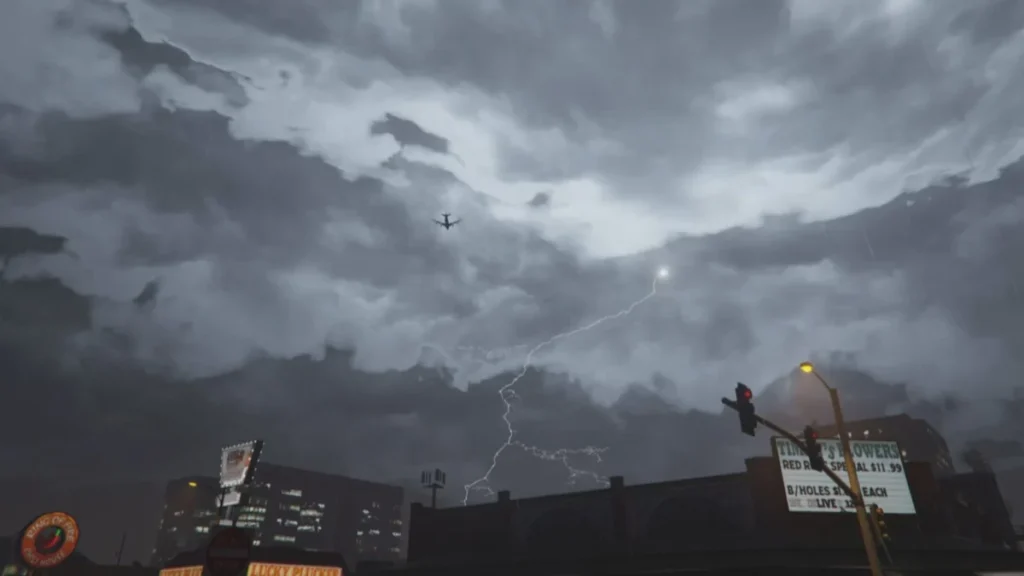

The gaming industry is currently witnessing a paradigm shift in environmental fidelity, as Rockstar Games prepares to launch Grand Theft Auto VI with an unprecedented meteorological simulation engine. As real-world climate patterns continue to disrupt major public events—ranging from music festivals to sporting fixtures—the developers behind the most anticipated title in gaming history have confirmed that the fictional state of Leonida will be subject to dynamic, localized, and potentially devastating tropical weather systems. This technological leap, detailed in a recent cover story for Game Informer, marks a departure from the scripted weather cycles of previous iterations, introducing a persistent, physics-based environment that promises to redefine player immersion.
The Technical Evolution of Environmental Systems
Owen Shepherd, Rockstar’s Vice President of Art for Lighting and Rendering, has provided significant insight into how the studio is leveraging modern hardware to achieve this level of atmospheric realism. According to the development team, the weather system in Grand Theft Auto VI is not merely a visual overlay but a complex simulation of fluid dynamics and light scattering.
The system incorporates heavy cloud density, high-velocity wind vectors, and dense volumetric fog, which interact with the game’s lighting engine to create a visceral experience. When a storm system moves across the map, players will observe realistic water runoff from architecture, such as roof edges and street-level fixtures, as well as dynamic lightning flashes that illuminate the sky in real-time. This level of detail extends to the "dripping wet" aesthetic of the environment, where surfaces transition from dry to saturated based on the intensity and duration of the rainfall. Unlike the global weather shifts seen in Grand Theft Auto V, the new engine allows for highly localized micro-climates, enabling a scenario where a player might travel from a clear, sunny highway into the epicenter of a localized tropical downpour within minutes.
Chronology of Expectations and Development
The anticipation surrounding Grand Theft Auto VI has been a decade-long saga. Following the release of Grand Theft Auto V in 2013, which remains one of the highest-selling entertainment products in history, the industry has spent years speculating on the scale and technical capabilities of its successor.
- 2013–2018: Early conceptualization and the establishment of the RAGE (Rockstar Advanced Game Engine) updates.
- 2019–2021: Refinement of volumetric lighting and cloud rendering techniques, largely informed by advancements seen in Red Dead Redemption 2.
- 2022: A massive leak of development footage provided the public with an early, albeit unpolished, look at the game’s mechanics, confirming the Floridian-inspired setting of Leonida.
- 2023–2024: Official trailer releases and marketing campaigns shifted focus toward the sheer density of the map and the interaction between AI and the game world.
- 2025–2026: Focused development on the "persistent" weather systems that utilize the expanded processing power of current-generation consoles.
The development trajectory suggests that Rockstar is prioritizing "world-state persistence." In previous games, weather was often a static background element; in Leonida, the weather acts as a dynamic entity that forces players to adapt their navigation and gameplay strategies.
Supporting Data: The Scale of Leonida
To appreciate the significance of this weather system, one must consider the geographic scale of the game world. Reports indicate that the map of Leonida is approximately twice the size of the Los Santos and Blaine County map from Grand Theft Auto V. This expansion is not just in terms of square footage, but in verticality and environmental diversity.
The integration of a persistent weather system across such a vast, sprawling map requires significant computational resources. To maintain a stable frame rate while simulating hundreds of thousands of individual raindrops and dynamic wind-driven foliage, Rockstar has implemented advanced culling and optimization techniques. These systems ensure that the meteorological data is updated in real-time, allowing for "dynamic cloudscapes" that do not merely loop but evolve based on the simulated pressure and temperature variables of the game world.
Industry Implications and Environmental Realism
The move toward hyper-realistic weather simulation carries broader implications for the open-world genre. As developers strive to mimic the "real world," the technical requirements for rendering weather often collide with the need for gameplay accessibility. However, Rockstar’s approach appears to be one of integration rather than obstruction. By making the weather localized, they avoid the frustration of forcing the entire map into a specific state, instead creating a "living" world where players can choose to seek shelter or navigate the hazards of a storm.
This technical achievement also mirrors the growing trend of climate awareness in media. By simulating the destructive power of hurricanes—a frequent and catastrophic reality in the Florida-inspired Leonida—the game creates a sense of vulnerability. It shifts the player’s role from an omnipotent force to one that must respect the environment. Analysts suggest that this design choice could pave the way for future titles to incorporate more complex environmental variables, such as seasonal changes that affect road surfaces, wildlife behavior, and infrastructure integrity.
The Technical Challenges of "Persistence"
The term "persistent" in the context of Rockstar’s weather system refers to the state of the world remaining altered after an event. For instance, if a tropical storm passes through a district, the resulting puddles, debris, and saturation of the landscape are expected to remain until the game’s environment naturally dries or is cleared.
This requires a sophisticated "state-tracking" system. Every lamppost, street, and storefront must be able to hold data regarding its current moisture level. When combined with the game’s high-fidelity shaders, this creates a seamless transition between weather conditions. This is a massive leap from the "fade-to-black" or "instant-transition" weather systems that have dominated the genre for years. It represents a commitment to the "Total World" concept, where the player is not just moving through a digital space, but interacting with a functional, reactive ecosystem.
Official Statements and Developer Vision
While Rockstar Games is notoriously guarded regarding their proprietary technology, the statements from lead developers emphasize a commitment to "immersion through friction." The logic is that when the world is inconvenient—when a storm forces a player to pull over or find cover—the world feels more tangible.
"The goal is to ensure that the environment is a character in its own right," a source close to the project noted. "The rain isn’t just an effect; it’s an event." By prioritizing the visceral experience of the storm—the sound of the wind, the erratic nature of the lightning, and the physical struggle of moving through high-water areas—Rockstar is attempting to bridge the gap between static digital environments and the unpredictable nature of reality.
Broader Impact on Gaming Culture
The inclusion of such complex systems places Grand Theft Auto VI in a unique position within the cultural zeitgeist. As real-world weather events become more frequent and severe, the ability to engage with these systems in a controlled, virtual environment has taken on a new layer of meaning.
Critics and industry analysts alike are observing this shift with interest. If the weather system functions as described, it could set a new industry standard for "living environments." Future developers will be under pressure to match this level of detail, potentially pushing the entire genre toward more immersive, weather-responsive designs. Furthermore, the commercial success of the game will likely dictate how much time and budget other studios are willing to allocate to environmental simulation, which is notoriously one of the most expensive and time-consuming aspects of game development.
As the launch of Grand Theft Auto VI approaches, the focus remains on whether these systems will provide a fun, engaging experience or if they will become a point of contention for players. However, from a technical and journalistic perspective, the shift toward hyper-realism in environmental design marks a significant milestone in the history of interactive media. The digital hurricane is coming to Leonida, and it promises to be as breathtaking as it is overwhelming.