
Saturday Night Live officially commenced its 52nd season at Studio 8H in Rockefeller Center, featuring New York Knicks point guard Jalen Brunson as the host and global pop ensemble KATSEYE as the musical guests. The premiere, which aired on September 27, 2026, marked a significant milestone for the legendary late-night institution as it continues to navigate the evolving landscape of live sketch comedy in the digital era. While the choice of an NBA superstar as the season-opening host generated considerable buzz among sports and entertainment circles, the critical reception of the episode highlighted a tension between the show’s traditional reliance on topical sports humor and the need for fresh, character-driven performances.
A Historic Premiere in Context
The return of Saturday Night Live for its 52nd season follows a period of transition for the long-running series, which has historically utilized the premiere slot to set the tone for the coming months. Jalen Brunson’s appearance was part of a broader trend of NBC attempting to bridge the gap between mainstream sports culture and the network’s flagship variety show. Given the Knicks’ recent prominence in the NBA and Brunson’s status as a fan favorite in New York, the synergy between the host and the show’s local audience was ostensibly high. However, the logistical challenges of balancing a professional athlete’s schedule with the rigorous demands of a live broadcast remain a recurring narrative for the production team.
Critical Analysis of Sketch Writing and Execution
The episode’s writing staff, led by executive producer Lorne Michaels, opted for a thematic focus that leaned heavily on sports-centric narratives. While these sketches sought to capitalize on Brunson’s natural comfort in front of a camera, the execution was met with mixed reviews. Observers noted that the reliance on sports tropes often resulted in repetitive pacing, which threatened to stall the momentum of the live broadcast.
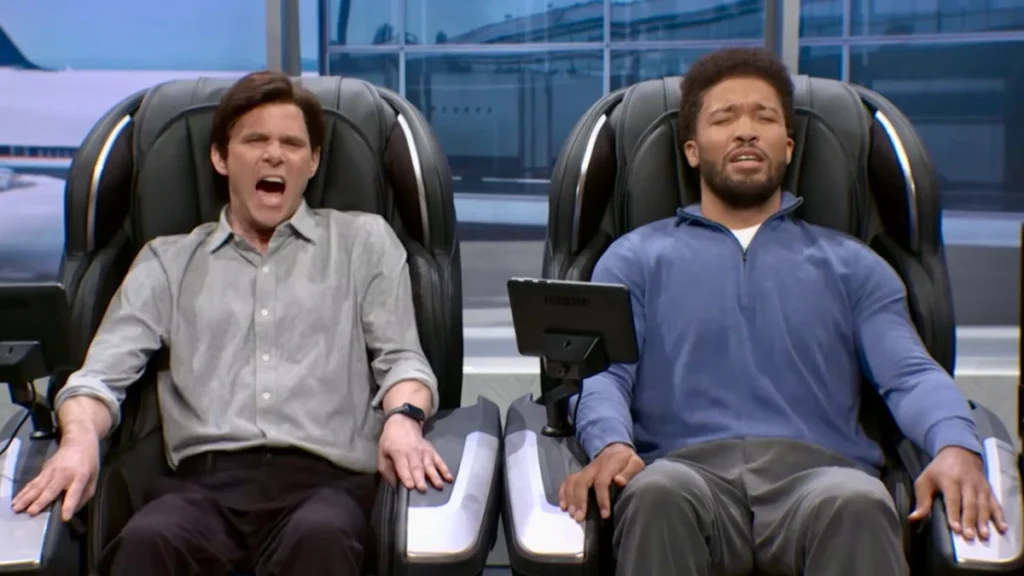
In contrast to the script-heavy sketches, the most successful segments of the evening were those that allowed the ensemble cast to showcase their improvisational and character-acting skills. The "Airport Massage Chairs" sketch, featuring Mikey Day, stood out as a highlight of physical comedy. Day’s commitment to the bit—a high-energy, absurd sequence centered on the awkwardness of public relaxation—demonstrated the cast’s ability to elevate thin premises through sheer performance volume and comedic timing.
Musical Performance and Industry Standards
The musical segment featuring KATSEYE faced scrutiny regarding production values. The group, which has gained significant traction in the international pop market, performed two tracks during the broadcast. However, technical analysis from viewers and industry critics pointed to issues with live vocal fidelity and choreography synchronization. While such technical challenges are not uncommon in the fast-paced environment of live television, the discrepancy between the group’s polished studio recordings and their stage presence led to a broader discussion regarding the expectations for musical guests on late-night variety programs.
Cast Standouts and New Additions
Despite the uneven nature of the writing throughout the premiere, individual performances provided necessary anchor points for the episode. Ashley Padilla continued to solidify her role as a linchpin of the current cast. Her ability to pivot between straight-faced roles and high-concept satire has made her a reliable presence, particularly during the transition periods between segments.
Furthermore, the season premiere served as the debut for new cast member Grace Reiter. In a show that often struggles to integrate newcomers quickly, Reiter’s performance in the "Dream Academy Season Two" sketch was notably confident. By holding her own against both the host and the established ensemble, Reiter signaled a potential shift in the cast dynamic, which may prove vital as Season 52 progresses.
Chronology of the Premiere Highlights
The structure of the episode followed a standard procedural flow, with specific sketches serving as the focal points for social media engagement:
- Opening Monologue: A traditional welcome that sought to introduce Brunson to the non-sports audience while acknowledging his role as a New York icon.
- Men’s Support Group: A mid-show sketch that utilized cultural touchstones—specifically the Usher and Chris Brown tour—to satirize current trends in live event attendance.
- High School Musical Parody: A sketch that leaned into the host’s background, placing Brunson in a familiar environment (the basketball court) but through a subverted lens of musical theater.
- Update Desk: A consistent high-water mark for the show, featuring the return of Jeremy Culhane as Tucker Carlson. Culhane’s caricature of the media personality provided a sharp satirical contrast to the otherwise lighthearted sketches of the evening.
Broader Implications for Season 52
The Season 52 premiere acts as a microcosm for the challenges currently facing Saturday Night Live. As the show contends with a fragmented media landscape, where short-form content dominates, the necessity of maintaining a 90-minute live format requires a delicate balance of topicality and timeless comedy.
The decision to lean into sports-themed content, while logical from a demographic reach perspective, underscores the difficulty of producing content that appeals to a diverse audience. When the sketches rely too heavily on the host’s personal brand, the show risks alienating viewers who are less familiar with the specific cultural context of the guest. Conversely, when the show relies on its veteran cast members to execute character-driven comedy, it finds its most authentic voice.
Looking ahead, the success of Season 52 will likely depend on the writers’ ability to diversify their subject matter. The debut of Grace Reiter and the continued reliability of Ashley Padilla suggest that the internal talent pipeline remains strong. However, the technical issues during the musical performances and the repetitive nature of the sports sketches serve as reminders that the production must evolve to meet the high standards expected of a half-century-old institution.
Industry Context and Statistical Trends
Saturday Night Live’s viewership has undergone significant shifts over the last five years. According to Nielsen ratings and digital streaming metrics, the show’s audience is increasingly viewing segments on-demand via social platforms rather than during the live Saturday night broadcast. This "snackable" format makes the quality of individual sketches more important than the narrative flow of the entire episode.
In the case of this premiere, the individual clips that performed best on platforms like X (formerly Twitter) and YouTube were those featuring high-concept absurdity or strong political satire, such as the Tucker Carlson segment. This trend suggests that the production team may benefit from prioritizing high-impact, sharable moments over long-form sketches that struggle to maintain pacing.
Conclusion
While the Season 52 premiere did not represent the show at its most cohesive, it provided a necessary reset for the series. Jalen Brunson proved to be an amiable host who was willing to engage with the show’s format, even if the material provided to him occasionally lacked the necessary depth to resonate. As the season continues, the primary challenge for the producers will be to reconcile the show’s legacy as a bastion of political and social satire with the modern requirement to create viral, high-energy entertainment. The debut of fresh talent and the consistent performance of the veteran cast provide a foundation of stability, but the creative direction will need to refine its focus to ensure that the 52nd season remains as relevant as its predecessors. With a rotating roster of upcoming hosts and the return of staple segments like the Update Desk, the show remains in a position to course-correct as it navigates the remainder of the 2026-2027 broadcast schedule.