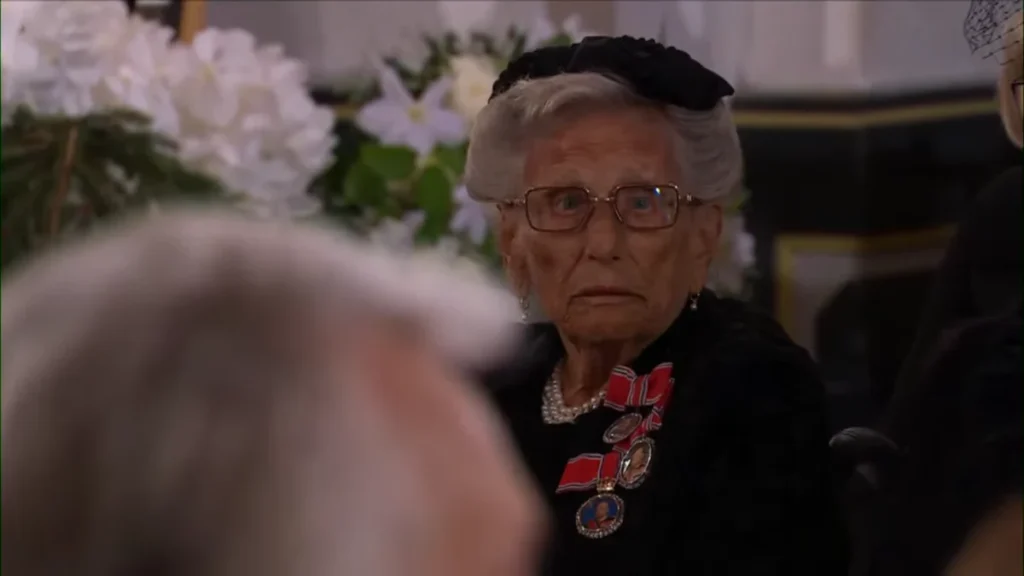

The Norwegian capital of Oslo came to a solemn standstill as members of the Norwegian Royal Family, alongside foreign dignitaries and representatives from royal houses across Europe, gathered at Ris Church to bid a final, emotional farewell to Princess Astrid. The cherished princess passed away earlier this month at the remarkable age of 94, just days after she had bravely stood to mourn her younger brother, King Harald. The juxtaposition of successive state funerals has plunged the House of Glücksburg into a period of profound national mourning, testing the resilience of the Scandinavian monarchy as it navigates a generational transition under the leadership of King Haakon.
The funeral service at Ris Church was marked by deep personal sorrow, traditional pageantry, and poignant displays of familial grief. While global headlines often focus on the grand spectacles of British or Spanish royal events, the atmosphere in Oslo reflected a tight-knit, deeply personal grief for a woman who had dedicated nearly a century of her life to public service, charity, and the quiet stabilization of the Norwegian crown through decades of turbulent European history.
Main Facts of the Service and Attendance
Princess Astrid’s funeral drew high-ranking royals from across the continent, underscoring the deep dynastic ties that bind Europe’s reigning and deposed houses. Leading the mourners from within the family was King Haakon, who was accompanied by Queen Mette-Marit, Queen Mother Sonja, and the future queen, Crown Princess Ingrid Alexandra. Also present were Princess Märtha Louise, her husband Durek Verrett, and her three daughters, standing united in their grief.
International representation was notably robust despite the short turnaround from King Harald’s obsequies. Crown Princess Victoria of Sweden made the journey across the border to represent the Swedish royal family, while Princess Astrid of Belgium and Prince Lorenz also attended to pay their respects. Although the British Royal Family did not send a physical delegate to Oslo for this specific service—having been represented heavily at King Harald’s funeral earlier in the month—their enduring bond with the Norwegian royals was visibly honored. Princess Anne, who serves as King Haakon’s godmother and had traveled to Oslo alongside Prince William for King Harald’s state farewell, ensured her presence was felt through a deeply personal floral tribute. A wreath of pristine white roses adorned with a handwritten note reading, "With love and happy memories," and signed simply "Anne," was placed among the mass of tributes surrounding the church.
A Solemn Chronology of Recent Royal Tragedies
To fully understand the heavy atmosphere that hung over Ris Church, one must look closely at the accelerated chronology of loss that has struck the Norwegian royal household in the late summer and early autumn of 2026. The sequence of events began on August 28, when King Harald passed away at the age of 89 following a multi-year decline in health. His passing triggered a national period of mourning, culminating in a grand state funeral on September 9.
In a display of extraordinary fortitude and devotion to her dynasty, Princess Astrid—then 94 years old and experiencing severe physical frailty—insisted on attending her brother’s state funeral. Supported by family members, she sat through the service, a poignant moment that would tragically mark her final public engagement. Just forty-eight hours later, on September 11, Princess Astrid passed away peacefully, her body having finally yielded to the immense physical strain of her advanced years and the crushing emotional weight of losing her lifelong sibling and sovereign.
This rapid succession of deaths means the Norwegian court has had to organize two major royal funerals within a single month—an unprecedented logistical and emotional challenge for the small but resilient Scandinavian monarchy. King Haakon, who ascended the throne amid these shifts, found himself playing an unusually physical and intimate role in his great-aunt’s final rites. Eschewing purely symbolic detachment, King Haakon personally served as one of seven pallbearers, helping to shoulder Princess Astrid’s coffin from Ris Church alongside her five children: Cathrine, Benedikte, Alexander, Elisabeth, and Carl-Christian Ferner.
Chronology and Proceedings at Ris Church
The funeral procession and service followed traditional liturgical guidelines of the Church of Norway, blended with the somber protocols reserved for senior members of the royal family. Members of the public lined the streets surrounding Ris Church hours before the service, holding flags and quiet tokens of remembrance.
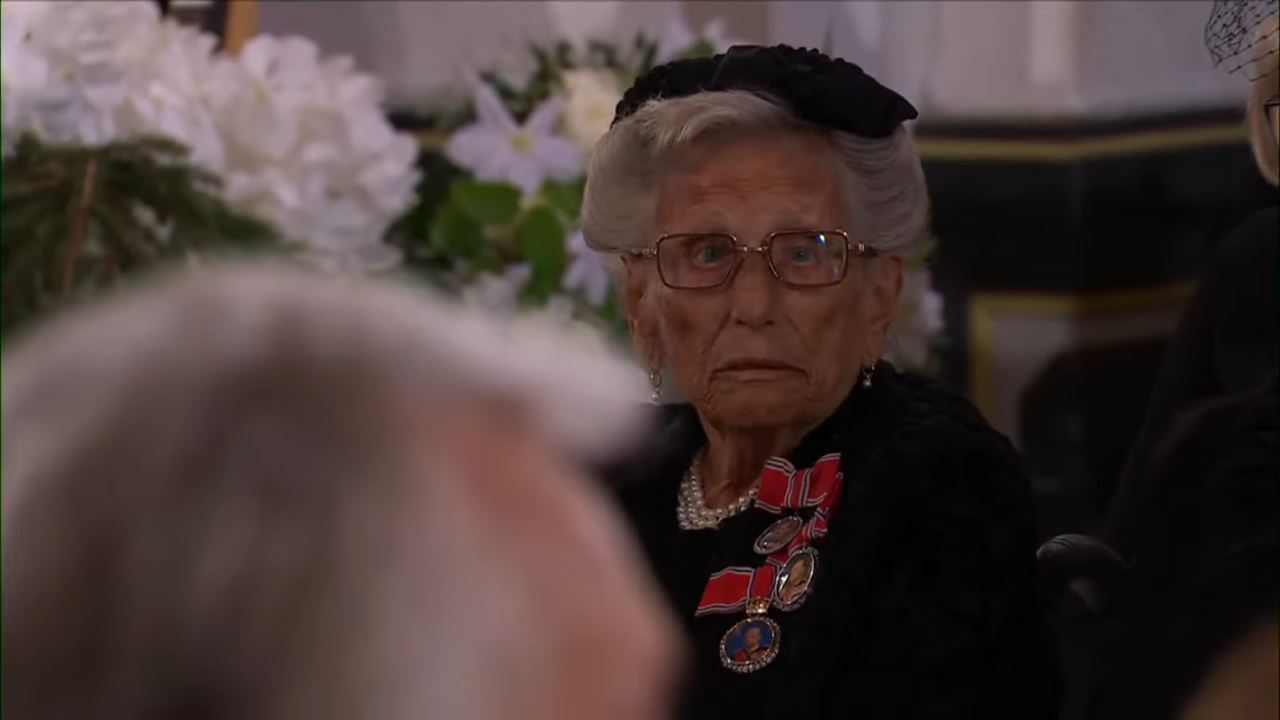
As the royal cortege arrived, family members gathered to receive the coffin. Following the traditional service, a deeply moving family-centric ceremony took place outside the church. Princess Astrid’s grandchildren and great-grandchildren stepped forward individually to lay single red roses upon her casket, a tactile and intimate farewell that moved many in attendance to tears.
As the mourners departed, media outlets captured striking images of the younger generation stepping into their public roles. Crown Princess Ingrid Alexandra was seen walking hand-in-hand with her mother, Queen Mette-Marit. The young royal wore a ruby and diamond heart pendant—a sentimental piece gifted to her by Queen Sonja for her christening in 2004. Notably, the princess had also chosen to wear this exact necklace at King Harald’s funeral earlier in the month, creating a visual thread of continuity and familial protection across the two tragedies.
Official Responses and Tributes
In the wake of her passing, official statements from the Royal House and political leaders painted a picture of a woman who was much more than a peripheral royal figure. King Haakon released a heartfelt statement honoring her lifelong dedication: "Throughout her long life, Princess Astrid represented the Royal House in a warm and dutiful manner."
Prime Minister Jonas Gahr Støre also issued a statement on behalf of the Norwegian government, noting that Princess Astrid had been a steadfast pillar of stability for generations of Norwegians. "She carried her royal duties with grace, humor, and an unwavering commitment to the people of Norway. Her loss, coming so soon after the passing of King Harald, marks the end of an era for our nation," the Prime Minister stated.
Historians and royal commentators have similarly emphasized Astrid’s role as a bridge between Norway’s wartime history and the modern constitutional monarchy. Having lived through the German occupation of Norway during World War II, her life spanned the transformation of the nation into a modern, prosperous social democracy, during all of which she remained a quiet, reliable servant of the state.
Broader Impact and Implications for the Norwegian Monarchy
The passing of Princess Astrid, hot on the heels of King Harald’s death, leaves the Norwegian Royal Family significantly diminished in terms of senior working members. With the generation that shaped mid-to-late 20th-century Norway now nearly entirely gone, the weight of the institution rests squarely on the shoulders of King Haakon, Queen Mette-Marit, and the rising generation led by Crown Princess Ingrid Alexandra.
This transition brings both structural challenges and strategic opportunities. The shrinking of the core royal family forces a modernization and streamlining of duties, a trend seen across several European monarchies as they seek to align with contemporary economic expectations and public desires for lean governance. However, it also removes living links to Norway’s historic twentieth-century trials and triumphs—links that public figures like Princess Astrid provided effortlessly by virtue of their longevity.
Furthermore, the simultaneous mourning periods have tested the institutional resilience of the palace communications and operational teams. Observers note that the dignified, composed, and deeply human way King Haakon and his family have navigated this dual crisis has ultimately strengthened public affection for the crown. By participating directly as pallbearers, sharing private grief in public spaces, and maintaining international ties through gestures like Princess Anne’s floral tribute, the Norwegian monarchy has demonstrated its relevance and emotional resonance in the 21st century.
As the bells of Ris Church fell silent and Princess Astrid’s coffin was driven away to its final resting place, Norway did not merely bury a princess; it closed a monumental chapter of its national story. The road ahead for the House of Glücksburg is defined by a new generation, but the foundations laid by figures like Astrid will continue to guide the Scandinavian crown as it faces the future.