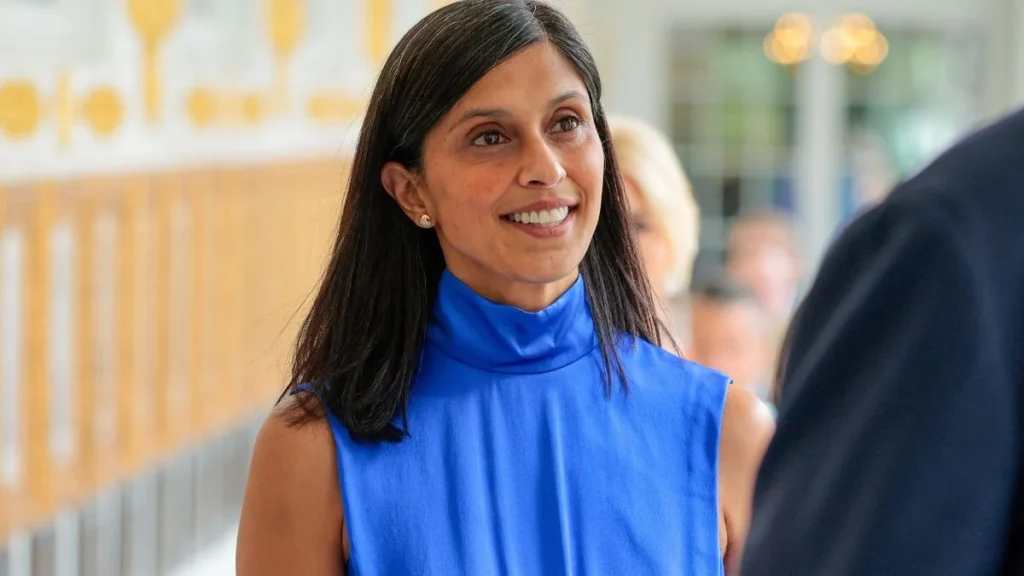

WASHINGTON — Second Lady Usha Vance emerged as a central figure in Washington style and diplomatic pageantry during a high-profile state dinner at the White House, stepping into the historic East Room wearing a custom metallic gold strapless column gown by Oscar de la Renta. The high-stakes diplomatic evening, hosted by President Donald Trump in honor of visiting Chinese President Xi Jinping, brought global attention to the intersection of international relations, high-level diplomacy, and American fashion craftsmanship. Flanked by Vice President JD Vance, who wore a traditional navy tuxedo paired with a black bow tie, the Second Lady delivered a sartorial statement that immediately drew praise from fashion critics and political observers alike, blending contemporary elegance with the formal traditions expected of a presidential administration hosting a major foreign head of state.
The meticulously tailored garment featured a sleek, straight-across strapless neckline accentuated by a crisp, folded cuff detail that rested delicately across her chest. The floor-length silhouette lengthened her frame while maintaining a disciplined, streamlined profile that glistened under the crystal chandeliers of the White House. Opting for a minimalist approach to jewelry and accessories, Usha Vance allowed the shimmering fabric to command the room, completing her ensemble with her dark hair parted neatly to the side and styled in silky, straight locks that cascaded over her shoulders. Her beauty look remained understated and polished, featuring fresh, luminous skin complemented by a soft pink lip. The presentation underscored a deliberate strategy to project modern sophistication on a global stage, reinforcing the role of the Second Lady as a visible cultural representative of the United States during monumental geopolitical summits.
Chronology of the Diplomatic Engagement and Evening Agenda
The state dinner represented the culmination of months of careful planning by the White House social office, the Department of State, and diplomatic security details. The schedule for President Xi Jinping’s official state visit began earlier in the day with an arrival ceremony on the South Lawn, complete with full military honors, 21-gun salutes, and official handshakes between President Trump and President Xi in front of an assembled press corps and international delegation.
Following the morning arrival ceremonies, the two delegations transitioned to the Oval Office and the Cabinet Room for bilateral policy discussions. These closed-door talks centered on critical geopolitical issues, including global trade tariffs, supply chain security, macroeconomic stability, regional security in the Indo-Pacific, and ongoing diplomatic communication channels between Washington and Beijing.
As evening approached, the focus shifted from policy negotiations to traditional state hospitality. Guests began arriving at the White House complex via the East Wing security gates starting at approximately 6:00 p.m., comprising members of the President’s Cabinet, congressional leaders from both political parties, corporate chief executives, cultural ambassadors, and prominent figures from various industries. Vice President JD Vance and Second Lady Usha Vance greeted arriving dignitaries in the Grand Foyer before the official reception commenced in the Blue Room. The formal dinner was subsequently served in the State Dining Room, accompanied by musical performances highlighting American arts and culture, before concluding with after-dinner remarks and photo opportunities in the historic East Room.
Context and Background of U-S-China State Visits
State visits are recognized globally as the highest form of diplomatic engagement, reserved exclusively for closest allies and primary strategic competitors. A state visit involving the leader of the People’s Republic of China carries immense geopolitical weight, given that the United States and China represent the world’s two largest economies. The last comparable full-scale state visit of this magnitude involved extensive protocols designed to balance strategic competition with necessary diplomatic engagement.
Within this framework, the visual and cultural elements of the evening assume heightened significance. Administrations historically use state dinners to project national identity, economic strength, and cultural values. The choice of American design houses—such as Oscar de la Renta, a legendary fixture in Washington high fashion worn by numerous First and Second Ladies across administrations—serves as an intentional celebration of domestic manufacturing, creative artistry, and heritage craftsmanship. By selecting a custom metallic piece, Usha Vance signaled an alignment with contemporary design sensibilities that embrace bold textures while adhering to strict diplomatic dress codes.
sartorial choices made by political spouses during high-profile international summits are frequently analyzed by historians and fashion sociologists as forms of soft diplomacy. Attire can communicate respect for a visiting delegation, signal confidence, and project stability to domestic and international audiences. The positive reception of the Second Lady’s gown reflects the ongoing public fascination with political style and the ways modern figures navigate the public eye.
Broader Economic, Cultural, and Diplomatic Implications
While the fashion choices of political figures capture immediate media attention, the underlying purpose of a state dinner remains rooted in statecraft. The interactions between American and Chinese officials during the visit provided a structured environment for addressing complex structural challenges in the bilateral relationship. Economically, the discussions aimed to stabilize trade frictions, protect intellectual property rights, and foster equitable market access for multinational corporations operating in both nations.
Furthermore, cultural diplomacy plays an indispensable role in maintaining channels of communication during periods of heightened geopolitical tension. Events like the White House state dinner facilitate informal dialogue between policymakers and private sector leaders who might not otherwise interact in structured bureaucratic settings. These interpersonal connections often lay the groundwork for subsequent policy breakthroughs or de-escalation measures.
For the Vance administration, the successful execution of the state visit demonstrated administrative competence on the international stage. The careful choreography of the evening—from the security protocols and guest list curation to the aesthetic presentation of the White House interiors and official attire—reinforces the projection of national strength and hospitality.
As images of Usha Vance in her custom Oscar de la Renta gown circulate globally across digital platforms and international news publications, the moment solidifies her growing profile as a notable figure in American public life. By balancing traditional diplomatic decorum with a distinct, modern approach to evening wear, she has established a high standard for future political hosting events. The enduring legacy of the evening will be measured not only by the diplomatic communiqués and trade agreements negotiated behind closed doors, but also by the lasting cultural impressions forged during a landmark night at the White House.