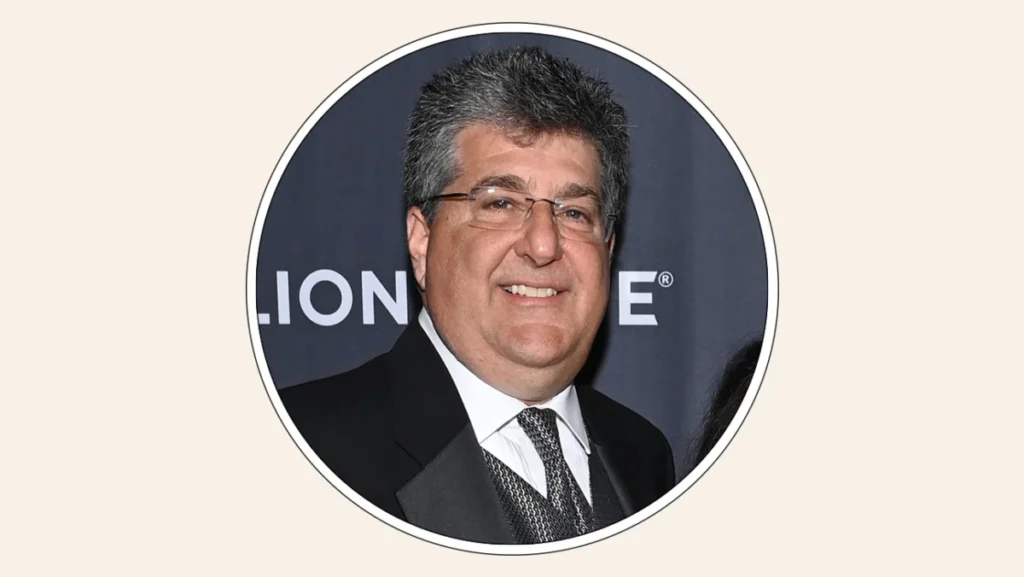

Guy Campanile has spent more than three decades dissecting facts, questioning assertions, and applying a rigorous, unforgiving standard of scrutiny to the news. As a 34-year veteran of CBS News and a famously exacting former managing editor of its flagship investigative program, 60 Minutes, he built a professional reputation on a foundation of blunt honesty and unyielding editorial independence. Even within a newsroom culture historically defined by fierce debate and rigorous story-honing, Campanile stood out for his refusal to sugarcoat his assessments.
Months after a sweeping and turbulent overhaul at CBS News resulted in his ouster alongside several other high-profile correspondents and senior leaders, Campanile is breaking his silence. In a wide-ranging discussion, the veteran newsman offers a critical evaluation of 60 Minutes as it navigates its milestone 59th season under new editorial leadership. While his critique of the program’s current output is measured, his concerns regarding the show’s direction, the broader editorial philosophy of incoming leadership, and the seismic corporate realignments shaking up the media landscape reveal deep-seated anxieties about the future of prestige broadcast journalism.
Anatomy of a Newsroom Upheaval: The Spring Purge
The backdrop to Campanile’s critique is the profound institutional trauma experienced by CBS News earlier in the year. In May, the network implemented a series of sudden and drastic leadership changes under the watch of CBS News Editor-in-Chief Bari Weiss. The shakeup resulted in the abrupt departures of multiple core pillars of 60 Minutes, including veteran correspondents Sharyn Alfonsi, Cecilia Vega, and Scott Pelley, as well as senior program leaders Tanya Simon, Draggan Mihailovich, and Matthew Polevoy.
Pelley’s exit, in particular, followed a tense confrontation with incoming management regarding editorial shifts under Weiss—an opinion journalist by background who transitioned into the traditional broadcast news hierarchy with limited prior experience in network television production. The mass departures triggered widespread industry scrutiny and internal alarms. Departing staffers and industry observers openly questioned whether the purge was driven by a desire to reshape the network’s editorial posture for political reasons, moving away from the hard-hitting, establishment-questioning investigative reporting that had defined the 60 Minutes brand for more than half a century.
In the wake of these departures, Campanile and his former colleagues did not mince words, previously characterizing their firing as a consequence of refusing to become "accomplices in the destruction of the most prestigious news program on American television." Yet, evaluating the program’s initial episodes under its 59th season, Campanile notes a curious paradox: despite the dramatic housecleaning and promises of a revolutionary new direction from incoming executives, the broadcast itself looks remarkably similar to its recent iterations.
Evaluating the New Season: Form vs. Content
Campanile points to the much-touted "notebook of ideas" brought by new executive leadership, noting that internal rhetoric frequently described the aging broadcast as a "melting ice cube" in desperate need of radical reinvention. This urgency to transform the program came despite solid performance metrics, including a nine percent viewership increase during the previous season.
"We kept hearing about a notebook full of ideas that the new executive producer had, and the broadcast had been described as a melting ice cube and that changes had to happen," Campanile observes. "And the broadcast I’ve seen the first few weeks, in collar and form, not in content, does not look very different. So I’m trying to understand why it was all blown up."
This disconnect between the stated rationale for the purge and the actual on-screen product forms the core of Campanile’s editorial critique of the season’s premiere. The marquee segment of the season opener featured an exclusive interview with a U.S. Air Force officer who had been shot down over Iran and subsequently rescued in a daring military operation. While Campanile acknowledges the segment’s high dramatic value and visual appeal as a season curtain-raiser, it raised immediate journalistic red flags for him.
The piece featured interviews with prominent defense officials, including Secretary of Defense Pete Hegseth and Chairman of the Joint Chiefs of Staff Dan Caine. However, Campanile notes a glaring omission in the questioning: the interviewers failed to press the officials on the broader conduct, arc, and status of the ongoing, broadly unpopular military engagement in Iran—particularly notable given that neither Hegseth nor Caine has been regularly holding open briefings or extensive media availabilities regarding the conflict.
"Where I, as a viewer, got stuck is how do we have the Secretary of Defense and the Chairman of the Joint Chiefs of Staff in that story and not ask about the conduct, the arc and the status of the war?" Campanile asks. He suggests that savvy viewers might easily interpret the omission as a concession made to secure the high-profile rescue story—a condition he insists would never have been tolerated during his tenure, when 60 Minutes correspondents operated under a strict rule that subjects could not dictate the boundaries of an interview.
Interestingly, segments of network reporting addressing the missing context did air elsewhere within the CBS ecosystem. Correspondent Norah O’Donnell questioned Hegseth on what ultimate victory in Iran would look like, and queried Caine regarding Iranian missile capabilities and potential munitions shortages, during appearances on CBS Mornings and Face the Nation. None of those accountability-driven questions, however, made it into the flagship 60 Minutes segment.

The Fine Line Between Investigation and Tabloid Journalism
Campanile’s second major critique targets the editorial judgment behind the season’s subsequent episodes. In its second week, 60 Minutes broadcast the first television interview with Patrick Clancy, the ex-husband of Lindsay Clancy, a Massachusetts mother who murdered her three children. The case—which culminated in a highly publicized, mistried summer court proceeding—garnered intense global media coverage and reignited national conversations surrounding postpartum mental illness, making the interview a major journalistic "get."
Yet, watching the broadcast, Campanile questioned whether securing a high-interest subject was sufficient justification for the network’s limited resources and airtime without a broader, more rigorous investigative framework.
"I think it’s a high-interest story, just like the fighter pilot’s story was a high-interest story, but you have to bring more than just high interest, at least I believe that to be the case, because otherwise it feels a little tabloid-y," Campanile says. "And I don’t think that’s what people want from 60 Minutes. I just don’t. I think they want something more thoughtful."
This tension highlights an enduring existential debate within modern television news: the continuous tug-of-war between sensationalism and substantive public-interest reporting in an era dominated by ratings pressures and fragmented audience attention spans.
Industry-Shaping Mergers and Macro-Level Anxieties
The internal turmoil at CBS News and 60 Minutes is taking place against a backdrop of historic corporate consolidation across the American media and entertainment landscape. Paramount Skydance, the corporate entity that oversaw the installation of the new CBS leadership regime, recently finalized a settlement with twelve state attorneys general, clearing the path for its massive merger with Warner Bros. Discovery (WBD).
If the transaction clears final regulatory hurdles, the newly combined media giant will possess an unprecedented portfolio of news and entertainment assets, bringing legacy networks like CBS News and CNN under the exact same corporate umbrella. This prospect has generated widespread apprehension among media critics, journalism ethicists, and industry veterans alike.
Campanile admits to harboring "lots of concerns" regarding the trajectory of a combined Paramount-Skydance and Warner Bros. Discovery media empire. "Chief among them is who is running this operation? Is it going to be Mark Thompson or is it going to be Bari Weiss?" he asks, pointing to the starkly different journalistic backgrounds and corporate philosophies represented by the respective media executives.
Furthermore, Campanile expresses skepticism regarding the enforcement and practical mechanics of the editorial oversight boards and independent structures mandated by the state attorneys general settlement. Noting that concrete details concerning the composition and authority of these oversight bodies remain obscure, he points to a glaring absence of institutional accountability mechanisms within his former employer. "Much was made of the CBS News ombudsman," Campanile notes dryly. "That guy’s been missing for a year."
Continuing the Mission Elsewhere
While his 34-year chapter at CBS has concluded, Campanile has not stepped away from the profession. He recently launched a media consultancy firm named FFWD Media Mentor, designed specifically to mentor and guide early-career and student journalists. The initiative aims to fill a growing void in modern newsrooms, where shrinking budgets and rapid digital transformations have left young professionals with fewer opportunities for direct, hands-on mentorship from seasoned veterans. Participants in the program will undoubtedly receive the same uncompromising, no-nonsense feedback that defined Campanile’s decades-long tenure in the 60 Minutes control rooms.
As for the future of his former television home, Campanile maintains a pragmatic, wait-and-see stance. While skeptical of the rationale behind the spring purges and the early editorial choices of the 59th season, he acknowledges that the ultimate arbiter of the program’s success will be the viewing public.
"Maybe, maybe there is a secret sauce we didn’t understand, some kind of equation that we never contemplated," Campanile reflects on the revamped 60 Minutes. "And we’ll all find out together. The viewer has the final vote in all of this. I have said over and over again, you are what the scoreboard says you are… So let’s see where we are in April and March and May, and then the final verdict will come down."