
Ten years following the devastating siege of Rushville, the narrative landscape of HBO’s series Lanterns has shifted dramatically. In the sixth episode of the freshman season, titled "Bad Optics," audiences are presented with an unsettling portrait of a world trying to pick up the pieces after intergalactic catastrophe. Hal Jordan is dead, the geopolitical and social fallout of alien incursions has permanently altered the American Midwest, and legacy characters occupy positions that defy initial expectations. Initially confounding in its structural pacing, the episode ultimately delivers a wealth of DC Comics lore, character deconstructions, and high-stakes exposition that reframes the preceding fifty-two minutes of narrative detours.
Main Facts and Narrative Setup
The episode establishes its premise a full decade after the catastrophic events in Rushville. John, now residing in Midway City—DC Comics’ industrial analog to Detroit or Chicago—has pivoted away from his heroic origins to become a high-end architect. Alongside his brother Marcus, John specializes in designing and constructing bespoke, ultra-secure panic rooms capable of housing up to 20,000 people. This business venture reflects a cynical new normal in a universe where the populace views large-scale destruction, such as the infamous Metropolis event depicted in the broader franchise, as an inevitable certainty.
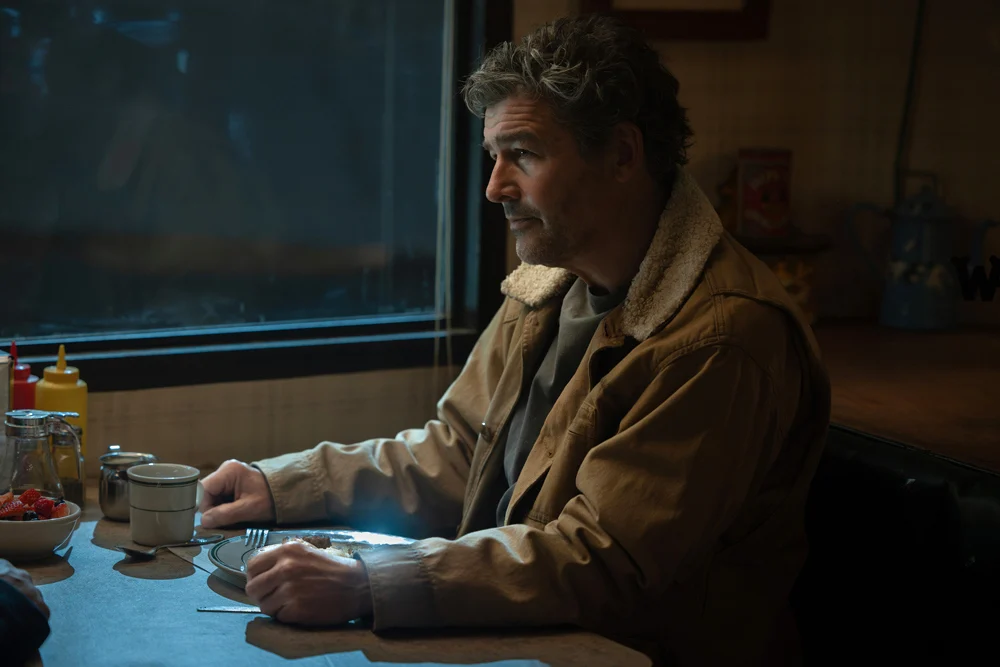
However, John’s carefully curated civilian life is upended by a deliberately deceptive phone call from his mother. Falsely claiming that Hal Jordan—who spent ten years incarcerated for the Rushville tragedy—is seeking to apologize, she lures John back to the desolate remains of Rushville. Upon arriving at the local diner, John discovers a defiant and unrepentant Hal. The ensuing confrontation exposes deep-seated resentments, culminating in a violent physical altercation where John breaks Hal’s nose. This crucial chronological marker establishes that the fistfight occurred merely hours before Hal’s subsequent murder.
Chronology and the Investigation of Hal Jordan’s Murder
Following the altercation, John returns to Midway City only to receive news that sets the murder investigation into motion. Kerry, the town’s sheriff—who has controversially entered into a romantic relationship with Hal following her divorce from Billy Macon—informs John of Hal’s death. Opting for operational secrecy, John conceals his recent trip to Rushville, returning to the Nebraskan town under the guise of an ordinary visitor.
Upon his return, John navigates a hostile and bizarre local ecosystem. The community holds him and Hal collectively responsible for the destruction of Rushville, despite factual evidence pointing toward an external alien threat and a rogue combat unit. Nevertheless, local tensions escalate when John’s clandestine activities, including a localized physical altercation with town locals, result in a brief overnight stay in the local jail cell overseen by Sheriff Kerry.
During his incarceration, John is visited by Guy Gardner, the successor Green Lantern operating under guidelines inspired by Gotham’s vigilante infrastructure. Gardner delivers critical exposition regarding the Guardians of the Universe, confirming that Hal’s original ring was officially decommissioned while a new one was forged for Gardner. Tensions flare as John weaponizes Gardner’s psychological vulnerabilities, taunting him regarding fear and institutional cowardice before Gardner departs, dropping a bombshell revelation: someone has successfully breached space prison to free Sinestro.
Supporting Data and Contextual Analysis
The historical backdrop of "Bad Optics" relies heavily on the psychological aftershocks of the Rushville siege. The narrative explores the weaponization of fear, a thematic cornerstone of the Green Lantern mythos. Across the series, the three men who have worn the power ring—Hal, John, and Guy—demonstrate acute vulnerability when confronted with accusations of cowardice. This recurring character flaw invites broader analysis regarding the Guardians’ selection process, raising questions about the psychological stability of individuals chosen to wield universe-level power without fear.
Simultaneously, secondary plot threads complicate the narrative framework:
- John’s Familial Strife: John’s estranged father, residing in a memory care facility, engages in erratic behavior, culminating in a firearm incident involving facility windows that prompts his impending eviction. The convergence of the father’s firearm possession and the mother’s strategic phone call on the night of Hal’s murder introduces compelling circumstantial intrigue.
- The Storage Unit Mystery: Post-mortem processing led by local authorities uncovers a storage unit key among Hal’s effects. Inside sits a heavily encrypted alien locker that responds exclusively to Hal’s voice authorization.
- The Blackmail Subplot: Maggie, a local resident with a childhood connection to John’s past operations in Rushville, attempts to leverage historical grievances for a $300,000 extortion payment, highlighting the persistent local hostility directed toward outsiders.
Official Responses and Character Dynamics
The social dynamics within Rushville strain conventional logic, presenting a town where law enforcement and civic leadership operate in stark defiance of community sentiment. Sheriff Kerry’s relationship with Hal Jordan—the man universally reviled by her constituents as the architect of their ruin—creates an inherent governance paradox. How local leadership maintains institutional order while harboring the town’s most despised figure remains one of the season’s central narrative tensions.
Carol Ferris, Hal’s former romantic partner, injects a note of tragic irony into the proceedings by asking John to deliver a eulogy written by Hal himself. Hal’s misplaced expectation of a grand funeral attended by dignitaries contrasts sharply with the desolate, snow-cleared reality of Rushville.
Broader Impact and Implications
The final minutes of "Bad Optics" recontextualize John’s seemingly erratic decision-making throughout the episode. Driven by the necessity to bypass the encrypted alien locker, John desecrates Hal’s grave under the cover of night, retrieving the decommissioned power ring. By manually charging the ring using techniques observed from Hal, John activates a holographic projection of his deceased rival.
This climactic maneuver suggests that Hal’s prolonged atonement tour across Rushville prior to his death was not merely an exercise in remorse, but a targeted search for specific extraterrestrial assets. With Sinestro’s escape from interplanetary detention, the revelation of the locked alien container, and John’s calculated risk in utilizing forbidden technology, the episode transitions from a localized murder mystery into a high-stakes cosmic conspiracy. As Lanterns progresses, the fallout from "Bad Optics" guarantees that the fragile peace in Rushville—and the broader galactic order—will face catastrophic fracture.