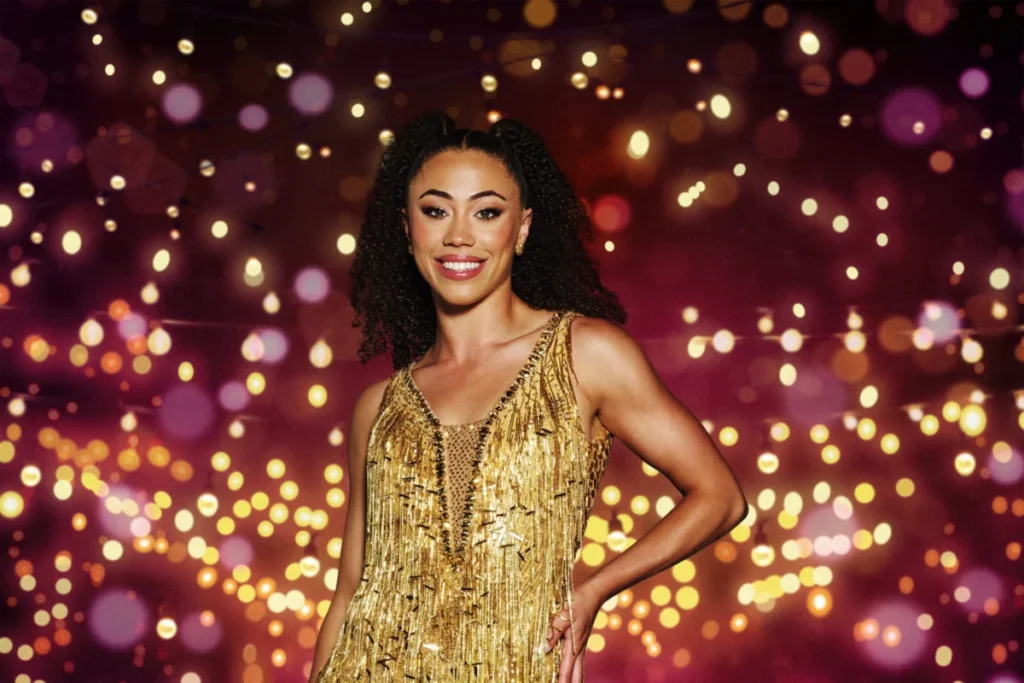

The 25-year-old skeleton racer, who rose to international prominence after securing a gold medal at the 2026 Winter Olympic Games, has transitioned from the high-speed, icy tracks of professional sport to the polished ballroom of the BBC’s flagship dance competition. Paired with newcomer Canadian professional dancer Mark Karmalita for the new series, Stoecker has made her ambitions clear: she intends to conquer what many consider the most technically demanding Latin dance in the Strictly repertoire.
The Quest for Perfection: Challenging the Rumba Curse
The rumba is widely regarded by professional dancers and judges alike as the "dance of love," but its slow, deliberate pace and emphasis on hip action and intricate footwork make it notoriously difficult to master. Despite its prominence in the competition, no celebrity contestant has ever been awarded a perfect 40-point score for a rumba.
History shows that while many have come tantalizingly close, the elusive 40 has remained out of reach. Notably, actress and former champion Kara Tointon, who partnered with Artem Chigvintsev in 2010, and television presenter AJ Odudu, who performed with Kai Widdrington in 2021, both achieved scores of 39 for their rumbas. Stoecker, emboldened by her competitive background, views this statistical gap not as a warning, but as a target.
"We found out that no one in Strictly history has ever got a 40 for a rumba," Stoecker stated in an interview with the Press Association. "That’s what I heard through the grapevine. That might be wrong, but I think it’s true and I feel like we should go for it. This is his first year. It’s my first time doing anything like this. We might as well go big."
From Skeleton Tracks to Ballroom Floors
Stoecker’s pivot to reality television follows a triumphant Olympic cycle. Her transition is part of a growing trend of elite athletes attempting to translate the high-pressure discipline of professional sports into the performance-based demands of entertainment.

The rigors of skeleton racing—a sport requiring immense focus, core strength, and the ability to handle extreme adrenaline—provide a unique foundation for ballroom dancing. However, the nature of the challenge is fundamentally different. While skeleton racing is measured by hundredths of a second against a clock, Strictly Come Dancing relies on subjective judging panels and public engagement.
"I’m taking that Olympic discipline and determination into the dancing," Stoecker explained. "Karmalita has got his hands full because I’m definitely the kind of person who wants to practice really hard, and I’m a bit of a perfectionist, so I’m going to give it my all."
Her professional partner, Mark Karmalita, joins the show during a period of transition for the BBC production. As a newcomer to the series, the pressure on the pair is compounded by the lack of prior history together, requiring them to build chemistry under the scrutiny of millions of viewers.
Reconnecting with Athletic Roots: The Acrobatics Factor
Beyond the standard ballroom repertoire, Stoecker has expressed an interest in incorporating her background in acrobatics and the flying trapeze into her routines. Before her focus shifted to winter sports, Stoecker practiced aerial disciplines that required significant spatial awareness and physical flexibility—traits that could provide her with a distinct advantage in choreography.
"I love adrenaline-fuelled things, so get me up in the air, get me in a hoop or something. That would be really cool," she remarked. "I think the acrobatics—not that I’ve done it in over 10 years—would be cool to see if I have any tricks still up my sleeve."
Integrating these elements, however, remains a logistical challenge. Strict rules govern the content of dances on Strictly Come Dancing, with judges often penalizing contestants if they believe the choreography strays too far from the traditional techniques of the Latin or Ballroom style being performed. Balancing "show-stopping" spectacle with technical adherence will be the primary task for Karmalita and Stoecker as they prepare for the live shows.

A Look at the Competitive Landscape
The upcoming series of Strictly Come Dancing features a diverse cast, but Stoecker’s entry is particularly notable due to the psychological profile of an Olympic athlete. Historically, former sports stars have fared well on the show, utilizing their existing training structures to rapidly progress in technical proficiency.
However, the "Strictly curse"—the colloquial term for the physical and emotional toll the show takes on participants—often serves as a barrier. The training schedule for the series is grueling, often requiring celebrities to spend upwards of eight hours a day in the studio. For an athlete accustomed to training for a singular, periodic event, the constant, week-to-week pressure of live performance requires a shift in endurance management.
Analysis: The Implications of the "Olympic Mentality"
Industry analysts suggest that Stoecker’s arrival on the show represents a shift in how the BBC approaches casting. By selecting high-profile gold medallists, the show reinforces its status as a major cultural event that attracts elite talent.
From a sociological perspective, the "perfectionist" trait that Stoecker identifies as her defining characteristic is a double-edged sword. While it drives high-quality performance, it can also lead to burnout or frustration when the subjective nature of the scoring system does not align with the contestant’s expectation of progress. The judges—Craig Revel Horwood, Motsi Mabuse, Anton Du Beke, and Shirley Ballas—are known for their exacting standards. If Stoecker is to achieve the first 40-point rumba, she will need to satisfy a panel that often rewards artistic interpretation and emotional connection as much as, if not more than, technical precision.
Timeline of the 2026 Series
The launch show, which aired on Saturday, served as the introduction for the public to the new pairing. The coming weeks will see the competition narrow as the contestants perform a variety of styles, ranging from the high-energy Jive to the romantic Waltz.
- Launch Show (September 2026): Introduction of the celebrity-professional pairings.
- Early Training Weeks: Establishing the technical foundation and physical stamina required for the season.
- Mid-Series Challenges: The introduction of complex dances, including the rumba, where the technical demands reach their peak.
- Finals (December 2026): The culmination of the series, where the highest-scoring couples compete for the Glitterball trophy.
Official Response and Public Sentiment
The BBC has not commented on the specific ambitions of individual contestants, maintaining a neutral stance on the potential for record-breaking scores. However, the network has emphasized that this year’s production aims to push the boundaries of what is possible in ballroom choreography.

Public sentiment, gauged through social media discourse and viewer polling, remains high for the athlete. Fans of the sport are eager to see if the "Olympic grit" translates to the dance floor. Conversely, there is a vocal segment of the viewing audience that prefers the traditional, more grounded approach to ballroom dancing, which may create a unique dynamic when Stoecker introduces her acrobatic influences.
Conclusion: The Road Ahead
As the series progresses, the focus will inevitably shift from the excitement of the launch to the harsh reality of the scoreboard. Tabby Stoecker’s stated goal of achieving a perfect 40-point rumba is an audacious target that reflects the confidence of a champion. Whether or not she achieves this milestone, her presence on the show adds a layer of competitive intrigue that will likely define the narrative of the 2026 series.
With the first live show approaching this Saturday at 18:15 on BBC One, the stage is set for a season defined by high stakes, technical ambition, and the relentless pursuit of perfection. For Stoecker, the gold medal she earned on the ice may have been the start of her journey, but the ballroom offers a completely different, and perhaps more unpredictable, challenge. The question remains: can she channel her internal drive into the fluid, emotive language of the rumba, or will the weight of history prove too heavy even for an Olympic champion? The answer will unfold in the coming months as she takes her first steps toward what she hopes will be a record-breaking title.