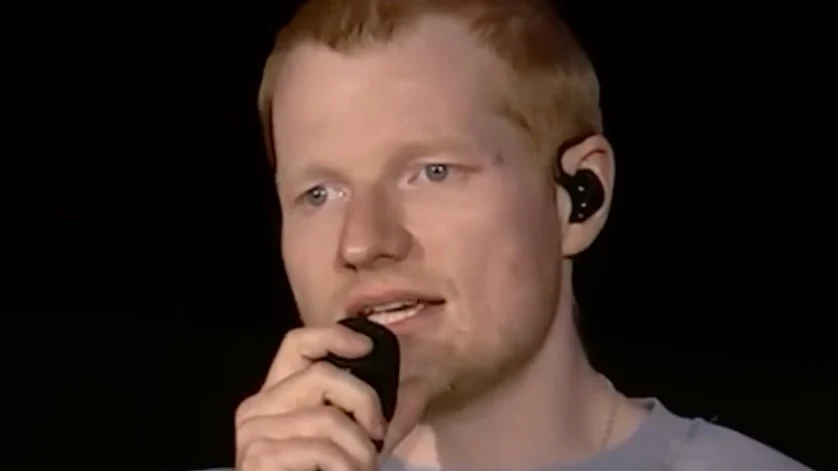

The return of Ed Sheeran to the live stage in Philadelphia this past Saturday marked a pivotal, albeit tense, juncture in the singer-songwriter’s current tour. Following the highly publicized fallout involving former support act Macklemore, Sheeran performed before a crowd that was as much a subject of uncertainty as it was an audience. The performance, characterized by a visible recalibration of production elements and a candid, if somber, admission from the artist, underscored the volatile intersection of celebrity, political discourse, and the logistical realities of modern stadium touring.
The most striking visual change to the concert experience was the absence of the B-stage. Traditionally a staple of Sheeran’s live setup, the B-stage is designed to allow the artist to navigate into the center of the stadium, bridging the distance between the performer and the back rows. On Saturday, however, the artist opted for a more traditional, stationary setup. During the performance, Sheeran addressed the crowd directly regarding this decision, citing legitimate security anxieties. "I’m going to be totally honest with you: I didn’t know what this audience would be like tonight. I didn’t know if I would have things thrown at me," Sheeran remarked from the main stage. "I took the B-stage out because I was afraid of what might happen if I stood in the middle, and I will admit that."
The Context of the Macklemore Fallout
The atmosphere in Philadelphia was heavily influenced by the recent dissolution of the collaborative partnership between Sheeran and Macklemore. The removal of the latter from the tour followed a series of public controversies regarding the tour’s association with high-profile figures and conflicting narratives surrounding political statements. The dispute, which reached a boiling point in mid-September 2026, resulted in a significant shift in the tour’s narrative.
The fallout was compounded by the withdrawal of the Irish folk-pop band Beoga. Known for their long-standing creative relationship with Sheeran, Beoga reportedly exited the tour in solidarity with the displaced support act. This departure left a critical hole in the musical arrangements for the Philadelphia date, forcing Sheeran to pivot toward a new, hastily assembled ensemble.
Rapid Mobilization and the New Live Band
The logistical burden of replacing an established act on such short notice is immense. Sheeran credited his longtime collaborator, Alicia Enstrom, with the heavy lifting of recruiting a new band within a 72-hour window. The performance in Philadelphia served as the debut for this emergency ensemble.
"They’ve had three days to learn these songs," Sheeran told the Philadelphia audience, highlighting the intensity of the rehearsal schedule. He further emphasized the personal risk taken by the musicians, noting, "They said yes to being on stage with the knowledge that the world thought I was a certain type of person. They said yes with the knowledge that the world may hate them, too, for standing on stage with me. And I am so grateful."
The inclusion of these new musicians speaks to the high-stakes environment in which modern touring artists operate. When a tour becomes embroiled in a socio-political controversy, the ripple effects extend to the supporting staff, session musicians, and the technical crew, many of whom may face public scrutiny for their professional associations.
Chronology of the Controversy
The sequence of events leading to the Philadelphia show highlights the rapid escalation of the situation:
- Mid-September 2026: Initial reports surface regarding tension between Sheeran’s tour management and Macklemore’s team regarding political statements and venue policies.
- September 17, 2026: Official confirmation is provided that Macklemore will no longer serve as a support act for the remainder of the tour.
- September 18, 2026: Beoga announces their departure, citing irreconcilable differences regarding the tour’s management and the ongoing controversies.
- September 19, 2026: Alicia Enstrom and Sheeran finalize the replacement band members.
- September 20, 2026: The Philadelphia show takes place, featuring a modified stage configuration and a public statement from Sheeran addressing the situation.
Security and Venue Logistics
The decision to scrap the B-stage reflects a broader trend in artist safety. In recent years, incidents involving projectiles being thrown at performers—such as smartphones, beverages, and other items—have increased significantly across the global touring circuit. For a performer like Sheeran, who has built his career on intimacy and crowd engagement, the B-stage represents a vulnerability that, under the current climate of public hostility, became untenable.
Venue security protocols often dictate that once an artist is isolated in the middle of a crowd, the ability for security personnel to intervene in the event of an unruly fan interaction is severely limited. By staying on the main stage, Sheeran maintained a traditional barrier, a decision that highlights the loss of the "intimate connection" he is known for, in favor of fundamental safety.
Industry Implications and Political Discourse
The controversy surrounding the tour has sparked a wider conversation regarding the responsibilities of artists in the age of polarized political landscapes. Sheeran’s opening remarks in Philadelphia were a calculated attempt to reclaim the narrative. He addressed the broader concerns regarding venues restricting artists’ speech—a growing concern among touring acts who find their platforms subject to the corporate policies of stadium owners and sponsors.
The intersection of Sheeran’s personal views on the Israel-Palestine conflict and the external pressures applied by tour partners created a complex PR environment. In many instances, stadium venues operate under strict "neutrality" agreements, which can conflict with the personal advocacy of the headlining act. When a tour enters a major market like Philadelphia, the pressure to conform to local expectations while simultaneously addressing international political issues creates a volatile environment for the production team.
Broader Impact on the Tour
The Philadelphia concert serves as a case study for how global tours manage crisis communication. By being transparent about his fears, Sheeran effectively disarmed much of the tension in the room. The admission of fear—that he was worried about being targeted—was a humanizing moment that likely garnered sympathy from his core fanbase. However, the logistical strain remains. The loss of a band like Beoga and the reliance on an emergency ensemble for the remainder of the tour dates will undoubtedly impact the sonic quality of the performances and the internal morale of the touring crew.
Furthermore, the precedent set by this removal and subsequent modification of the stage will likely influence how future stadium tours are planned. Insurance premiums for artists, the implementation of more robust security cordons, and stricter vetting processes for support acts are all potential outcomes of the industry’s current volatility.
Conclusion
The Philadelphia show was not merely a concert; it was an act of survival in an increasingly polarized entertainment sector. Ed Sheeran’s ability to navigate the fallout from the Macklemore controversy, while simultaneously managing the technical and human resources required to sustain a massive stadium tour, illustrates the complexities of contemporary fame. As the tour moves forward, the scrutiny on Sheeran’s stage setup, his band, and his public statements will likely remain high. The shift away from the B-stage, while a security necessity, serves as a poignant reminder that even the most successful artists are subject to the shifting tides of public opinion and the inherent dangers of performing in an era where the divide between the stage and the audience is increasingly charged with political tension.