
The ongoing controversy surrounding Ed Sheeran’s mathematics-themed global concert series has taken a new turn, with tour-opener Aaron Rowe publicly defending the British pop star while redirecting public anger toward billionaire Robert Kraft. The dispute, which erupted following the abrupt removal of American rapper Macklemore from eight major stadium dates, has exposed deep tensions within the live music industry regarding political expression, corporate venue management, and the responsibilities of headlining artists when their opening acts are sidelined.
The fallout highlights a growing intersection between geopolitics and commercial entertainment. As live tours increasingly rely on massive corporate sponsorships and privately owned venues, artists find themselves navigating a complex web of contractual obligations, public relations crises, and ideological pressures. Rowe’s recent statements add a critical perspective to a debate that has already caused significant structural disruption to Sheeran’s tour itinerary, leading to multiple artist boycotts and shifting scrutiny toward the financial stakeholders behind major concert arenas.
Chronology of the Controversy
The sequence of events leading to the current crisis began in early September during Sheeran’s high-profile two-night residency at MetLife Stadium in East Rutherford, New Jersey. On September 4 and 5, Macklemore—who had been booked as a primary supporting act for a substantial portion of the tour—used his platform to voice pro-Palestinian sentiments. During his set, the rapper performed his 2024 protest track “Hind’s Hall,” a song written in honor of Hind Rajab, a six-year-old Palestinian girl killed in Gaza, with all streaming proceeds pledged to the United Nations Relief and Works Agency (UNRWA).
The performance immediately triggered intense reactions from various political advocacy groups and venue stakeholders. Shortly after the MetLife Stadium concerts, Macklemore was informed that he had been dropped from eight upcoming performances on the tour schedule. These cancellations included high-profile dates at Gillette Stadium in Foxborough, Massachusetts, a venue owned by the Kraft Group, headed by billionaire businessman and New England Patriots owner Robert Kraft.
Macklemore publicly alleged that Kraft and other venue executives had directly pressured concert promoters—specifically the Messina Touring Group—to remove him from the bill due to his political commentary. Promoters later confirmed that multiple venue operators had issued warnings that upcoming shows would be canceled or refused entry if Macklemore remained part of the touring lineup.
In response to the rapper’s dismissal, a wave of solidarity ripples through the tour’s supporting roster. Over the course of the following week, artists including Aaron Rowe, Lukas Graham, and FINNEAS announced their withdrawal from their respective scheduled support slots. Additionally, the traditional Irish folk-rock band Beoga pulled out of their role as members of Sheeran’s backing band.
Public Reactions and Statements
As criticism mounted across social media and music industry publications, detractors initially directed much of their ire at Ed Sheeran, questioning why the multi-platinum singer-songwriter did not intervene to protect his supporting acts. However, Sheeran released a statement clarifying that the decision to remove Macklemore was ultimately made by tour promoters and venue management rather than himself. The headlining artist stated that he had engaged in discussions with venue operators, promoters, and activists in an effort to reach a compromise, but ultimately lacked the contractual leverage to overrule the stadium executives.
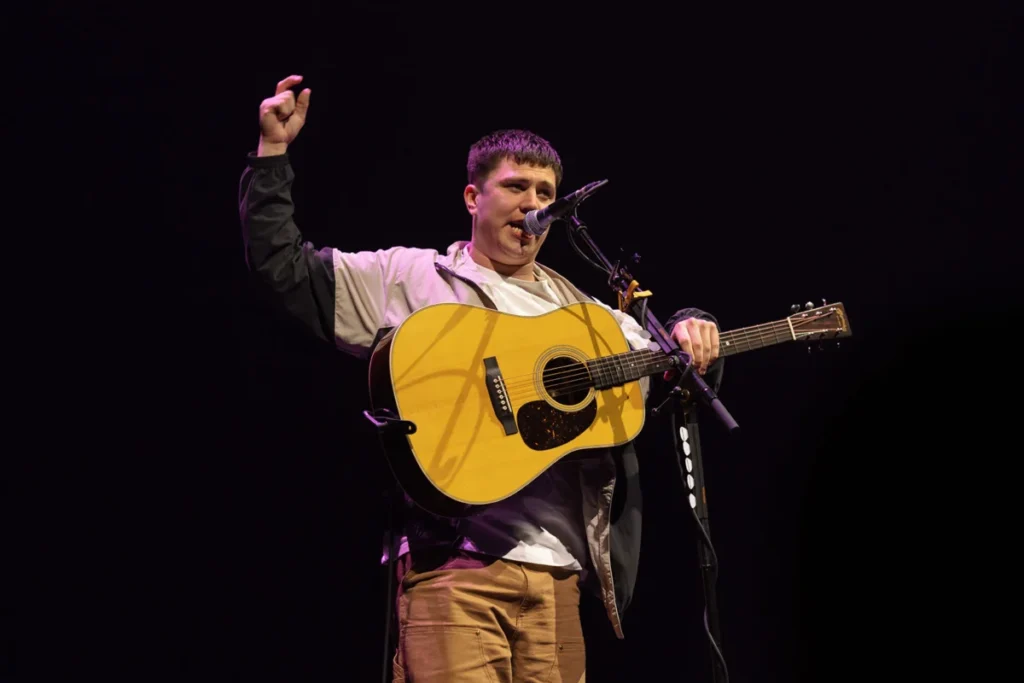
On September 18, Aaron Rowe took to Instagram to address the situation directly, arguing that public discourse had misdirected blame onto Sheeran.
“I’m gonna be honest. I think you are all focusing on the wrong person here,” Rowe stated in a video post. “All I keep hearing is Ed Sheeran this, Ed Sheeran that — when you really should be focusing on the likes of Robert Kraft.”

Rowe acknowledged that while Sheeran’s initial public communication could have been handled more effectively, he believed the singer was caught off-guard by the swift actions of his management and venue partners. “I haven’t had a chance to talk to Ed too much, but I fully believe he knows that was a mistake,” Rowe added.
Rowe had previously explained his own departure from the tour by stating that he could not “stand by and allow billionaires to use their position of power to silence” artists speaking out on international humanitarian issues.
Financial Commitments and Corporate Involvement
The controversy has also involved significant financial pledges regarding humanitarian aid for Palestinians. Following his removal from the tour, Macklemore announced he would donate $1 million—representing his net earnings from the tour—to organizations supporting Palestinian relief efforts. He subsequently issued a public challenge to Robert Kraft, urging the billionaire to match the contribution.
In response, the Kraft Group announced a $2 million philanthropic commitment, noting that the donation followed a parallel request initiated by Ed Sheeran, who had encouraged stakeholders to channel resources into humanitarian channels amidst the dispute.
Broader Implications for the Live Music Industry
The friction surrounding the Loop Tour underscores a broader, systemic challenge facing contemporary touring artists. Stadiums and large-scale arenas are frequently owned or operated by major corporate entities, sports conglomerates, or private investment groups. These organizations often maintain strict codes of conduct, liability policies, and public relations thresholds that can conflict with the expressive freedoms historically embraced by touring musicians.
Industry analysts note that incidents of this nature establish a precarious precedent. When venue operators successfully lobby for the removal of performers based on political speech, it introduces a chilling effect on artistic expression within commercial spaces. Conversely, promoters and venue owners argue they have a fiduciary responsibility to maintain public order, protect corporate partnerships, and ensure the safety of large concert-going audiences.
The fallout has also forced headlining acts to re-evaluate how they structure their tour contracts. Securing guarantees of artistic autonomy for opening acts has traditionally been secondary to box office metrics and logistical coordination. However, the mass withdrawal of supporting talent from Sheeran’s tour suggests that artists are increasingly willing to sacrifice high-profile exposure in defense of ideological solidarity and peer support.
Tour Resumption and Outlook
Despite the disruption, Ed Sheeran’s tour is scheduled to resume on Saturday evening at Lincoln Financial Field in Philadelphia, Pennsylvania. Production teams have scrambled to adjust the schedule following the departure of Rowe, Lukas Graham, FINNEAS, and Beoga. Current tour manifests indicate that no opening acts are listed for the Philadelphia performance, suggesting that the remainder of the itinerary may feature extended headlining sets by Sheeran or last-minute additions to the supporting bill.
As the music industry watches how the remaining dates unfold, the legacy of this controversy will likely prompt deeper conversations regarding censorship, corporate influence in the arts, and the complex responsibilities shared between superstars, promoters, and venue owners in an increasingly polarized cultural landscape.