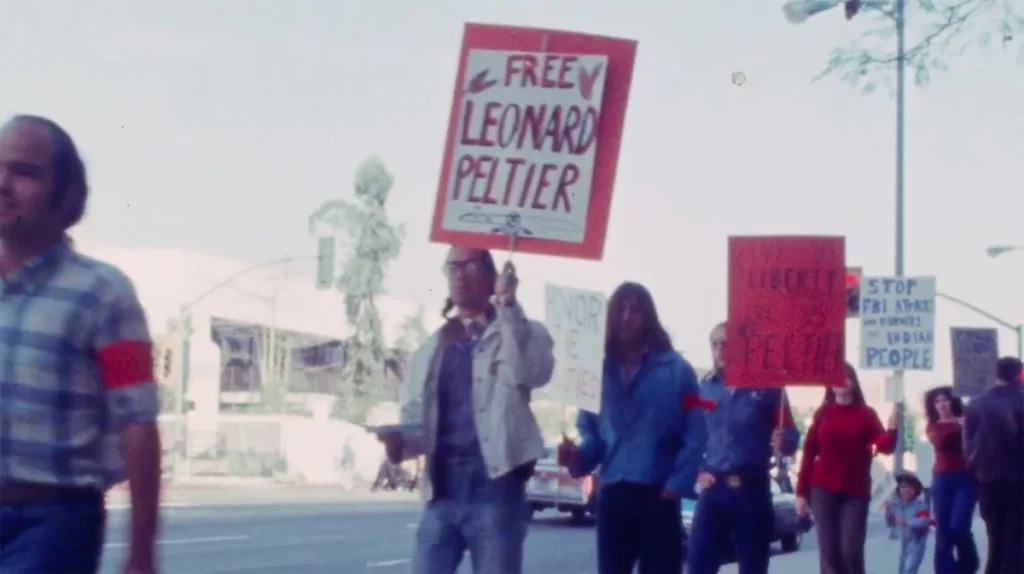

Netflix has officially released the trailer for Free Leonard Peltier, a compelling and deeply researched feature-length documentary directed by acclaimed filmmakers David France and Jesse Short Bull. The film, which first debuted to critical acclaim at the 2025 Sundance Film Festival, is scheduled for a worldwide streaming release on October 12, 2026. The documentary examines one of the most contentious and heavily scrutinized legal cases in modern American history: the double life sentences handed down to American Indian Movement (AIM) activist Leonard Peltier for the 1975 murder of two Federal Bureau of Investigation (FBI) agents on the Pine Ridge Indian Reservation in South Dakota.
Main Facts of the Case and Documentary
Free Leonard Peltier chronicles the complex intersection of Indigenous rights activism, federal law enforcement, and systemic injustice. Using extensive archival footage, contemporary interviews, and innovative visual storytelling techniques—including AI-assisted recreations of historical events—co-directors David France and Jesse Short Bull trace the trajectory of Peltier’s life from a mechanic to an ardent defender of Native sovereignty.
The documentary focuses heavily on the shootout on June 27, 1975, which resulted in the tragic deaths of FBI agents Ronald A. Williams and Jack R. Coler. The subsequent manhunt, trial, and conviction of Peltier became a lightning rod for international human rights organizations, Indigenous leaders, and legal scholars who argued that the trial was marred by coerced testimony, withheld evidence, and prosecutorial misconduct.

After spending nearly fifty years behind bars in various federal penitentiaries, Peltier’s federal prison sentence was commuted to home confinement in January 2025 following decades of appeals, clemency petitions, and high-profile advocacy campaigns. However, despite his release to home confinement, his legal conviction has never been officially overturned, leaving a lasting scar on the legacy of American jurisprudence regarding Native American communities.
Historical Chronology and Background Context
To fully understand the weight of Free Leonard Peltier, it is essential to examine the socio-political climate of the 1970s on the Pine Ridge Reservation.
- Early 1970s: The American Indian Movement (AIM) gains national prominence by staging high-profile protests against broken federal treaties, government corruption, and the mistreatment of Indigenous populations. The Trail of Broken Treaties (1972) and the Occupation of Wounded Knee (1973) heighten tensions between federal authorities and Native activists.
- 1973–1975: The Reign of Terror on Pine Ridge. A period of intense civil unrest and violence marked by dozens of unsolved murders of traditional Lakota residents and AIM members.
- June 27, 1975: A shootout occurs on the Jumping Bull property on the Pine Ridge Indian Reservation after agents Williams and Coler enter the area. Both agents, along with Native activist Joe Stuntz, are killed during the exchange of gunfire.
- 1976–1977: Peltier is extradited from Canada, tried in Fargo, North Dakota, and subsequently convicted of first-degree murder. He receives two consecutive life sentences.
- 1979–2009: Decades of legal appeals fail. Over the years, key witnesses recant their testimonies, and Freedom of Information Act (FOIA) requests reveal that the FBI suppressed ballistic evidence that could have exonerated Peltier. Amnesty International, the European Parliament, and former Watergate prosecutor James H. Reynolds call for his clemency.
- January 2025: Facing deteriorating health and mounting pressure from civil rights advocates, government officials commute Peltier’s sentence to home confinement, allowing him to leave federal prison after nearly five decades.
- 2025–2026: Free Leonard Peltier premieres at the 2025 Sundance Film Festival, garners critical praise on the film festival circuit, and prepares for a global streaming debut via Netflix on October 12, 2026.
Creative Vision and Production Leadership
The collaboration between David France and Jesse Short Bull brings a unique depth to the documentary. France is widely recognized for his incisive investigative filmmaking, having directed critically acclaimed projects such as How to Survive a Plague, The Death and Life of Marsha P. Johnson, Welcome to Chechnya, and How to Survive a Pandemic. Jesse Short Bull brings an intimate, community-centered perspective to the project, having previously co-directed the award-winning documentary Lakota Nation vs. United States.
The production team also features prominent voices in Indigenous and documentary cinema, including producers Paul McGuire, Jhane Myers, and N. Bird Runningwater. Their collective expertise ensures that the narrative remains grounded in historical accuracy while respecting the complex cultural and political dynamics of the Lakota people.

Supporting Data and Institutional Response
The case of Leonard Peltier remains one of the longest-standing points of contention between the federal government and Native American communities. According to reports from human rights organizations, Peltier’s imprisonment became a symbol of systemic bias within the American criminal justice system.
Law enforcement agencies, particularly the FBI and the Federal Bureau of Investigation Agents Association (FBIAA), have maintained a steadfast stance regarding the case. For decades, active and retired law enforcement officials have opposed executive clemency or parole for Peltier, emphasizing the brutality of the 1975 shootout and honoring the memory of agents Williams and Coler. The enduring grief and institutional trauma within the FBI community underscore why the case remains intensely polarized even fifty years later.
Conversely, Indigenous rights advocates and international legal bodies have pointed to the handling of Peltier’s extradition from Canada—which involved fabricated affidavits—as evidence of fundamental government overreach. Former U.S. Attorney James H. Reynolds, who supervised part of the prosecution against Peltier, wrote a public letter to the White House acknowledging that the government never proved who actually fired the fatal shots, arguing that continued imprisonment served no further interest of justice.
Broader Impact and Implications
The release of Free Leonard Peltier on a global platform like Netflix arrives at a time of renewed cultural reckoning regarding Indigenous history, federal land rights, and the legacy of state-sponsored surveillance and suppression of political dissidents.

By utilizing contemporary archival materials alongside advanced visual recreation techniques, the documentary aims to educate a new generation of viewers who may be unfamiliar with the American Indian Movement or the struggles that defined the civil rights landscape of the late 20th century. Furthermore, the film arrives when conversations surrounding mass incarceration, police accountability, and the restoration of tribal sovereignty are at the forefront of public discourse.
While Peltier’s transition to home confinement in 2025 marked a significant humanitarian milestone, the failure of the courts to formally vacate his conviction means that his legal battle for complete exoneration remains incomplete. Free Leonard Peltier serves not only as a historical retrospective of a turbulent era in American history but also as an active call to examine the ongoing responsibilities of the federal government toward Indigenous nations.
As the documentary prepares for its worldwide release on October 12, 2026, it is expected to reignite public debate, inspire academic discourse, and prompt renewed scrutiny into one of the most enduring legal controversies in the history of the United States.