
The literary landscape of the 19th century meets the modern streaming era as Netflix unveils its latest high-profile production: a six-part reimagining of Jane Austen’s seminal 1813 novel, Pride and Prejudice. Released on December 3, this ambitious adaptation arrives with a formidable creative pedigree, blending the directorial sensibilities of Heartstopper’s Euros Lyn with the sharp, contemporary narrative voice of author and co-producer Dolly Alderton. The production features a distinguished ensemble cast that aims to breathe new life into one of English literature’s most enduring tales of social navigation, class friction, and the complexities of courtship.
The narrative remains anchored to the familiar trajectory of the Bennet family, specifically the intellectual and spirited Elizabeth Bennet, as she contends with her mother’s relentless pressure to secure a financially advantageous marriage. Her journey becomes inextricably linked with the arrival of the enigmatic and wealthy Mr. Darcy, setting the stage for a classic study in pride and prejudice. While the core plot points remain true to Austen’s original vision, the aesthetic and tonal execution—showcased in recently released promotional stills—suggest a deliberate effort to blend Regency-era historical authenticity with a vibrant, character-focused visual palette.
A Cast of Heavyweights in Regency Attire
The casting for this production has garnered significant attention, reflecting the industry’s trend toward high-caliber acting talent in serialized period dramas. Emma Corrin, whose nuanced performance as Princess Diana in The Crown established them as a formidable talent, leads the series as Elizabeth Bennet. Early promotional imagery highlights Corrin’s portrayal as pensive and spirited, notably captured in a red dress and floral spencer jacket—a stylistic choice that reflects the vibrant, period-appropriate costuming supervised by the production design team.
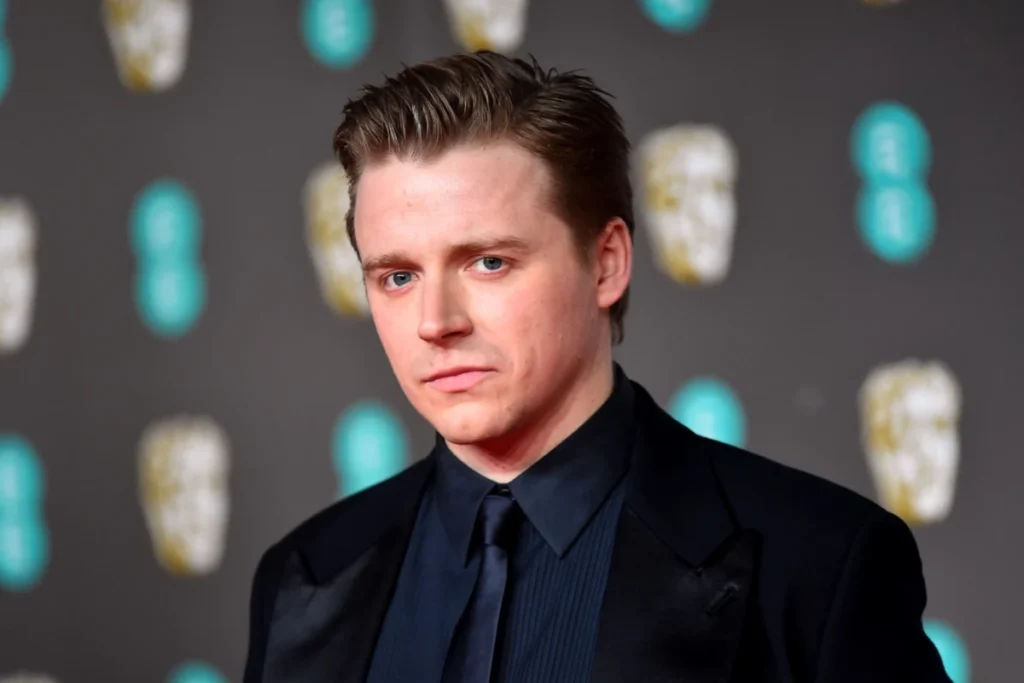
Opposite Corrin, Jack Lowden, known for his compelling work in the espionage thriller Slow Horses, steps into the iconic boots of Mr. Darcy. His interpretation appears to embrace the traditional hallmarks of the character—sideburns, wool waistcoats, and a brooding, formal demeanor—while offering a contemporary gravitas that distinguishes his performance from previous iterations.
The ensemble is rounded out by an array of celebrated British actors. Academy Award winner Olivia Colman assumes the mantle of Mrs. Bennet, depicted with tight, meticulous ringlets and a sense of frantic domestic authority. The role of the deceptive officer Mr. Wickham is played by Louis Partridge, whose portrayal promises to inject a necessary layer of antagonism into the proceedings. Further character work is provided by Jamie Demetriou, who tackles the socially inept and pompous Mr. Collins, a role that necessitates a delicate balance between comedy and pathos. The wider Bennet family circle is populated by Daryl McCormack as Mr. Bingley, Rufus Sewell as the patriarch Mr. Bennet, and a cohort of sisters played by Freya Mavor, Rhea Norwood, Hopey Parish, and Hollie Avery.
Historical Context and the Evolution of the Adaptation
Jane Austen’s Pride and Prejudice has served as a cornerstone of screen adaptations for nearly a century. Since the novel’s publication over two centuries ago, it has transcended its original medium to become a cultural touchstone. The history of bringing this story to the screen is vast, beginning in the early sound era and extending into the present day.
The 1995 BBC television adaptation remains perhaps the most significant milestone in the modern history of the story, particularly for its role in cementing the career of Colin Firth. The cultural impact of that specific production was so profound that it continues to yield financial and historical relevance; notably, in 2024, the linen shirt worn by Firth during the famous "lake scene" fetched £20,000 at a charity auction. This figure serves as a testament to the enduring obsession with Austen’s world.

Ten years later, in 2005, Joe Wright directed a feature film adaptation starring Keira Knightley, which earned critical acclaim and multiple Academy Award nominations. That production, which marks its 20th anniversary this autumn, demonstrated that the material could be successfully condensed into a two-hour theatrical format while maintaining the emotional core of the novel. The history of these adaptations is marked by variety, ranging from the traditional period drama to more experimental interpretations such as the 2016 comedy-horror film Pride and Prejudice and Zombies, which starred Lily James and Matt Smith and underscored the elasticity of the source material.
Production and Creative Direction
The selection of Dolly Alderton as the primary adapter represents a strategic shift for Netflix. Alderton, whose literary success with Everything I Know About Love provided a modern blueprint for exploring female friendship and personal growth, brings a fresh linguistic sensibility to the Regency dialogue. By co-producing the series, Alderton has ensured that the adaptation prioritizes the interiority of the characters, particularly the Bennet women, in a way that resonates with contemporary streaming audiences who have come to expect high production values and psychological depth.
Euros Lyn’s involvement as director adds a layer of visual sophistication. Having established a reputation for sensitive and visually striking work in Heartstopper, Lyn brings an eye for interpersonal chemistry that is essential for a story predicated on the slow-burn romance between Elizabeth and Darcy. The production’s use of rich, brightly colored settings—evident in the depiction of the Bennet household—suggests a departure from the muted, washed-out color palettes often associated with mid-budget period dramas, opting instead for a saturated, immersive aesthetic.
Industry Implications and Market Analysis
The release of this six-part series is a calculated move by Netflix to capitalize on the sustained popularity of the period drama genre. Market data suggests that "literary prestige" programming continues to perform exceptionally well on global streaming platforms, serving as both a subscriber acquisition tool and a long-tail content asset. The "Austen phenomenon"—the evergreen demand for retellings of her works—provides a built-in global audience, significantly lowering the risk associated with such high-budget productions.
From an analytical standpoint, the success of this series will likely be measured by its ability to balance traditional fan expectations with the requirement to capture a younger, digital-native demographic. The inclusion of stars like Corrin, Lowden, and Partridge suggests a multi-generational appeal. Furthermore, the decision to produce a six-part series rather than a feature film allows for a more granular exploration of the novel’s subplots, including the machinations of Mr. Wickham and the social pressures exerted upon the lesser-known Bennet sisters.
The Legacy of the Regency Genre
As the industry looks forward, the success of this Netflix production may dictate the future of Austen adaptations. With high-end production values, a focus on diverse and well-known acting talent, and a modernized script, the series seeks to prove that classic literature is not a static relic but a living, breathing subject for reinterpretation.
The sheer volume of adaptations throughout the 20th and 21st centuries illustrates a permanent fascination with the Regency era’s social hierarchy. Whether through the lens of horror, historical romance, or contemporary drama, the story of Elizabeth Bennet’s agency in a constrained society remains a powerful narrative device. By placing this production in the hands of creators who have successfully navigated modern romantic themes, Netflix has signaled a clear intent to dominate the genre for the foreseeable future.
Ultimately, the impact of this series will be determined by its reception among both the "Austen purists" and new viewers who have yet to engage with the text. Given the high production standards and the pedigree of the cast and crew involved, the series is poised to become one of the defining cultural moments for the streaming giant this winter, reinforcing the enduring relevance of a story written over 200 years ago. As the episodes roll out, the discourse will likely center on the subtle departures from the original text and the chemistry of its leads, solidifying the status of this adaptation as a significant entry in the long and storied history of Pride and Prejudice on screen.