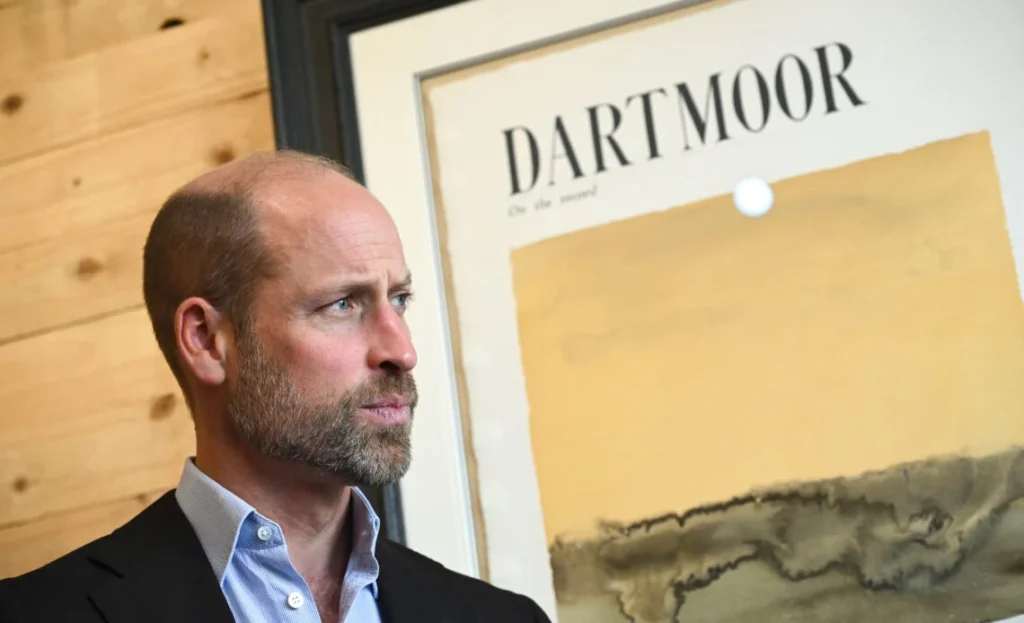

Prince William has returned to Dartmoor in his capacity as the Duke of Cornwall to review ongoing regional development projects and formally launch a new community fund in the village of Princetown. The royal engagement highlights the continued strategic focus of the Duchy of Cornwall on supporting isolated rural populations, improving infrastructure, and empowering local communities in the southwest of England.
The visit comes at a time of broader public interest in the activities of the senior members of the royal family, intersecting with discussions surrounding regional estates, royal titles, and separate reports regarding the Duke and Duchess of Sussex. However, the primary focus of William’s itinerary remained firmly rooted in community outreach, economic resilience, and grassroots support systems for rural youth.
Launching the Princetown Community Fund
The Prince of Wales began his day at Gather & Moor, a newly established community, visitor, and cultural hub located in the heart of Princetown. The facility is designed to serve as a central gathering point for residents and tourists alike, fostering social cohesion and economic activity in an area defined by its dramatic moorland landscape and sparse population density.
During his time at the hub, William met with local leaders, project coordinators, and residents involved in the development of a comprehensive new community strategy for Princetown. This strategy aims to address the unique challenges faced by settlements within Dartmoor National Park, where geographic isolation can often limit access to essential services, employment opportunities, and social amenities.
The launch of the Princetown Community Fund is expected to provide financial backing for grassroots initiatives, small businesses, and local projects designed to enhance the quality of life for residents. Local organizers expressed optimism that the high-profile royal backing will draw wider attention to the needs of rural communities in Devon and attract further philanthropic and governmental investment.
Investing in Rural Youth Infrastructure
A central focus of William’s return to Dartmoor was evaluating improvements made to local youth facilities—an issue that had captured his attention during a previous, unannounced visit to the area.
During his prior engagement at the local youth club, the Prince observed firsthand the acute shortage of recreational infrastructure for young people living in remote settlements across the moor. Many families in the region reside several miles from the nearest town, making accessible community spaces vital for youth development, mental health, and social engagement.
Prompted by these observations, William had formally asked the Duchy of Cornwall to examine ways to support the club in upgrading its facilities. His return visit allowed him to inspect the completed improvements and speak directly with youth leaders and teenagers who benefit from the expanded resources. Community representatives praised the intervention, noting that modern, well-maintained facilities are crucial for retaining young families in rural areas and preventing the social isolation that can disproportionately affect rural youth.
The Duchy of Cornwall: History, Governance, and Modern Role
Operating under his ancient title as the Duke of Cornwall, William’s visit underscored the practical economic and social responsibilities attached to the medieval estate. Established in 1337 by King Edward III, the Duchy of Cornwall was created to provide a private income for the heir to the throne, ensuring financial independence from the Sovereign Grant.
Spanning over 130,000 acres across 23 counties—primarily in the southwest of England—the Duchy comprises agricultural land, residential and commercial properties, forests, and rivers. In recent years, under both King Charles III and now Prince William, the estate has placed a strong emphasis on sustainable land management, affordable housing development, and community-led regeneration projects.
The title of Duke of Cornwall is held automatically by the eldest living son of the monarch and heir apparent, a milestone William reached four years ago following the accession of King Charles III on September 8, 2022. Alongside this title, the heir to the throne traditionally holds several other historic designations, including the Prince of Wales—bestowed upon William by the King on September 9, 2022—and the Duke of Rothesay for use in Scotland. William also retains the title of Duke of Cambridge, which was granted to him by Queen Elizabeth II on his wedding day in July 2011.
Broader Royal Developments: Security Reviews and Relocation Reports
While the Prince of Wales focused on his regional duties in Dartmoor, national media coverage concurrently highlighted developments concerning his younger brother, Prince Harry, and Meghan Markle, the Duke and Duchess of Sussex.
The reports unfolded across several media outlets, beginning with an exclusive from ITV News revealing that the Duke and Duchess of Sussex had been informed by the Executive Committee for the Protection of Royalty and Public Figures (RAVEC) that they would undergo fresh security reviews following their unexpected return to the United Kingdom in August.
The couple had previously relocated to California in 2020, spending six years residing in North America while occasionally voicing public criticisms of aspects of royal life and media treatment in the UK. Their decision to return to Britain for an extended period prompted renewed discussions regarding their official security arrangements, which have been a subject of ongoing legal and administrative scrutiny since they stepped back from working royal duties.
The timing of their return and subsequent movements also shed light on familial dynamics within the wider royal family. Reports indicated that King Charles III was informed of their relocation plans only three days before the public announcement. This followed a brief meeting in July, during which the Duke of Sussex and his family partook in afternoon tea at Highgrove with the King and Queen Camilla.
Educational Adjustments and Logistics for the Sussex Family
Further domestic updates regarding the Sussex family emerged shortly after the security announcements. According to an exclusive report by Hello! magazine, Prince Harry and Meghan enrolled their two young children, Prince Archie and Princess Lilibet, into a school in England, only to withdraw them after a two-day trial period.
The decision was reportedly driven by logistical challenges associated with the daily commute. While initial test journeys conducted during school holidays estimated a thirty-minute travel time, peak-time traffic congestion extended the school run to upwards of an hour each way. Compounding these concerns were worries regarding the logistics of maintaining a security convoy through congested commuter routes, leading the couple to opt for an alternative educational institution situated closer to their current residence in England.
Clarification of Royal Status and the Use of HRH Titles
In tandem with media reports concerning the Duke and Duchess of Sussex, official administrative clarifications were issued regarding their constitutional status.
Last week, the Lord Chamberlain—who oversees the operations of the Royal Household—circulated a formal memorandum to military chiefs, lord lieutenants, and government officials involved in the coordination of official royal engagements. The directive explicitly reiterated that the Duke and Duchess of Sussex remain private citizens and do not carry out official duties in any institutional capacity on behalf of the Crown.
Furthermore, the communication clarified the formal status of their "His Royal Highness" and "Her Royal Highness" (HRH) styles, noting that they remain "in abeyance." In constitutional and genealogical terms, this designation means the styles are permanently dormant and cannot be utilized unless formally revived by a reigning monarch. The reminder served to establish clear administrative boundaries across government and military channels regarding official correspondence, precedence, and representation.
Analysis of Implications for the Monarchy
Observers of the British monarchy note that the simultaneous unfolding of grassroots regional engagements by the Prince of Wales and high-profile administrative updates concerning the Duke and Duchess of Sussex reflects the ongoing dual narrative surrounding the institution.
On one hand, Prince William’s systematic focus on the Duchy of Cornwall, regional development, and environmental sustainability reinforces a modernizing, hands-on approach to royal duties. By addressing practical socioeconomic challenges—such as rural isolation in Dartmoor and youth infrastructure deficits—the heir to the throne continues to anchor his public profile in tangible community impact.
On the other hand, ongoing media interest in the private lives, security reviews, and administrative standing of Prince Harry and Meghan highlights the persistent public fascination with the broader family dynamic. Despite formal clarifications from the Lord Chamberlain regarding their non-working status, the actions of the Sussex family continue to generate significant domestic and international media coverage.
As the Monarchy navigates this transition period, the stark contrast between the domestic, community-focused itineraries of senior working royals and the private pursuits of non-working family members underscores the evolving nature of the modern British crown. For Prince William, the day in Dartmoor served as another opportunity to demonstrate continuity, regional stewardship, and direct engagement with the populations dependent on the ancient estates of the realm.