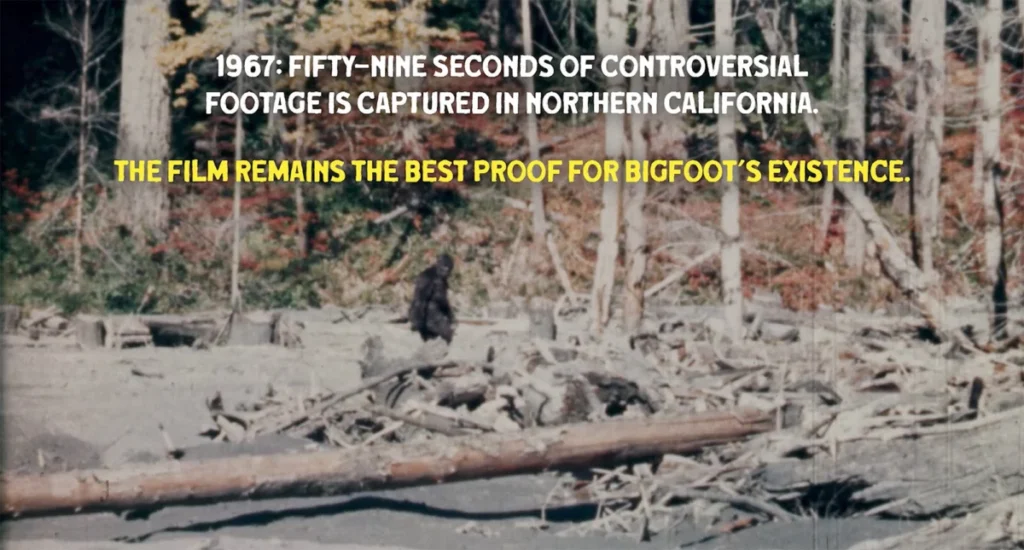

Nearly six decades after a fateful autumn day in the remote forests of Northern California permanently altered the landscape of cryptozoology, the definitive story behind the world’s most debated piece of visual media is finally coming to light. XYZ Films has officially released the first teaser trailer for Capturing Bigfoot, a revelatory feature-length documentary directed by acclaimed filmmaker Marq Evans. Scheduled to premiere theatrically and on Amazon Prime Video on October 20, 2026, the film arrives precisely on the 59th anniversary of the legendary Patterson-Gimlin encounter, promising audiences a profound look at a cultural phenomenon that has fascinated, divided, and perplexed humanity since the height of the 1960s counterculture movement.
Unlike a crowded subgenre of cryptozoology media that frequently leans into sensationalism, unverified speculation, and repetitive conspiracy theories, Capturing Bigfoot approaches its subject through the lens of history, human relationships, and archival discovery. At the heart of the documentary is a newly unearthed reel of 16mm film, remarkably preserved within a safe for over five decades. This physical artifact serves as a narrative anchor, blowing the historical legend wide open and prompting the individuals who were present during the event to reunite, reevaluate, and tell the unvarnished truth about what transpired in the wilderness of Bluff Creek.
Main Facts of the Production and Release
Directed by Marq Evans—whose previous documentary credits include The Glamour & the Squalor, Cow by Bear, Claydream, and The Diamond King—Capturing Bigfoot is produced by Tamir Ardon, Marq Evans, and Nick Spicer. The project first generated significant critical buzz earlier this year when it made its world premiere at the 2026 SXSW Film Festival. Despite drawing strong interest and receiving numerous invitations to screen at subsequent film festivals throughout the spring and summer, the filmmakers and distributors deliberately withheld the documentary from wider public consumption.
This calculated distribution strategy was implemented to safeguard the integrity of the newly discovered archival footage and to ensure that audiences across North America could experience the cinematic revelation simultaneously. By bypassing a traditional, staggered festival rollout, XYZ Films has engineered a theatrical event designed for communal viewing. This strategy intentionally mirrors how Roger Patterson himself toured the original 1967 footage across the United States decades ago, effectively achieving a viral cultural footprint long before the advent of digital media and the internet.

A Chronological History: The Enduring Legacy of the Patterson-Gimlin Film
To fully understand the gravity and cultural resonance of Marq Evans’s documentary, one must examine the timeline of the event that created the modern mythos of Bigfoot.
On October 20, 1967, film enthusiast Roger Patterson and his companion Robert Gimlin traversed the rugged terrain of Bluff Creek in Humboldt County, Northern California. Armed with a Kodak K-100 16mm movie camera, Patterson captured a mere 59 seconds of motion picture footage showing an upright, bipedal, ape-like creature casually striding away from the camera into a dense tree line. The figure, later universally dubbed "Patty," became the foundational visual archetype for Sasquatch across global pop culture.
In the years immediately following the encounter, Patterson and Gimlin embarked on a grueling promotional tour, carting their reel from town to town, renting high school auditoriums, and screening the footage for curious crowds. Despite widespread skepticism from the mainstream scientific community, the cultural impact was immediate and immensely lucrative for its era. Adjusted for modern inflation, the original footage grossed upwards of $5 million at the United States box office—a staggering financial achievement for an independent, grassroots expedition.
Over the ensuing decades, the 59-second clip underwent exhaustive forensic analysis. Government agencies, independent film technicians, biomechanics experts, and special effects artists scrutinized every single frame. Some claimed the footage was an elaborate hoax orchestrated inside a bulky primate costume, pointing to the rigid posture and fluid muscle movements as cleverly constructed artistry. Conversely, proponents argued that the biological mechanics displayed by the creature—such as the distinct flexibility of the Achilles tendon, the muscular undulation beneath the fur, and the sheer anatomical consistency—defied the capabilities of 1960s costume design.
Despite millions of words written, countless television specials produced, and decades of scientific debate, the absolute truth behind the original footage remained elusive. The principal figures passed away or faded into the background, leaving behind a legacy weighted down by fractured friendships, financial disputes, and the heavy burden of disbelief.

The Human Element: Family, Loyalty, and Belief
While the physical evidence has driven decades of academic and amateur debate, Capturing Bigfoot shifts the narrative focus from cryptozoological proof to human psychology and interpersonal dynamics. Director Marq Evans has emphasized that the documentary is fundamentally a story about family legacy, personal loyalty, and the complex nature of human belief.
Featuring firsthand accounts from Roger Patterson’s own son and other surviving individuals who were intimately connected to the 1967 expedition, the film explores the psychological toll that carrying the weight of a global mystery inflicts upon everyday people. For nearly six decades, the families of those involved have lived in the shadow of skepticism, ridicule, and relentless media scrutiny.
In an official statement accompanying the teaser trailer release, director Marq Evans reflected on the emotional weight of the project: "That footage is one of the most recognizable images in the world, but the people behind it have privately carried its weight for almost sixty years. This film is their story; about family, loyalty, and the truths they’ve held onto or finally let go of. I’m grateful they trusted me to help them finally tell it."
Through these deeply personal testimonies, the documentary examines why humanity remains so desperate to believe in the existence of the unknown. In an era increasingly defined by digital manipulation, deepfakes, and hyper-cynical media consumption, the enduring fascination with Bigfoot represents a collective yearning for a world that still holds genuine mysteries.
Broader Impact and Implications for the Documentary Genre

The release of Capturing Bigfoot arrives at a fascinating cultural juncture. Cultural critics have noted a significant resurgence in documentary programming that explores historical anomalies through a sociological lens. Works that examine cultural myths, viral phenomena, and historical conspiracy thinking have found immense audiences on streaming platforms, helping viewers contextualize how misinformation and communal belief systems develop within society.
By framing the Patterson-Gimlin film not merely as a cryptid hunting expedition, but as a defining American cultural moment, Marq Evans elevates the subject matter beyond niche fanbases. The documentary positions the legendary encounter as a precursor to modern viral media, demonstrating how a single piece of visual evidence could capture the global imagination before the arrival of mass telecommunications.
Furthermore, the involvement of XYZ Films—a prominent distributor known for championing bold, high-concept independent cinema—signals commercial confidence in the project’s broad-scale appeal. By executing a simultaneous theatrical release and Prime Video streaming debut on October 20, 2026, the studio is providing viewers with maximum accessibility while preserving the shared communal experience that defined the original promotional tours of the late 1960s.
As the 59th anniversary approaches, the unveiling of the 16mm film reel discovered in the safe promises to add a definitive, long-awaited chapter to an ongoing American saga. Whether audiences tune in for the historical intrigue, the personal family drama, or the perennial quest to determine whether Sasquatch truly roams the North American timberlands, Capturing Bigfoot stands poised to reshape our understanding of the most famous 59 seconds in cryptozoology history.