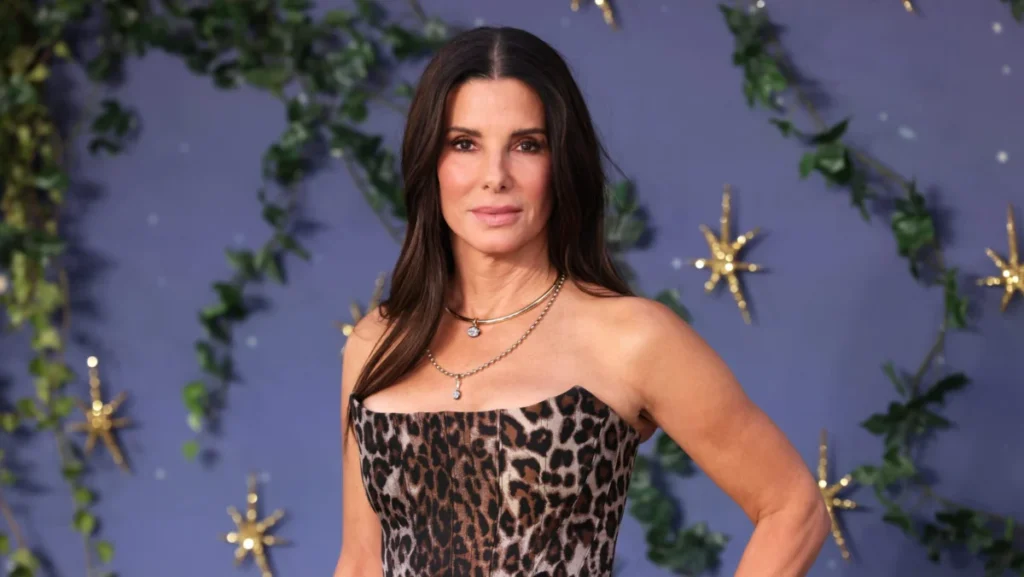

In a candid and deeply reflective conversation for Interview magazine, Hollywood icons Sandra Bullock and Jennifer Aniston pulled back the curtain on decades of navigating the entertainment industry. Speaking to her longtime friend and fellow superstar, Bullock opened up about the early struggles of her career, the predatory conditions she faced as a struggling actress in New York City, and the calculated career pivots that ultimately cemented her status as an Academy Award-winning powerhouse. The wide-ranging discussion also touched upon the challenges of maintaining privacy under the relentless glare of the public eye and the emotional significance of Bullock’s return to the big screen in the long-awaited sequel, Practical Magic 2.
The dialogue between the two friends arrives at a major professional milestone for Bullock, who makes her triumphant return to cinema after a four-year hiatus. Her latest project, the continuation of the 1998 cult classic Practical Magic alongside Nicole Kidman, has already made waves at the box office. Yet, beneath the celebration of her cinematic comeback lies a sobering look at how the entertainment industry has evolved—and the heavy personal and professional tolls paid by women who broke through its systemic barriers decades ago.
Early Struggles and Confronting Industry Exploitation in New York City
Reflecting on the trajectory of her career, Aniston posed a central question to her peer: Did Bullock map out a deliberate trajectory for her stardom from the outset, or did her path simply evolve organically? In response, the Oscar winner transported listeners back to her formative years in New York City, where she supported herself as a waitress while pounding the pavement for acting roles.
Rather than walking an easy path to fame, Bullock described a grueling environment marked by rampant exploitation. She recalled enduring numerous auditions where inappropriate and predatory demands were commonplace.
"I was auditioning for every pervert that existed, asking me to drop my pants. I was like, ‘Nope, not the role for me,’" Bullock shared during the Interview cover story. She elaborated on the psychological pressure placed on aspiring performers, noting that the culture of the time conditioned working actors to accept almost any indignity out of a pervasive fear that turning down a job meant never working again. "I was working my way up. Every working actor thinks you will never work again so you just take what you can get and make the most of it."
Bullock’s frank admission highlights the precarious nature of early-career acting, where aspiring talent—particularly women—frequently faced boundary-violating situations with limited institutional protection or recourse. Her steadfast refusal to compromise her dignity during those vulnerable early years established a foundational boundary that would eventually define her professional integrity.
Strategic Career Pivots: Breaking Free from the Rom-Com Box
While Bullock’s early days required a survivalist mentality just to secure dignified work, her later career choices required a different kind of bravery: tactical reinvention. By the late 1990s and early 2000s, Bullock had established herself as America’s sweetheart, dominating the box office in a string of commercially successful romantic comedies such as While You Were Sleeping, Miss Congeniality, and Two Weeks Notice.
However, typecasting presented a new cage for the versatile performer. Reflecting on her deliberate choices, Bullock noted that the only time she was truly calculating about her career trajectory was when she decided to actively dismantle her romantic-comedy persona.
"I said, ‘I need to stop right now with the rom-coms,’ because I was getting so much shit for them. And I took a role in this film called Crash," Bullock explained.
That calculated risk paid off exponentially. Paul Haggis’s searing social drama Crash examined racial and social tensions in Los Angeles, presenting Bullock in a gritty, complex supporting role far removed from her buoyant rom-com heroines. The gamble transformed her critical standing; Crash went on a historic run, culminating in the Academy Award for Best Picture at the 78th Academy Awards in 2006.
The successful pivot proved that Bullock could command the screen in heavy dramatic fare. Four years later, she cemented her dramatic credentials by starring in The Blind Side (2009). Her transcendent performance as Leigh Anne Tuohy earned her widespread critical acclaim and the Academy Award for Best Actress, firmly establishing her as a multifaceted dramatic heavy-hitter capable of commanding any genre.
A Triumphant Cinematic Return: The Box Office Impact of Practical Magic 2
Bullock’s conversation with Aniston coincides with her highly anticipated return to acting in Practical Magic 2. Marking her first film appearance since the 2022 action-comedy adventure The Lost City alongside Channing Tatum, the new Warner Bros. release brings Bullock back together with Nicole Kidman to revisit the beloved Owens sisters.
For Bullock, the sequel is more than a nostalgic trip back to the magical realism of the late 90s; it is a deeply personal endeavor. During her discussion with Aniston, Bullock revealed that the project serves as a "love letter" to her own daughter, grounding the supernatural fantasy in profound maternal themes and familial legacy.
The audience’s appetite for the reunion has proven insatiable. Practical Magic 2 made an immediate splash at the box office, grossing an impressive $13 million domestically on its opening day alone, a figure that includes robust Thursday night preview screenings. Industry tracking and box office analysts indicate that the film is pacing toward a stellar opening weekend haul of approximately $30 million, comfortably exceeding pre-release projections and proving that Bullock’s enduring star power remains entirely intact.
Navigating Fame and the Public Eye
Beyond professional milestones, Bullock and Aniston used their platform to discuss the ongoing complexities of maintaining a personal life while under intense public scrutiny. Having spent decades in the absolute epicenter of celebrity culture, both women shared insights into how they shield their families and personal lives from the relentless media cycle.
Navigating life in the public eye has required strict boundaries, a philosophy Bullock has leaned into heavily during her recent multi-year break from the spotlight. By stepping away from filmmaking following 2022’s The Lost City, Bullock prioritized her family life, deliberately choosing domestic tranquility over constant cinematic output. Her selective approach to projects has transformed each return to the screen into a major cultural event, heightening anticipation among fans and critics alike.
Broader Implications and Industry Impact
The reflections shared by Sandra Bullock in her conversation with Jennifer Aniston carry significant weight within the broader context of modern Hollywood. By speaking openly about the predatory conditions she faced in her early career, Bullock contributes to the ongoing, vital reckoning regarding workplace safety, power dynamics, and accountability within the entertainment industry. Her testimony underscores how far the industry has progressed since the pre-#MeToo era, while simultaneously honoring the internal resilience required by generations of women who navigated hostile audition environments without institutional safety nets.
Furthermore, Bullock’s career trajectory serves as a masterclass in professional longevity and strategic reinvention. From weathering exploitative conditions in New York to defying typecasting through bold dramatic risks like Crash and The Blind Side, and finally stepping away on her own terms to prioritize motherhood, Bullock has continually dictated the terms of her engagement with Hollywood.
As Practical Magic 2 dominates box office charts and introduces a new generation to the magical world of the Owens family, Sandra Bullock stands not only as an enduring cinematic icon, but as a resilient trailblazer who successfully carved out a legendary career while fiercely guarding her boundaries, her craft, and her autonomy.