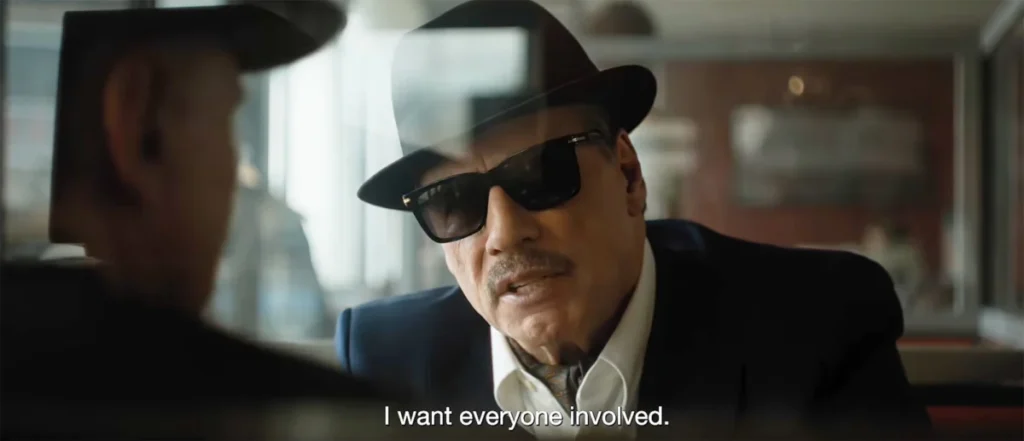

Ketchup Entertainment has officially released the trailer and promotional poster for November 1963, an upcoming feature film that reexamines the tragic assassination of President John F. Kennedy through the lens of organized crime. Directed by Academy Award nominee Roland Joffé—best known for historical dramas such as The Killing Fields and The Mission—the film marks a notable return for the veteran filmmaker. Set against a tense, 48-hour timeline leading up to and immediately following November 22, 1963, the movie shifts its narrative focus away from the conventional CIA-centric conspiracy theories that have dominated mainstream discourse for decades. Instead, it investigates alleged deep-rooted connections between the Chicago Outfit and the highest levels of American political power.
The cinematic project boasts an ensemble cast featuring John Travolta, Robert Carlyle, Dermot Mulroney, Mandy Patinkin, and Jefferson White. Rather than relying solely on traditional historical documentation, the screenplay is rooted in firsthand accounts and intimate family insights provided by the relatives of notorious Chicago crime boss Sam Giancana. Written by Nicholas Celozzi, the nephew of Giancana, and drawn from a story co-developed by Joseph Giancana and Celozzi, the narrative explores an alleged pact brokered between Joseph P. Kennedy and the Chicago mob to secure the presidency for JFK, followed by the catastrophic betrayal that allegedly sealed the president’s fate in Dallas.
Main Facts and Narrative Premise
November 1963 constructs its narrative around a contentious historical premise: that the mob orchestrated the assassination of President John F. Kennedy. The promotional campaign highlights dramatic dialogue, including the chilling question, "Do you vouch for him? What if he misses?" alongside the tagline, "One president. Two shooters. One conspiracy that changed history."

The film dramatizes the mechanics of a purported setup involving a meticulously planned execution, a second shooter stationed away from the public view, and a designated "patsy" positioned to take the blame. By centering the Chicago Outfit, the screenplay brings forward an angle that has long circulated among true-crime researchers and historical revisionists but has rarely received major Hollywood treatment on this scale.
The production is backed by producers Kevin DeWalt, Carrie Wilkins, and screenwriter Nicholas Celozzi. Ketchup Entertainment has scheduled the film for a theatrical release in select United States markets on November 20, 2026, positioning the debut just days ahead of the 63rd anniversary of the historical event.
Historical Context and Background of the Event
The assassination of John F. Kennedy on November 22, 1963, in Dealey Plaza, Dallas, Texas, remains one of the most heavily scrutinized events in modern American history. The official investigation conducted by the Warren Commission concluded in 1964 that Lee Harvey Oswald acted alone in shooting the president from the sixth floor of the Texas School Book Depository, and that Jack Ruby similarly acted alone when he fatally shot Oswald two days later while in police custody.
Despite the conclusions of the Warren Commission, public skepticism and alternative theories have persisted for generations. While the Central Intelligence Agency (CIA), the Federal Bureau of Investigation (FBI), anti-Castro Cuban groups, and military-industrial complex entities have traditionally occupied the center of conspiracy narratives, organized crime has also played a prominent role in alternative historical analyses.

Historically, investigators and authors have pointed out that figures like Sam Giancana held significant animosity toward the Kennedy administration. Despite alleged assistance from organized crime figures in securing crucial votes during the 1960 presidential election—particularly in Illinois—Attorney General Robert F. Kennedy spearheaded an aggressive nationwide crackdown on organized crime and the Mafia, creating severe friction between the crime syndicates and the White House administration. November 1963 taps directly into this historical friction, dramatizing the theory that the Chicago Outfit sought deadly retribution against the Kennedy family.
Chronology of the Project and Release Timeline
The journey of bringing November 1963 to the screen spans years of development rooted in familial ties to mid-century American crime syndicates.
- Pre-Production and Development: Screenwriter Nicholas Celozzi spent years gathering family lore, documents, and oral histories concerning Sam Giancana’s alleged involvement in national politics. The project was developed to offer an alternative viewpoint to the standard archival narratives.
- Casting and Crew Assembly: Director Roland Joffé, whose career spans decades of directing internationally acclaimed and Oscar-nominated historical dramas, joined the project to helm the feature. A high-profile cast including John Travolta, Robert Carlyle, Dermot Mulroney, and Mandy Patinkin was assembled to bring the dramatic historical figures to life.
- Distribution Acquisition: Ketchup Entertainment secured the distribution rights for the film, mapping out a targeted theatrical rollout strategy.
- Trailer Release (September 11, 2026): Ketchup Entertainment officially debuted the first public trailer and theatrical poster, offering audiences their initial look at the film’s aesthetic, tone, and narrative focus.
- Theatrical Release Date (Scheduled for November 20, 2026): The film is slated to open in select theaters across the United States, strategically timed just ahead of the anniversary of the 1963 assassination.
Supporting Data and Creative Team Background
The credibility and visibility of November 1963 rest heavily upon its veteran creative team. Director Roland Joffé is internationally recognized for his powerful cinematic treatments of complex historical and political turmoil. His past directorial credits include:
- The Killing Fields (1984): A critically acclaimed biographical drama about the Cambodian Civil War, which earned Joffé an Academy Award nomination for Best Director.
- The Mission (1986): A historical drama depicting 18th-century Spanish Jesuits in South America, which won the Palme d’Or at the Cannes Film Festival and secured multiple Oscar nominations.
- Fat Man & Little Boy (1989): A historical drama detailing the Manhattan Project and the development of the atomic bomb.
- City of Joy (1992) and The Scarlet Letter (1995): Notable dramatic features that further established his reputation for handling intense human narratives within sweeping historical contexts.
The inclusion of John Travolta—a seasoned actor with extensive experience in crime thrillers and historical dramas—adds significant commercial weight to the production. Alongside actors of the caliber of Robert Carlyle, Dermot Mulroney, and Mandy Patinkin, the cast brings substantial gravitas to a project dealing with sensitive and heavily debated historical subject matter.

Broader Impact and Implications
The release of November 1963 arrives at a time when public interest in historical revisionism and true-crime dramatizations remains exceptionally high. By shifting the spotlight away from the well-trodden territory of government intelligence agencies and placing it firmly upon organized crime, the film challenges audiences to reconsider the intricate web of power, political patronage, and illicit alliances that characterized mid-20th-century America.
From an industry perspective, the film represents a deliberate counterprogramming choice for the autumn box office season. While major studios typically reserve late November for family-friendly blockbusters or awards-season prestige dramas, Ketchup Entertainment is carving out a niche with a high-concept political and criminal thriller.
However, the film is expected to generate debate among historians, researchers, and political analysts. Dramatizations involving real historical figures and unverified conspiracy theories often blur the line between documented history and speculative fiction. By relying on perspectives from the family of a prominent mob boss, November 1963 opens itself up to scrutiny regarding historical accuracy, even as it delivers high-stakes cinematic tension.
As the theatrical release date of November 20, 2026, approaches, industry watchers will be monitoring how audiences and critics respond to this provocative retelling of a national tragedy. Whether the film initiates a renewed public conversation about the Chicago Outfit’s role in American politics or remains strictly within the realm of dramatic entertainment, its arrival ensures that the enduring mystery of November 1963 will once again capture the public imagination.