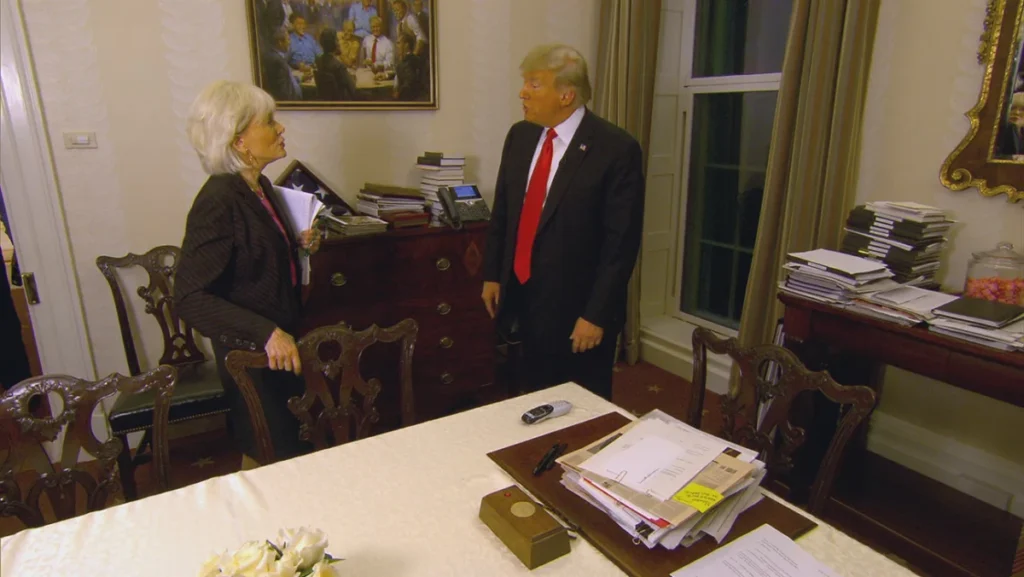

The venerable CBS newsmagazine 60 Minutes is returning for its milestone 59th season under a heavy cloud of industry scrutiny, internal transitions, and high-stakes legal sensitivities. Anchoring the season premiere is a deeply investigative report spearheaded by veteran correspondent Lesley Stahl, which examines what the program describes as the lucrative and controversial "pardon economy" cultivated during the presidency of Donald Trump.
As the flagship news program prepares to unveil its opening lineup, the spotlight extends far beyond the journalistic merits of the individual segments. The production comes at a precarious transitional period for CBS News, marked by executive restructuring, recent high-profile talent departures, and an ongoing, contentious lawsuit filed by the former president against the network over a previous 60 Minutes broadcast.
The inclusion of the pardon-focused segment guarantees that the season opener will command intense public interest and political debate, serving as an early litmus test for the direction of the broadcast under newly appointed executive producer Nick Bilton.
The Lineup and the Spotlight on "The Pardon Economy"
The third and final segment revealed for the upcoming premiere, titled "The Pardon Economy," promises to scrutinize a specific subculture of Washington, D.C., insiders, lawyers, and lobbyists. According to promotional descriptions released by the network, the report investigates how affluent or well-connected individuals navigated the executive clemency process during the Trump administration, often utilizing intermediaries to secure pardons or commutations.
"Presidents have pardoned criminals since the time of George Washington. It’s a constitutional power that has been controversial from the start — but perhaps never more so than during the Trump presidency," the program’s official synopsis notes. "Lesley Stahl and 60 Minutes investigate the world of lawyers and lobbyists who have created a new pardon economy." The segment was produced by veteran television journalists Shachar Bar-On and Michael Kaplan.
This investigative piece completes a diverse three-part premiere lineup. The episode also features correspondent Jon Wertheim’s intimate profile of the Los Angeles Rams and head coach Sean McVay, offering a cinematic look inside the pressures of modern professional sports. Additionally, anchor Norah O’Donnell contributes an exclusive interview with the United States military pilot who was shot down and subsequently rescued in Iran, providing a gripping narrative of geopolitical tension and survival.
Background and Context of the Presidential Pardon Power
The constitutional authority to grant pardons and commutations is vested exclusively in the president under Article II, Section 2, Clause 1 of the United States Constitution. Historically designed as an act of mercy and a check against potential miscarriages of justice within the federal judiciary, the power is nearly absolute and largely unreviewable by Congress or the courts.
However, the exercise of this authority has repeatedly sparked ethical debates throughout American history. From Gerald Ford’s controversial pardon of Richard Nixon in 1974 to Bill Clinton’s clemency grants on his final day in office in 2001—which notably included fugitive financier Marc Rich—executives of both political parties have faced accusations of cronyism or political favoritism.
During Donald Trump’s presidency, the utilization of the pardon power departed significantly from traditional norms managed through the Office of Pardon Attorney at the Department of Justice. Instead, Trump frequently bypassed the formal bureaucratic review process, relying heavily on informal recommendations from personal defense attorneys, political allies, media personalities, and family members. High-profile beneficiaries included political associates, campaign aides, and military figures convicted of war crimes.
Legal watchdogs and ethics reform organizations repeatedly raised concerns that the informal nature of the clemency process created perverse incentives, allegedly giving rise to a cottage industry of well-paid lobbyists and fixers who claimed influence over executive decision-making. It is this specific phenomenon—the monetization and politicization of executive clemency—that Stahl’s report is expected to dissect.
A Fragile Transition at CBS News
The broadcast of "The Pardon Economy" arrives at a delicate juncture for 60 Minutes and its parent organization, CBS News. The program is currently navigating a period of operational flux following an exodus of talent that included both voluntary exits and forced departures.
Former CBS News chief Wendy McMahon publicly addressed the transition ahead of the premiere, predicting a strong start while acknowledging the hurdles ahead. McMahon characterized the season opener as a potential "banger," betting that the institution would marshal its considerable resources to set a commanding editorial tone. However, she also offered a candid assessment of the road forward, remarking that "shows three, four, and five could get quite interesting, I think," alluding to the structural challenges of maintaining momentum amidst ongoing newsroom changes.
At the helm of this transition is new executive producer Nick Bilton, who stepped into the role tasked with modernizing the historic broadcast while preserving its foundational journalistic identity. Bilton is collaborating with a mix of returning institutional pillars—including Stahl, Bill Whitaker, Jon Wertheim, and Norah O’Donnell—alongside a handful of newly integrated staff members and correspondents.
According to network insiders, while the premiere episode relies heavily on the familiar formats and trusted faces that loyal viewers expect, Bilton is expected to gradually introduce structural innovations over the course of the season. Potential format enhancements being discussed or tested include hidden-camera investigative journalism and dedicated end-of-show segments featuring rigorous commentary, debate, or analytical breakdowns of complex national issues. For the immediate future, however, the executive team has chosen to lean on the established authority of veterans like Stahl, O’Donnell, and Wertheim to steady the ship.
Legal Tensions and Heightened External Scrutiny
Any editorial content targeting Donald Trump carries heightened legal and public relations sensitivities for CBS, particularly given the contentious relationship between the former president and the network.
The scrutiny is amplified by active litigation. Trump previously filed a high-profile lawsuit against CBS over a past 60 Minutes interview with Vice President Kamala Harris, alleging deceptive editing practices designed to favor the Democratic nominee. While legal analysts have debated the long-term viability of the suit given broad First Amendment protections afforded to broadcasters, the litigation underscores the hostile environment in which the network operates.
Consequently, investigative reports focused on Trump—such as Stahl’s examination of the pardon economy—are subjected to rigorous internal legal reviews and external observation. Critics from across the political spectrum will be watching closely to evaluate whether the reporting meets the strict standards of fairness, balance, and factual accuracy required of America’s premier television newsmagazine. Conversely, supporters of traditional journalism view the segment as a vital public service, arguing that examining the mechanics of executive power is an essential accountability function of a free press.
Broader Implications and Anticipated Public Reaction
The broadcast of "The Pardon Economy" is anticipated to trigger widespread media analysis and political debate. As the United States continues to grapple with questions regarding the limits of executive authority, ethics in government, and the influence of money in politics, the report touches upon fundamental concerns about democratic governance.
For 60 Minutes, the stakes extend beyond a single ratings cycle. As television news navigates an era of declining linear viewership, deep public skepticism toward mainstream media institutions, and intense political polarization, the program must continually prove its relevance. A successful, hard-hitting investigative report executed with journalistic rigor can reaffirm the program’s cultural footprint and journalistic authority. On the other hand, any perceived misstep could invite intense criticism from political partisans and accelerate debates over media bias.
Ultimately, the 59th season premiere represents a crucial test for both the legendary newsmagazine and its new leadership team. By tackling a complex, provocative, and politically charged subject like the presidential pardon economy on night one, 60 Minutes is signaling that it has no intention of shying away from controversial topics as it enters its sixth decade on the air.