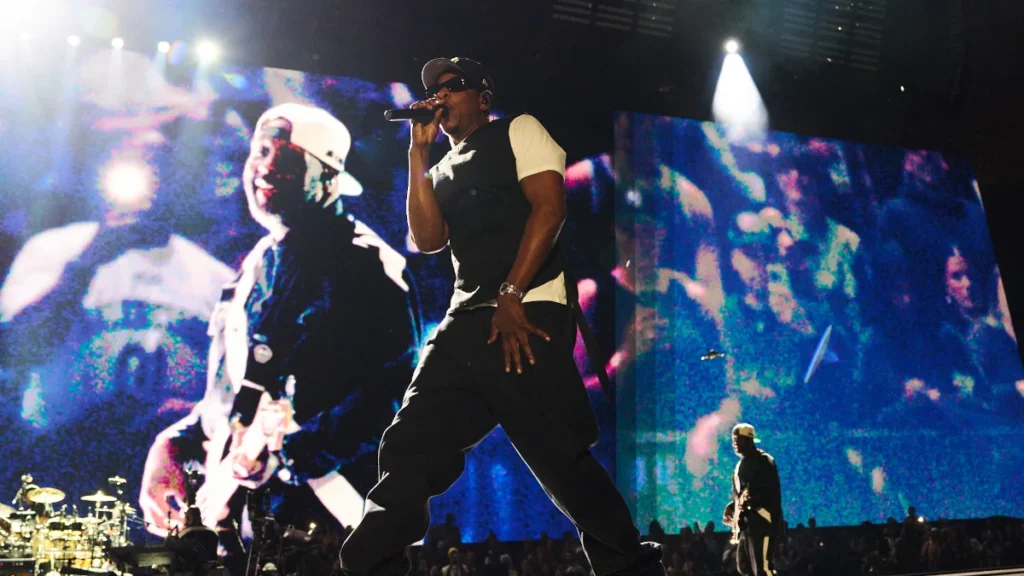

The Stade de France in Saint-Denis, located just north of Paris, played host to a monumental display of musical history on Thursday, September 10, 2026, as JAY-Z continued his "JAY-Z30 Tour." The concert served as a centerpiece of a global celebration marking three decades of the Brooklyn-born icon’s career, specifically commemorating the 30th anniversary of his seminal debut, Reasonable Doubt, and the 25th anniversary of his commercial breakthrough, The Blueprint. In a performance that spanned generations and genres, JAY-Z elevated the evening by inviting long-time collaborator Justin Timberlake to the stage, reinforcing the rapper’s standing as one of the few figures in contemporary music capable of curating such high-profile guest appearances.
A Night of High-Profile Collaborations
The inclusion of Justin Timberlake was the highlight of a setlist meticulously crafted to bridge the gap between JAY-Z’s gritty underground origins and his subsequent rise to global pop culture dominance. The pair opened their collaborative segment with "Holy Grail," the lead single from JAY-Z’s 2013 album Magna Carta Holy Grail. The track, which famously features Timberlake on its hook, served as a bridge between the classic hip-hop aesthetic of JAY-Z’s earlier work and the polished, chart-topping sound of his later years.
Following the high-energy delivery of "Holy Grail," the duo transitioned into a more melodic space with "Until the End of Time." Originally a solo track for Timberlake, the song gained a new life through its 2007 remix featuring Beyoncé, and its inclusion in the Paris set served as a nod to the deep-rooted personal and professional connections between the performers. The crowd at the Stade de France, a venue known for its massive capacity and atmosphere, responded with fervor, signaling the continued relevance of these collaborative works nearly two decades after their inception.
Pharrell Williams and the Creative Legacy
While Timberlake’s appearance captured the headlines, he was not the only surprise of the evening. JAY-Z also welcomed producer and artist Pharrell Williams, a frequent collaborator who has been instrumental in shaping the sound of modern hip-hop and R&B. The duo embarked on a four-song stretch that highlighted the collaborative chemistry that defined the early 2000s, performing "Excuse Me Miss," "La-La-La (Excuse Me Miss Again)," "Frontin’," and "Allure."
The presence of Williams served as a reminder of the "JAY-Z30" tour’s primary goal: to contextualize the rapper’s vast discography within the broader evolution of the music industry. By bringing out figures like Williams and Timberlake, JAY-Z effectively demonstrated how his career has been a collaborative enterprise, involving the brightest minds in production and performance over the last three decades.
Chronology and Context of the JAY-Z30 Tour
The Paris performance represented the final leg of a three-night European run, which began with two highly anticipated shows in London. The London residency set the tone for the European tour, drawing significant media attention for its diverse array of guests, including actor Idris Elba, DJ Khaled, Lauryn Hill, Wyclef Jean, and South London’s rising rap talent, Giggs.
The "JAY-Z30" tour is a limited, exclusive engagement spanning only eight shows across four cities, underscoring the scarcity and prestige of the event. The journey began in July with a three-night residency at Yankee Stadium in New York, a symbolic choice that linked the artist back to his hometown roots. After concluding the European portion of the tour in France, the production is slated to move to the West Coast, with two final performances scheduled for October 23rd and 24th at SoFi Stadium in Inglewood, California.
Analysis of the Setlist and Artistic Evolution
The 34-song setlist performed in Paris provided a comprehensive overview of JAY-Z’s trajectory. The inclusion of five tracks from The Blueprint—including "Heart of the City (Ain’t No Love)," "Izzo (H.O.V.A.)," and "U Don’t Know"—reminded the audience of the album’s critical role in securing JAY-Z’s status as a top-tier lyricist. Furthermore, the inclusion of tracks from The Black Album, such as "99 Problems," "Dirt Off Your Shoulder," and "Public Service Announcement," served as a masterclass in mainstream rap endurance.
The opening track, "On to the Next One," set a brisk, aggressive pace for the evening, while the final song, "Numb / Encore," a collaboration with the late Chester Bennington of Linkin Park, provided a climactic, rock-infused conclusion. This diversity in song selection—ranging from the jazz-inflected production of his earlier years to the maximalist stadium anthems of the 2010s—illustrates the adaptability that has allowed JAY-Z to remain a dominant force in an industry that often favors younger, emerging artists.
Implications for the Music Industry
The success of the "JAY-Z30" tour carries several implications for the current live music landscape. First, it highlights the enduring profitability and cultural demand for legacy acts who have successfully maintained their brand integrity. By limiting the tour to eight shows, the organizers have maximized the "event" status of the performances, ensuring that each night feels like a singular moment in musical history rather than just another stop on a routine promotional tour.
Second, the tour underscores the power of the "guest appearance" model in the streaming age. In a digital environment where music is consumed individually, the spectacle of seeing two massive stars share a stage provides a tangible experience that cannot be replicated through audio streaming or social media clips. For the artists involved, these appearances serve to reinforce their own legacies and maintain their presence in the public consciousness, creating a symbiotic relationship that benefits both the headliner and the guest.
Finally, the geographical selection of the tour—New York, London, Paris, and Los Angeles—reflects JAY-Z’s global footprint. Each of these cities serves as a hub for fashion, finance, and media, mirroring the rapper’s own career path into corporate boardrooms and high-fashion ventures. The tour is not merely a concert series; it is a branding exercise that confirms JAY-Z’s position as a global cultural icon who occupies a space far beyond the traditional confines of the music industry.
Looking Ahead to Inglewood
As the tour approaches its conclusion at SoFi Stadium, industry analysts and fans alike are watching to see if JAY-Z will continue this trend of high-profile guest appearances in California. The move to Inglewood represents the final chapter of this anniversary celebration, and expectations remain high for further surprise collaborations. The logistical challenge of orchestrating such events, particularly when balancing the schedules of other A-list celebrities, suggests that the "JAY-Z30" tour has been a year-long project of coordination and creative vision.
For those who have witnessed the tour, the message is clear: JAY-Z is not just celebrating the music of his past, but actively demonstrating its ongoing influence on the present. By weaving together his deep catalog with the presence of contemporaries and proteges, he has successfully framed his career as a continuous arc of development. As he prepares for the final two shows, the "JAY-Z30" tour stands as a definitive look back at one of the most significant musical careers of the 21st century, and a testament to the power of artistic consistency in an ever-changing industry.
The legacy of these performances will likely be discussed for years to come, not only for the hits played or the guests brought out, but for the way they solidified the narrative of a rapper who rose from the streets of Brooklyn to command the largest stages in the world, proving that three decades later, the "Blueprint" is still being written.