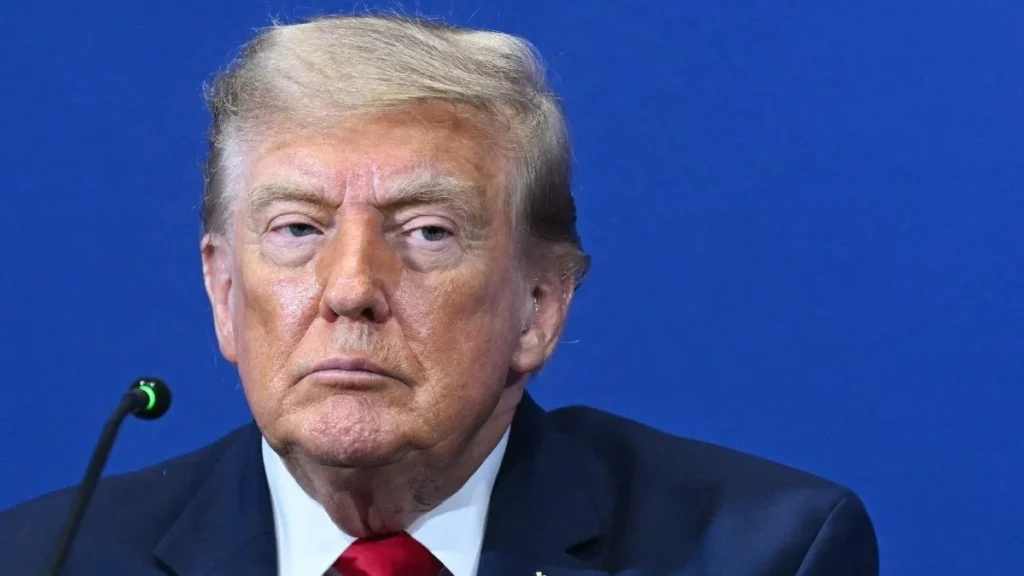

The Department of Homeland Security (DHS) has finalized a series of comprehensive changes to federal regulations governing international student visas, marking a significant shift in how the United States manages foreign academic talent. Under the direction of the administration of Donald Trump, the new rules aim to replace the long-standing "duration of status" framework with a fixed period of admission, a move that legal experts and educational advocates suggest will introduce unprecedented levels of bureaucracy, cost, and uncertainty for F-1, J-1, and I visa holders. This policy shift specifically targets the flexibility previously afforded to international students, who will now be restricted to a maximum four-year stay regardless of the length of their doctoral or specialized programs, unless they successfully navigate a rigorous extension process through U.S. Citizenship and Immigration Services (USCIS).
The End of Duration of Status and the New Fixed-Period System
For decades, the "duration of status" (D/S) policy allowed international students to remain in the United States as long as they maintained their full-time student status, complied with the rules of their educational institution, and kept their Form I-20 updated. This system provided the necessary flexibility for students pursuing complex degrees, such as PhDs or medical residencies, which often extend beyond four years. Under the new DHS regulations, this flexibility is being abolished in favor of a "fixed date of admission."
Beginning September 17, most F-1 students will be admitted for the length of their academic program, not to exceed four years. While this may cover the standard duration of a traditional undergraduate degree, it poses significant hurdles for students in five-year programs, dual-degree tracks, or research-intensive graduate studies. Once the four-year mark is reached, students will no longer be able to simply update their records with their university’s Designated School Official (DSO). Instead, they must file a formal application for an extension of stay with USCIS. This transition shifts the burden of monitoring student compliance from academic institutions to federal immigration officers, adding layers of administrative scrutiny.
Impact on Grace Periods and English Language Programs
The new regulations also tighten the timelines for students concluding their studies or training. Historically, F-1 students were granted a 60-day grace period following the completion of their program or Optional Practical Training (OPT) to prepare for departure or transition to a new visa category. The new rule slashes this grace period in half, reducing it to 30 days. This reduction leaves students with a very narrow window to finalize their affairs, ship belongings, and secure travel arrangements, increasing the risk of overstaying and facing future entry bans.
Furthermore, students enrolled in English language training programs face even stricter limitations. The DHS has capped the maximum period of stay for these students at 24 months. The administration argues that this cap prevents the "perpetual student" phenomenon, where individuals remain in the country for years by repeatedly enrolling in language courses without progressing to a degree-granting program. However, educators argue that for students coming from non-English speaking backgrounds to pursue advanced technical degrees, two years may be insufficient to reach the native-level fluency required for high-level academic research.
Heightened Requirements for Extensions and Biometrics
The procedural change from institutional oversight to USCIS approval represents one of the most significant financial and logistical hurdles for international students. Under the previous system, extending a stay was a routine administrative update at the university level with no federal fee. Under the new rule, students requiring an extension must submit Form I-539, pay the associated filing fees—which can exceed $400—and undergo biometric screening, which includes providing fingerprints and photographs at a government facility.
This process is subject to USCIS processing times, which have historically fluctuated from a few months to over a year. If a student’s extension is denied or delayed past their expiration date, they risk accruing "unlawful presence." Under U.S. law, accruing more than 180 days of unlawful presence can lead to a three-year bar from re-entering the United States, while a year or more can result in a ten-year bar. This legal jeopardy places immense pressure on students to file perfectly and well in advance of their deadlines.
Restrictions on Changing Majors and Schools
The Trump administration’s new policy also seeks to limit academic mobility. Undergraduate F-1 students will face new restrictions on changing their major or study program during their first year. Except in specific, documented circumstances, students are expected to remain in the program for which they were originally admitted.
The rules for graduate students are even more stringent. Generally, graduate students will be prohibited from changing their field of study or program level without undergoing a new review process. Additionally, the rules place new constraints on transferring between educational institutions. The DHS maintains that these measures are necessary to ensure that student visas are used for their intended purpose and to prevent "visa mill" activity, but academic advisors warn that these restrictions stifle the intellectual exploration that is a hallmark of the American higher education system.
Chronology of Student Visa Policy Shifts
The move to end "duration of status" is not a new concept within the Trump administration’s policy circle. A similar proposal was introduced in late 2020 but faced significant pushback during the public comment period, receiving over 30,000 comments, the vast majority of which were critical.
- September 2020: DHS first proposes the rule to eliminate D/S.
- January 2021: The transition of power leads to a temporary freeze on many proposed regulations.
- 2021-2023: The Biden administration largely avoids finalizing the D/S rule, though it remains in the regulatory pipeline.
- 2024: With a renewed focus on immigration enforcement and border security, the administration moves to finalize the rule with an effective date of September 17.
To mitigate immediate chaos, the DHS has outlined transition arrangements. Students currently in the U.S. under the D/S framework will be allowed to continue under their current status for up to four additional years or until they complete their current program, whichever comes first. However, any new program start or transfer after the implementation date will fall under the new, stricter regulations.
Supporting Data: The Indian Student Demographic
The impact of these changes will be felt most acutely by students from India. According to the 2024-25 Open Doors Report, there are approximately 3.6 lakh (360,000) Indian students currently enrolled in U.S. higher education institutions. India recently surpassed China as the largest source of international graduate students in the United States, with a particular concentration in Science, Technology, Engineering, and Mathematics (STEM) fields.
Indian students often rely on the OPT and STEM-OPT extensions to gain work experience in the U.S. tech sector following their studies. The new four-year cap and the increased difficulty in securing extensions could complicate the transition from student status to post-completion training. For many Indian families who take out significant loans to fund U.S. educations, the added uncertainty and potential for "unlawful presence" issues represent a major financial and personal risk.
Reactions from the Academic and Policy Communities
The announcement has sparked a wave of concern from university presidents and international education advocates. The American Council on Education (ACE) and the Association of International Educators (NAFSA) have previously argued that such rules make the United States a less attractive destination for global talent.
"International students contribute over $40 billion annually to the U.S. economy and support nearly 400,000 jobs," noted a policy analyst from a leading D.C. think tank. "By introducing these hurdles, we are essentially sending a message to the world’s brightest minds that they should look to Canada, the United Kingdom, or Australia instead."
Proponents of the rule, however, argue that it is a necessary national security measure. The DHS has stated that the "duration of status" policy made it difficult for the government to track exactly how many students were in the country and whether they were actually attending classes. By requiring periodic extensions, the government ensures a regular "check-in" with every foreign national on a student visa.
Analysis of Broader Implications
The shift in visa policy reflects a broader "America First" approach to immigration, prioritizing oversight and enforcement over ease of access. While the administration frames these changes as a way to "improve program integrity" and "reduce fraud," the secondary effects could be profound.
- STEM Leadership: The U.S. relies heavily on international graduate students to fuel its research and development sector. If PhD students, whose programs regularly last 5 to 7 years, find the extension process too burdensome or risky, the U.S. could see a "brain drain" in critical sectors like Artificial Intelligence and biotechnology.
- Financial Stability of Universities: Many U.S. universities, particularly mid-tier private and state schools, rely on the out-of-state tuition paid by international students to subsidize their operations. A decline in international enrollment could lead to budget shortfalls and tuition hikes for domestic students.
- Diplomatic Relations: For countries like India, the treatment of its students in the U.S. is a major diplomatic touchstone. Significant hurdles for Indian students could create friction in the bilateral relationship, particularly as the two nations seek closer cooperation in technology and defense.
As the September 17 deadline approaches, universities are rushing to advise their international populations on how to maintain legal status. Students are being encouraged to keep meticulous records and to begin the extension process as early as the law allows. For the hundreds of thousands of students currently pursuing the American dream, the path forward has become considerably more narrow and fraught with administrative peril.