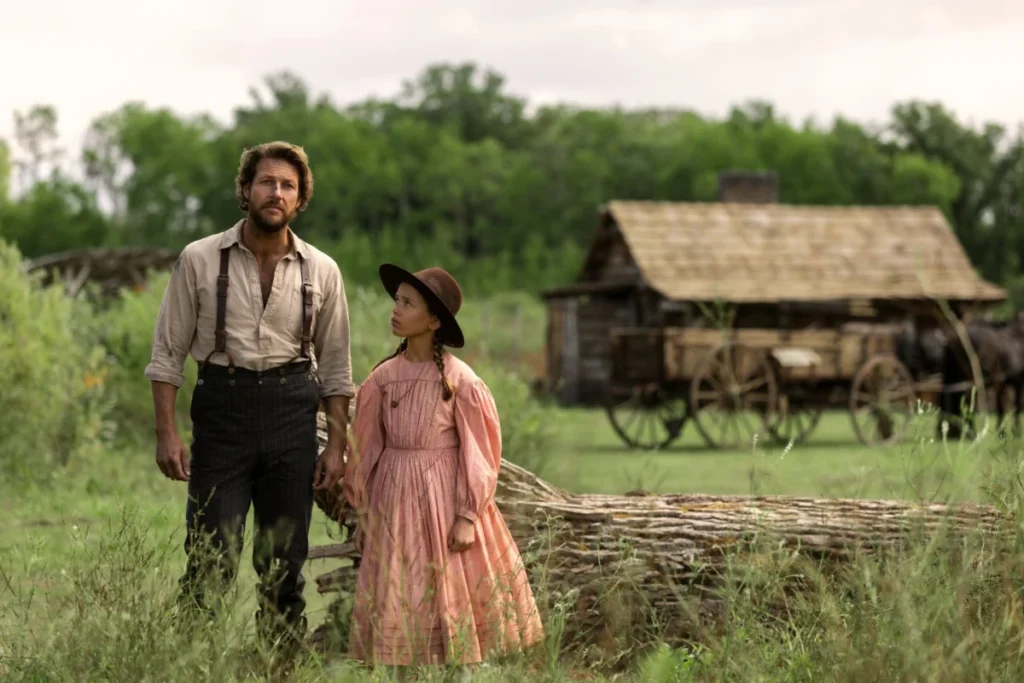

The landscape of modern television is increasingly defined by the ambitious reimagining of classic intellectual properties, and Netflix’s latest endeavor, a high-fidelity adaptation of Laura Ingalls Wilder’s Little House on the Prairie, represents a significant milestone in this trend. While the narrative remains rooted in the 19th-century American Midwest, the production has found its home in the expansive vistas of Manitoba, Canada. This strategic shift in filming location, combined with a meticulous commitment to historical authenticity and cultural representation, marks a departure from previous adaptations. As the series prepares for its debut and moves directly into production for a second season, the scale of the project reveals a complex intersection of period-accurate construction, environmental challenges, and a modernized approach to the frontier narrative.
A Geographical Shift: From California to the Canadian Prairies
For audiences who grew up with the 1970s NBC series starring Michael Landon and Melissa Gilbert, the visual identity of Little House on the Prairie was inextricably linked to the golden, arid hills of Simi Valley, California. However, the Netflix reboot has opted for a more geographically diverse and climate-accurate setting. Production for the first season was centered in and around Winnipeg, the capital city of Manitoba. The province’s vast, flat horizons and lush, river-cut terrain provide a visual surrogate for the historical Independence, Kansas, where the Ingalls family settled after leaving Wisconsin.
Showrunner Rebecca Sonnenshine and the creative team aimed to capture what they describe as the "vastness of the prairie," a feat that required navigating the volatile weather of the Canadian North. Unlike the controlled environments of a studio backlot, the Manitoba locations exposed the cast and crew to the raw elements. Sonnenshine noted that while the script demanded the Ingalls family brave the rain and sun, the production itself faced significant delays due to Manitoba’s notoriously harsh, snowy winters. These environmental factors, while logistically challenging, contributed to the visceral realism of the series, grounding the pioneers’ struggle in a landscape that felt legitimately formidable.

Historical Authenticity in Production Design
One of the most striking aspects of the Netflix adaptation is the emphasis on architectural and material accuracy. Production designer Jonah Markowitz was tasked with creating a world that felt lived-in and historically grounded. The centerpiece of this effort was the construction of the Ingalls family’s log cabin. Rather than utilizing modern construction shortcuts, the team opted for traditional methods. The cabin was built using approximately 96,000 pounds of timber. To maintain the integrity of the 1800s setting, the crew utilized wooden pegs instead of industrial nails to secure the logs, mirroring the limited resources available to frontier settlers.
The town of Independence was not merely a collection of facades; it was a fully realized set featuring 29 standing buildings. Set decorator James V. Kent went to extraordinary lengths to source authentic American antiques, ensuring that every interior reflected the era’s aesthetic and functional realities. This included hiring a local blacksmith to hand-forge hooks and hardware that could be hammered directly into the timber walls. This level of detail extends to the smallest props, creating a tactile environment that supports the actors’ immersion into the period.
Cultural Consultation and the Osage Narrative
A critical evolution in this adaptation is the intentional inclusion and representation of the Osage Nation. Historically, the land the Ingalls family settled on in Kansas was Osage territory, a fact that was often marginalized or simplified in earlier depictions of the story. To rectify this, the production team collaborated closely with Osage scholar and consultant Robert Warrior.
The inclusion of characters such as William Mitchell (who is half-European and half-Osage) and his wife, White Sun (who is Osage), provides a more nuanced view of the frontier’s demographic reality. Markowitz explained that these characters were inspired by the 19 Osage families known to have lived in the region at the time of the settlers’ arrival. By reflecting multiple cultures within the architecture and daily life of the series, the show aims to provide a more accurate historical context regarding the displacement of Indigenous peoples and the complex social dynamics of the Western frontier.

Cast and Creative Direction
The casting of the new series brings a blend of established talent and fresh faces to these iconic roles. Luke Bracey takes on the mantle of Charles "Pa" Ingalls, while Crosby Fitzgerald portrays Caroline "Ma" Ingalls. The central figures of the children are played by Alice Halsey as Laura and Skywalker Hughes as Mary. Warren Christie joins the cast as the rugged neighbor John Edwards.
Beyond the human cast, the production utilized multiple canine actors to portray Jack, the family’s loyal dog. Executive producer Rebecca Sonnenshine highlighted the necessity of using several dogs, as each was trained for specific tasks—ranging from high-energy action sequences to quiet, domestic moments. This pragmatic approach to "animal acting" is indicative of the production’s overall focus on performance quality and safety.
Chronology of Production and Early Renewal
The trajectory of the Netflix reboot has been remarkably accelerated. Production for the first season took place throughout 2024 and 2025, with a scheduled debut of July 9, 2026. However, the streaming giant signaled immense confidence in the project by renewing it for a second season in March 2026, months before the public had seen a single episode.
This early renewal allowed the production to maintain its momentum, with Season 2 filming commencing in the summer of 2026. The transition between seasons also mirrors the chronological progression of Laura Ingalls Wilder’s books. While the first season focuses on the journey to and settlement in Kansas, the second season is rumored to follow the events of the 1937 novel On the Banks of Plum Creek. This will see the Ingalls family moving to Walnut Grove, Minnesota, a location that will likely require new sets and potentially different filming locations within the Manitoba region to simulate the change in geography.

Broader Implications for the Manitoba Film Industry
The decision to film in Winnipeg is part of a broader trend of major streaming platforms utilizing Canadian provinces for high-budget period pieces. Manitoba’s film industry has seen a significant boost in infrastructure and local hiring due to the "Little House" production. The project required hundreds of local artisans, construction workers, and background actors, contributing to the local economy and solidifying the region’s reputation as a viable alternative to traditional filming hubs like Vancouver or Toronto.
The economic impact of a multi-season series of this scale is substantial. By building permanent or semi-permanent structures like the 29-building town of Independence, the production has created a footprint that benefits local suppliers of timber, antique dealers, and specialized craftsmen.
Conclusion: A Legacy Reimagined
Netflix’s Little House on the Prairie is more than a simple exercise in nostalgia; it is a high-stakes attempt to reconcile a beloved literary legacy with contemporary standards of historical accuracy and cultural sensitivity. By moving the production to the authentic prairies of Manitoba and investing heavily in traditional craftsmanship, the creative team has sought to bridge the gap between the "magic" of the books and the harsh realities of 19th-century life.
As the series moves into its second season, the focus will remain on the Ingalls family’s resilience. The Season 1 finale, which depicts the family’s wagon heading into the unknown, serves as a thematic bridge for the audience. It captures the spirit of the original novels—the uncertainty of the frontier and the enduring bond of family—while laying the groundwork for a long-term television event. With Season 2 already underway and the narrative shifting toward Minnesota, Netflix appears committed to telling the full scope of Wilder’s story for a new generation of viewers, ensuring that the "Little House" remains a relevant and resonant part of the cultural landscape.