
Netflix’s latest comedic offering, The Hawk, sees celebrated comedian Will Ferrell returning to both the small screen as a series regular and the familiar terrain of sports comedy. Co-created by and starring Ferrell, the series delves into the often-unexplored comedic potential of professional golf, presenting a narrative that is both an homage to past classics and a fresh take on the redemption arc. The show, which began streaming recently, has quickly drawn attention for its blend of Ferrell’s signature humor, a robust ensemble cast, and a surprising depth of character development, all set against the backdrop of the PGA Tour.
The series centers on Lonnie "The Hawk" Hawkins, a former PGA champion whose glory days are long behind him. Lonnie’s quest for a comeback is complicated by a tumultuous personal life, most notably his ongoing, often bitter, relationship with his ex-wife Stacy (Molly Shannon), who now meticulously manages the career of their son, Lance (Jimmy Tatro), Lonnie’s primary competitor on the green. This intricate web of family dynamics and professional rivalry forms the emotional core of The Hawk, elevating it beyond mere slapstick.
The Comedic Potential of the Green: A Genre Revisit
While soccer might claim the title of the "sexiest sport" in contemporary media, golf, with its perceived staidness and methodical pace, has historically proven to be a surprisingly fertile ground for comedy. Classics like Caddyshack (1980) and Happy Gilmore (1996) famously capitalized on the inherent absurdity of the sport, juxtaposing its genteel facade with chaotic characters and outlandish scenarios. The Hawk consciously places itself within this lineage, acknowledging the foundational works while attempting to forge its own path. The review notes that golf, despite lacking the "oomph" of other sports, can be exceptionally funny, a principle The Hawk embraces wholeheartedly. Ferrell’s portrayal of Lonnie Hawkins, a character brimming with specific quirks—a penchant for white wine, an ever-present visor, and a habit of gently encouraging his golf balls—adds a distinct flavor to this tradition, diverging from the more aggressive, albeit hilarious, approach of a Happy Gilmore.
Will Ferrell’s Sports Comedy Pantheon: A Timeline
Ferrell has long been synonymous with iconic sports comedy roles, often portraying arrogant, slightly dim-witted protagonists who, against all odds, find success and a measure of redemption. His previous forays into the genre include:
- 2005: Kicking & Screaming – Ferrell played Phil Weston, a hyper-competitive soccer coach.
- 2006: Talladega Nights: The Ballad of Ricky Bobby – Arguably his most famous sports comedy, where he embodied NASCAR driver Ricky Bobby, cementing his reputation for larger-than-life characters in high-stakes, high-speed environments.
- 2007: Blades of Glory – He starred as Chazz Michael Michaels, a disgraced figure skater.
- 2008: Semi-Pro – Ferrell took on the role of Jackie Moon, an owner-player-coach of a fictional ABA basketball team.
These films, all released before 2009, established a specific brand of sports-centric humor that became a hallmark of Ferrell’s career. The Hawk marks a significant return to this "sandbox" after a considerable hiatus, demonstrating Ferrell’s enduring appeal in a genre he helped define. This gap of over a decade has allowed for a fresh perspective, adapting his comedic style to the episodic format of a streaming series.
A Return to Series Regular Status: Ferrell’s Television Evolution
Beyond his return to sports comedy, The Hawk signifies another notable milestone for Ferrell: his first role as a series regular since his departure from Saturday Night Live. After a prolific film career spanning decades, a move back to a consistent television role reflects a broader industry trend where major film stars are increasingly drawn to the creative freedoms and narrative depth offered by prestige television and streaming platforms. While Ferrell has maintained a strong presence in television through executive producing roles (most notably Eastbound and Down), and various guest appearances, The Hawk places him squarely back in the weekly (or rather, binge-watched) spotlight. This shift allows audiences to experience a more sustained character arc from Ferrell, something that has been less frequent in his recent cinematic output.
The Eastbound and Down DNA: A Familiar Irreverence
One of the most compelling aspects of The Hawk is its undeniable genetic link to the acclaimed HBO comedy series Eastbound and Down. The original review highlights that despite The Hawk being an officially sanctioned PGA Tour Studios production and lacking the direct involvement of Danny McBride’s Kenny Powers, it shares "a lot of the same irreverent DNA." This connection is far from coincidental. Will Ferrell served as an executive producer on Eastbound and Down and made occasional guest appearances, familiarizing him with its distinctive brand of humor and narrative approach.
The ties run deeper: David Gordon Green, who directed multiple episodes of Eastbound and Down, helms The Hawk‘s series premiere and other episodes. Furthermore, Chris Henchy, one of The Hawk‘s co-creators, also collaborated on Eastbound and Down. This shared creative lineage imbues The Hawk with a similar spirit of a flawed, ego-driven protagonist seeking redemption, often through unconventional means and amidst a gallery of equally eccentric characters. Lonnie Hawkins, much like Kenny Powers, possesses a healthy ego that often masks deeper insecurities or a lack of intellectual depth, a comedic wellspring that Ferrell taps into with characteristic skill. The comparison also extends to the pacing and structure, with the review noting that many episodes conclude with cliffhangers suitable for binge-viewing, a common characteristic of modern streaming narratives.

An Ensemble Cast That Soars
The success of The Hawk is not solely reliant on Ferrell’s star power; it is significantly bolstered by its strong ensemble cast and the palpable chemistry among its members.
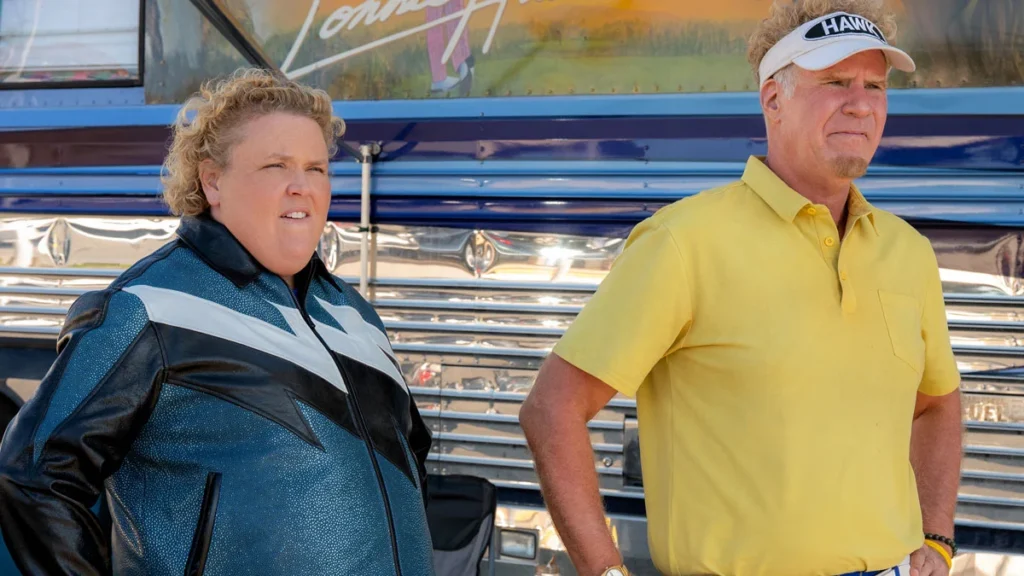
- Fortune Feimster as Sam: Feimster, primarily known for her stand-up comedy, takes on the role of Sam, Lonnie’s new caddy and driver. Their dynamic is described as a "tight bond" built on "natural friend chemistry." Feimster’s performance is praised for her reliable hilarity and her ability to portray a "slightly shadier character than usual," giving Sam a solid, well-developed arc. This unexpected pairing provides much of the show’s heart and many of its comedic highlights, as Sam, despite her lack of golf knowledge, grounds Lonnie and offers a fresh perspective.
- Molly Shannon as Stacy: As Lonnie’s ex-wife, Stacy, Molly Shannon delivers a performance lauded for its sharp edge. Unlike her sweeter roles in shows like HBO Max’s The Other Two, Shannon here gets to "wield a much sharper edge," embodying a woman whose "give-a-shit broke years ago." Her often-bitter micromanagement of their son Lance’s career provides ample comedic tension and adds layers to the complex family dynamics.
- Jimmy Tatro as Lance Hawkins: Tatro, who transitioned from a successful YouTube career to a reliable comedy star, is a crucial component of the father-son narrative. His performance as Lance, navigating his mother’s overbearing influence and his father’s often-embarrassing antics, provides both humor and emotional grounding. His chemistry with both Ferrell and Shannon is highlighted as a key strength.
- Supporting Players: The series is further enriched by a roster of talented comedic actors. Keith David appears as Lonnie’s original caddy, adding gravitas and history. Chris Parnell, known for his distinctive delivery, plays a "frequently unhinged" PGA Tour board member, providing institutional absurdity. Luke Wilson, with a "bleached-blond" hair color that unsettlingly makes him resemble his brother Owen, portrays Lonnie’s biggest rival, adding another layer of competitive antagonism. The article also notes the presence of other notable guest stars, including a "hilarious cameo" from Tony Hawk, whose presence underscores the show’s playful engagement with sports culture.
PGA Tour Studios: Authenticity Meets Irreverence
The designation of The Hawk as an "officially sanctioned PGA Tour Studios production" adds an intriguing dimension to the series. This partnership suggests a level of authenticity in its depiction of the professional golf world, from the course layouts to the competitive atmosphere. It implies that the production likely had access to real PGA facilities, potentially even some golf professionals, lending credibility to the backdrop against which Lonnie Hawkins’ farcical journey unfolds.
This official sanctioning also presents a unique challenge: how to maintain the irreverent, often boundary-pushing humor characteristic of Ferrell’s work and the Eastbound and Down style, while operating under the umbrella of a major sports organization. The fact that the show successfully navigates this balance speaks to the nuanced approach taken by the creators. It suggests a willingness from the PGA Tour to embrace humor, even if it occasionally pokes fun at the sport’s more traditional elements, in exchange for increased visibility and a more relatable, comedic portrayal of its world. This collaboration is a testament to the evolving strategies of sports organizations seeking to engage wider, more diverse audiences through entertainment.
Netflix’s Content Strategy and the Future of Sports Comedy
For Netflix, The Hawk represents a strategic investment in star-driven original comedy series, a cornerstone of its content library. In an increasingly competitive streaming landscape, acquiring and producing shows with established talent like Will Ferrell is crucial for attracting and retaining subscribers. The series’ episodic structure, with cliffhangers designed for binge-viewing, aligns perfectly with Netflix’s consumption model.
The show’s debut also comes at a time when sports entertainment is diversifying, with docuseries like Drive to Survive and Full Swing popularizing niche sports to broader audiences. The Hawk taps into this trend by offering a fictional, comedic take on the behind-the-scenes drama and personal struggles of professional athletes. Its release further solidifies Netflix’s commitment to varied comedic offerings, from broad humor to more character-driven narratives.
Critical Reception and Implications
While the initial review praises The Hawk as a "loose and fun flight," it also subtly suggests that the series "isn’t crying out for a second season." This nuanced assessment implies that while the first 10-episode season delivers a satisfying arc and ample entertainment, its story might feel complete, or that its core premise might not inherently demand extensive continuation. Such a perspective is not uncommon for limited series or shows that achieve their narrative objectives within a single run.
However, the show’s strengths—the engaging character dynamics, the strong performances, and Ferrell’s enduring charisma—could certainly pave the way for future seasons if viewer engagement and completion rates on Netflix are high. In the streaming era, metrics often dictate renewal decisions more than traditional critical acclaim alone. The Hawk demonstrates Ferrell’s continued relevance and his ability to adapt his comedic genius to new formats and collaborations. It successfully blends the familiar comfort of his past sports comedies with the distinct irreverence of the Eastbound and Down lineage, offering a fresh, funny, and surprisingly character-rich exploration of golf and the human pursuit of redemption.
The Hawk is currently available for streaming on Netflix, inviting audiences to join Lonnie Hawkins on his peculiar journey back to the top of the golf world, one white wine-fueled, ball-talking swing at a time. A trailer for the series can be viewed below, offering a glimpse into the comedic world created by Ferrell and his collaborators.