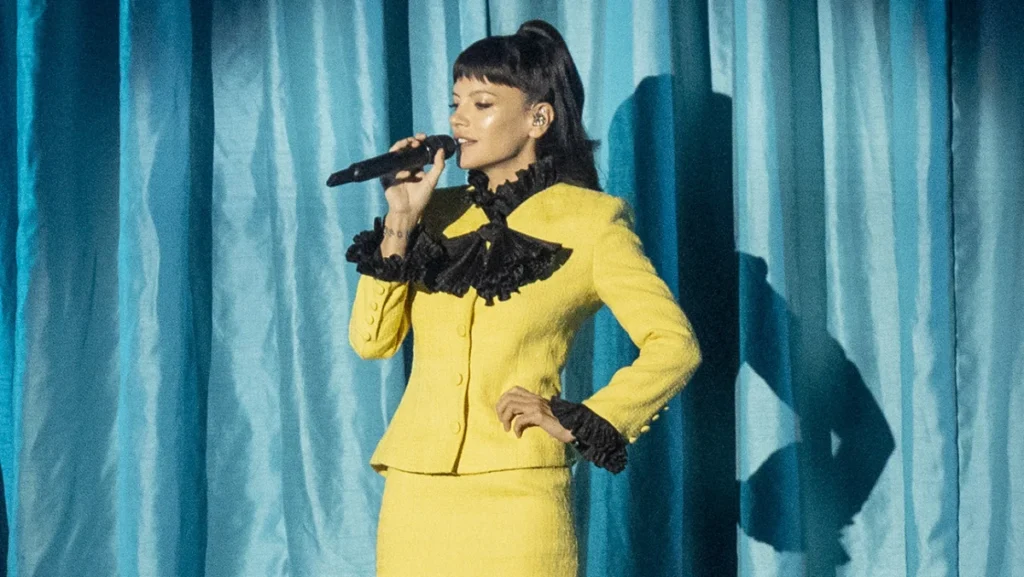

British singer-songwriter Lily Allen has announced a significant recalibration of her forthcoming extended North American leg for the acclaimed West End Girl tour, transitioning the majority of planned arena engagements to more intimate theatre settings. The adjustment, communicated by Allen via social media on Monday, signals a strategic shift for several key dates across the United States and Canada, though her September 3rd performance at New York City’s Madison Square Garden is slated to proceed as originally scheduled. This development has initiated considerable discussion among fans and industry observers regarding the evolving dynamics of live music touring in a post-pandemic landscape.
Detailed Tour Reconfiguration
The comprehensive changes impact a substantial portion of Allen’s itinerary, particularly in major metropolitan areas where large-capacity venues were initially booked. For Philadelphia, the show originally planned for an arena-sized venue (implicitly a major arena given the scale of others listed) will now move to the TD Pavilion, an amphitheater known for its versatile configurations. Chicago’s performance, initially set for the expansive United Center, will relocate to the historic Chicago Theatre, a renowned indoor venue with significantly smaller capacity. Similarly, the highly anticipated Los Angeles engagement, initially slated for the Kia Forum, will now take place at the picturesque Greek Theatre, an iconic outdoor amphitheater offering a more intimate atmosphere. San Francisco’s concert, previously booked at the Chase Center, will move to the Paramount Theatre in Oakland, a historic indoor venue. In Canada, the Vancouver date, initially at Rogers Arena, will be shifted to the Orpheum, a grand concert hall.
Perhaps the most definitive change is the outright cancellation of Allen’s Montreal performance at the Bell Centre, with no replacement show in a smaller venue offered. This particular cancellation stands in contrast to the venue downgrades elsewhere, suggesting a distinct logistical or market-specific consideration. Alongside these adjustments, Allen also confirmed the addition of a new date in Seattle, scheduled for the Paramount Theatre, expanding the tour’s reach. A number of other dates, already planned for theatre or amphitheater-sized venues in cities such as Boston, Toronto, Detroit, Minneapolis, and the iconic Red Rocks Amphitheatre, will proceed precisely as originally announced, indicating that these venues align with the tour’s adjusted scale.
The shift in venues represents a substantial reduction in potential audience capacity for several cities. For instance, the United Center in Chicago boasts a concert capacity of over 23,500, while the Chicago Theatre accommodates approximately 3,600. The Kia Forum, with a capacity around 17,500 for concerts, contrasts sharply with the Greek Theatre’s roughly 5,900 seats. Similarly, the Chase Center’s 18,000+ capacity is significantly larger than the Paramount Theatre’s around 2,800. These figures underscore a deliberate move towards a more controlled and potentially more engaged audience experience, though they invariably raise questions about the underlying motivations.
Artist’s Statement and Fan Reactions
In her social media announcement, Lily Allen succinctly stated that "we’ve had to make some adjustments" without providing an explicit rationale for the widespread venue changes or the Montreal cancellation. This absence of a detailed explanation has naturally led to considerable online discourse among her fanbase. Many fans have openly speculated that the adjustments, particularly the move to smaller venues and the cancellation, could be attributed to insufficient ticket sales for the larger arena settings. This form of speculation is common when such tour adjustments are announced in the music industry, as filling colossal venues requires immense popular demand, often necessitating consistent chart-topping success or a highly active and expansive touring base.
While Allen herself refrained from direct commentary on ticket sales, her previous touring history provides some context. Prior to this North American leg, the West End Girl tour predominantly utilized theatres and concert halls across the United Kingdom, Europe, and an earlier segment of its U.S. run. This established a precedent for the tour’s scale. However, the preceding month saw Allen performing in larger arena venues across the U.K., including a notable appearance at London’s famed O2 Arena. This recent experience with arena-sized crowds in her home country might have influenced initial plans for the North American leg, creating a stark contrast with the subsequent venue adjustments. The decision to revert to theatre-sized venues in North America, after having successfully played arenas in the U.K., suggests a nuanced understanding of market differences, logistical complexities, or perhaps a strategic pivot to optimize the tour’s overall success and profitability.
The ‘West End Girl’ Era: Album Context and Previous Tour Legs
The album West End Girl, released late last year, garnered widespread critical and commercial acclaim, marking a significant chapter in Allen’s discography. Her fifth studio album, it was notable for its deeply personal lyrical content, extensively detailing her separation from ex-husband David Harbour. This introspective and candid approach resonated strongly with both critics and listeners, contributing to its commercial success and sparking considerable discussion about her artistic evolution.
Allen herself has spoken about the album’s therapeutic origins. In a previous interview, she articulated the raw emotional process behind its creation: "It’s viscerally like going through the motions. At the time, I was really trying to process things and that’s great in terms of the album, but I don’t feel confused or angry now. I don’t need revenge." This statement highlights the album’s role as an emotional outlet, a journey through personal turmoil captured in song. The West End Girl tour, therefore, is not merely a promotional vehicle but an extension of this deeply personal narrative, inviting audiences to share in a reflective experience. Performing such emotionally charged material in smaller, more intimate venues could arguably enhance the connection between Allen and her audience, fostering a more profound shared experience than might be possible in a cavernous arena.
The initial legs of the West End Girl tour in the U.K. and Europe primarily leveraged theatres and concert halls, which are typically well-suited for artists who wish to emphasize musicality, storytelling, and direct audience engagement over large-scale spectacle. This choice aligns with the album’s introspective nature. The subsequent foray into arenas in the U.K., culminating in the O2 Arena date, demonstrated Allen’s capacity to command larger stages. However, the North American market presents unique challenges and opportunities, and an artist’s drawing power can vary significantly across different continents and regions, influenced by factors such as recent radio play, cultural relevance, and existing fanbase size.
Logistics for Ticket Holders
For fans who had already purchased tickets for the now-impacted shows, a clear and systematic refund and re-ticketing process has been outlined. All ticket holders for the affected dates are guaranteed a full refund, which is expected to be processed and appear in their accounts within the next five to seven business days. This measure is crucial for maintaining fan trust and goodwill amidst unexpected tour changes. Furthermore, as a gesture of appreciation and to facilitate access to the new, smaller capacity shows, these original ticket holders will be automatically entered into an exclusive pre-sale for the adjusted dates. This provides them with a priority window to secure tickets for the more limited seating available at the new venues. Following the conclusion of this pre-sale period, a new general on-sale for any remaining tickets will commence on July 24th. This structured approach aims to minimize inconvenience and ensure that loyal fans have the best opportunity to attend the reconfigured performances.
Broader Industry Context: Touring Economics and Artist Strategy
The live music industry has undergone significant transformations in recent years, particularly in the wake of the global pandemic. While there was an initial "revenge touring" surge as restrictions eased, leading to a glut of artists hitting the road, the market has begun to stabilize and, in some cases, contract. Factors such as persistent inflation, rising production costs, increased travel expenses, and heightened competition for consumer discretionary spending have collectively made touring a more complex and financially precarious endeavor for many artists and promoters.
Filling large arenas consistently requires an artist to be at the absolute peak of their commercial popularity, often with recent chart-topping hits and widespread media visibility. For artists like Lily Allen, who maintain a strong and dedicated fanbase but may not be dominating global pop charts with new releases, the economics of arena touring can be challenging. The decision to downsize venues can be a shrewd strategic move, often referred to as "right-sizing" a tour. This approach prioritizes maximizing attendance and revenue at each stop by matching venue capacity more closely with realistic demand. A theatre-sized venue, even if not completely sold out, often provides a higher per-seat profitability margin than a sparsely attended arena, where overhead costs remain astronomically high regardless of ticket sales.
Moreover, the shift to smaller venues can also be driven by artistic intent. Intimate settings allow for a different kind of performance, fostering a stronger connection between the artist and the audience. Acoustics are often superior in purpose-built theatres, enhancing the musical experience. Production costs for theatre shows are generally lower than for arena spectacles, allowing artists greater flexibility in their budget and creative control. For an album as personal and reflective as West End Girl, an intimate theatre setting may, in fact, provide a more fitting and profound environment for the music to be experienced. This suggests that the "adjustments" may not solely be a reaction to perceived ticket sales but also a conscious artistic choice to optimize the concert experience for both the performer and the audience.
Lily Allen’s Career Trajectory and Touring History
Lily Allen first rose to prominence in the mid-2000s with her distinctive blend of pop, ska, and witty, often satirical lyrics. Her debut album, Alright, Still, launched her to international stardom, establishing her as a unique voice in contemporary music. Throughout her career, Allen has navigated periods of intense creative output, critical acclaim, and personal reflection, including hiatuses from music. Her return to the music scene and the release of West End Girl signify a mature evolution of her artistry.
Historically, Allen has performed in a variety of venues, adapting her tours to the scale of her releases and her desired artistic presentation. While her early success certainly saw her playing to large festival crowds and substantial venues, her career has also embraced more intimate settings. The decision to play London’s O2 Arena recently demonstrated her enduring appeal and capacity to draw significant crowds in her home market. However, touring dynamics are highly fluid, and an artist’s commercial momentum can fluctuate. The North American market, while vast, is also intensely competitive, with a constant stream of both established and emerging artists vying for audience attention. For an artist like Allen, known for her sharp lyrical wit and engaging stage presence, smaller venues can often enhance the directness of her performance, allowing her personality to shine through more clearly without the need for extensive visual production often associated with arena shows.
Implications for Promoters and Venues
The frequent adjustments to tour itineraries, such as those announced by Lily Allen, present both challenges and opportunities for promoters and venues. For venues, last-minute cancellations or downgrades can create scheduling gaps, impacting revenue streams from ticket sales, concessions, and merchandise. Promoters, on the other hand, bear the financial risk of guaranteeing artist fees and production costs, making accurate forecasting of demand paramount. Adjustments require agile management of contracts, marketing campaigns, and logistics.
However, these changes also highlight the adaptability required in the modern touring ecosystem. Venues that can accommodate a range of artist sizes and genres are better positioned to weather such shifts. For promoters, "right-sizing" a tour can ultimately lead to more financially successful engagements, even if the initial large-scale vision needs to be modified. The willingness of artists and their teams to make such adjustments demonstrates a commitment to delivering viable and engaging live experiences, even if it means recalibrating expectations.
Conclusion
Lily Allen’s decision to modify her North American West End Girl tour, primarily by shifting from arenas to theatres, underscores the complex and ever-evolving landscape of the contemporary music industry. While fan speculation regarding ticket sales is an understandable reaction, the adjustments may also reflect a multifaceted strategy encompassing logistical considerations, financial optimization, and a conscious artistic choice to foster a more intimate connection with her audience, particularly given the deeply personal nature of her latest album. The transparent refund and re-ticketing process aims to mitigate inconvenience for fans, while the broader industry implications point to the continued need for adaptability and strategic planning in live music touring. Ultimately, these changes suggest a focused effort to ensure the West End Girl tour delivers a memorable and impactful experience, aligned with Allen’s artistic vision and the current market realities.